
What the day feels like
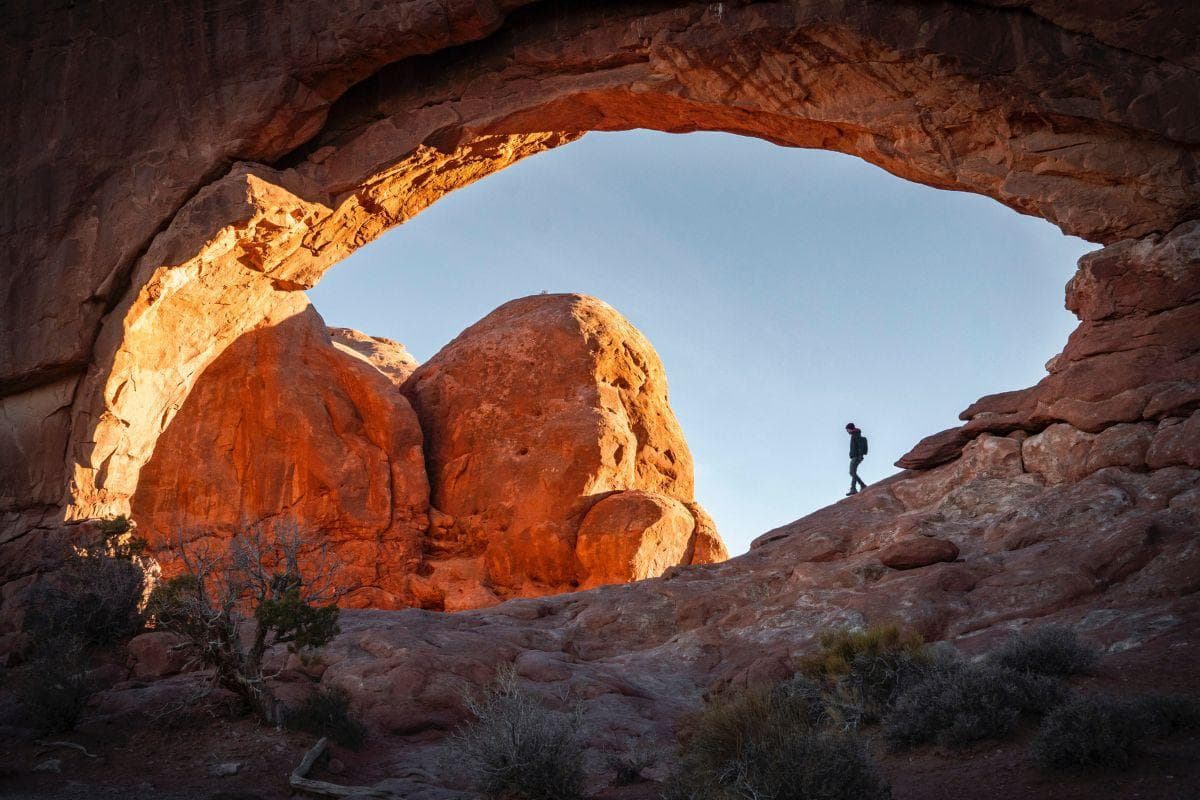
You climb a low sandstone fin before dawn and the world reshapes itself. Cool air slips through the cracks of your jacket; the horizon east of the La Sal Mountains is a thin bruise of light. Below, a valley of fins and fins-until-now unnamed spires sits like a sleeping city. When the sun breaks, the sandstone exhales—glowing pinks and ochres flood the fins, and for a few minutes the park feels personal, like someone has opened a book for only you to read.
Arches National Park is often reduced to postcards: Delicate Arch silhouetted against an orange sky, Balanced Rock balancing a thousand Instagram frames. That’s the shortcut. The longer version is a landscape written in layers of salt, shale, and wind—an unreadable grammar made legible by time. The park sits atop a buried salt bed left by an inland sea. As that salt shifted millions of years ago it buckled and fractured the overlying sandstone into the vertical plates called fins; erosion turned select fins into windows and, eventually, the suspended ribbons we call arches. Today more than 2,000 documented arches stand here, a concentration unrivaled anywhere on earth.
But Arches is not only geology; it’s motion. Trails thread through fins, forcing you to crouch, to pick a foothold, to consider the rock under your hands. The Delicate Arch trail—3.2 miles round-trip—walks you into the emblem of the park and rewards patient early risers with a private hour at the face of the arch. For those who want the entire poem, the Devil’s Garden Primitive Loop is a 7-mile test of navigational patience and airy exposed scrambling that takes you past Landscape Arch and into a quieter, riskier part of the park where the stone feels older and the wind reads to you from a different page.
To see Arches beyond its pavement, local guides open backcountry gates via Willow Springs Road and wind through Marching Men pinnacles to Tower Arch and Eye of the Whale. These 4x4 tracks are not just shortcuts; they are invitations to the parts of the park that remember what silence sounds like. If you prefer to move under your own mechanical power but with a grin, electric dirt bikes let you cover more ground—Gemini Bridges and surrounding sandstone canyons are better seen with dust on your boots and a motor that hums instead of roars.
Moab isn’t just a launch point; the town and nearby Colorado River shape any Arches itinerary. Summer heat can be fierce, and when the desert presses, a float on the Colorado—flatwater SUPing or a guided rafting trip through Fisher Towers or Westwater Canyon—offers a literal cool-down and a very different perspective: walls that read like vertical maps and river currents that insist you keep moving. Between the cliffs, wildlife shows up in small, perfect moments—mule deer stepping out at dusk, a red-tailed hawk hovering above a slickrock ledge.
The park’s nights are a different theater. Arches is an International Dark Sky Park; guides offer astro-photography nights and stargazing hikes that place the Milky Way exactly where compositional foregrounds expect it. In that darkness, arches and fins become silhouettes anchored to a sky you can almost touch—the whole massif seems to inhale stars.
There’s history here as well. Human presence predates maps: Ute and Paiute people traveled these lands for centuries, leaving petroglyphs and traces. More recent history includes early park designation as a monument and later national park status in 1971—protecting the arches, the desert ecology, and the fragile cryptobiotic soil that stitches the surface together.
Practical edge: timed-entry reservations and summer crowds mean logistics matter. Book sunrise visits when possible, bring 2–3 liters of water per person for half-day hikes, and treat the slickrock with the respect of wet granite—shoes with sticky rubber and a steady, deliberate gait will serve you better than any spectacle-ready footwear. If you want the park without the driving puzzle—timed tickets, parking, loop traffic—consider a guided morning or private tour; many operators include entry and short interpretive hikes so you can listen instead of watch the clock.
For photographers, golden hour and twin-light sunset sessions are obvious choices; for action-hungry visitors, a 4x4 backcountry journey and a guided primitive-loop hike offer both adrenaline and context. If time allows, add a late-afternoon studio of the sky: a short airplane or flightseeing tour folds the park into a map of mesas and river scars, revealing the patterns you miss on foot.
Arches gives itself in layers—first the bright postcard moments, then the deeper lines for those willing to go off pavement. Its stone has a temperament; sometimes it’s forgiving and smooth, sometimes it demands patience. The best plan is to arrive curious, to move slowly, and to leave the place better than you found it. The arches will still be here, patiently eroding, waiting to tell the next visitor the long story only they can hear.
Whether you come for Delicate Arch at dawn, a full Devil’s Garden loop, an off-road Tower Arch exploration, river time on the Colorado, or a night beneath the Milky Way, Arches National Park rewards attention. The landscape doesn’t just sit— it nudges, dares, and occasionally humbles. Bring a good pair of shoes, a decent camera, and a readiness to let sandstone show you how vast small things can be.
Trail wisdom
Small choices, better day.
Start at Sunrise
Delicate Arch and many viewpoints are far less crowded and much cooler early—aim to be on the trail 30–45 minutes before sunrise.
Carry More Water Than You Think
Bring at least 2–3 liters per person for half-day hikes; desert heat and exposed slickrock deplete you faster than shaded trails.
Respect Fragile Surfaces
Stay on established trails to protect cryptobiotic soil and seedlings that stabilize the desert crust.
Plan for Logistics
Timed-entry requirements, parking limits, and summer crowds make guided tours or early reservations practical time-savers.
Local knowledge
Read the place, not just the route.
Watch for native species including Mule deer, Golden eagle.
Keep an eye out for wildlife during the transition between areas and habitats. Respect distance guidelines.
Stay on designated trails to protect cryptobiotic soil and native plants; drones are prohibited inside national parks and climbing on arches is illegal and accelerates erosion.
Follow the guide's instructions on size limits, ethical handling, and leave-no-trace practices.
Tower Arch and Eye of the Whale (via backcountry 4x4). Gemini Bridges and nearby sandstone canyons—great for electric dirt bike exploration
Locally recommended viewpoints and quiet spots known best to local operators.
Arches sits above an ancient salt bed left by an inland sea; Indigenous peoples including the Ute and Paiute visited these lands for centuries, and the area became a national park in 1971.
Maritime roots and regional tradition shape the waterways and working coasts.
Seasonal guide
Four versions of the same landscape.
Spring
Best forWildflower accents on slickrock · Moderate-temperature hikes
ChallengesUnpredictable afternoon thunderstorms · Occasional wind
Mild days and blooming desert plants make spring ideal for longer hikes—watch afternoon weather and pack a light shell.
Summer
Best forNight sky and stargazing · Early-morning hikes and river activities
ChallengesExtreme daytime heat (100°F+) · Dehydration risk
Plan strenuous moves for dawn, use river-based activities for cooling off, and always carry ample water and sun protection.
Fall
Best forPerfect hiking temperatures · Golden-hour photography
ChallengesHigher visitor numbers on holidays · Shorter daylight hours
Cool, stable weather and extraordinary light make fall the park’s sweet spot—book accommodations and tours early.
Winter
Best forEmpty trails & dramatic contrasts · Clear, crisp nights for stargazing
ChallengesCold temperatures at night · Occasional ice on slickrock
Wintry days are quiet and photogenic; bring warm layers and microspikes if temperatures drop and surfaces glaze.
Pack with intention
What to bring.
Good to know
Common questions.
Yes—Arches has a timed-entry system during busy months; many guided tours include entry so you can bypass the system.
Plan the edges
The details that make the day easier.
Arches National Park contains over 2,000 documented natural sandstone arches and owes its unique formations to a massive buried salt bed that caused the overlying rock to buckle and erode.
Moab’s outdoor community hums with climbing shops, local breweries, Navajo-run galleries, and hearty southwestern diners—after a day in the park, savor slow-cooked bison chili or a craft IPA while locals sketch your route on the back of a napkin.
Practice Leave No Trace: stay on marked routes to protect cryptobiotic crust, pack out waste, don’t fly drones, and avoid climbing on arches—these actions preserve the park’s fragile geology for future visitors.
Explore by topic
Follow the threads.
Keep exploring
Make the story part of the trip.
Set out from Bass Harbor for a private, customizable day on Blue Hill Bay — lighthouses, puffins, seals, and the chance to feel Acadia from the water. Small groups, local captains, unforgettable views.
In four hours you can move from shaded canyon ferns to wind-scoured coastal ridgelines, guided by someone who knows where the light—and the hidden views—live. This private half-day hike on the Monterey Peninsula or Big Sur is compact, curated, and perfect for travelers who want depth without a multiday commitment.
 Related story
Beneath a sky of shifting light, Skaftafell’s ice reads like a map of time. This three-hour guided glacier hike mixes technical instruction with geology and culture: compact, safe, and unforgettable.