
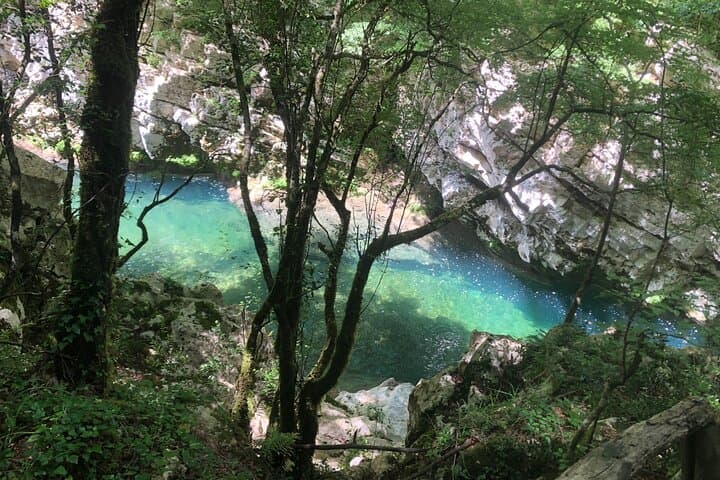
What the day feels like
The first steps into Calore Gorge push you into a different pace. The river draws your attention—clear, quick, purposeful—threading through limestone walls that keep the sun low and the air cool. Birdsong echoes off stone; the path, when it appears, is more a memory than a manicured trail: single-track, rooted, sometimes hewn from the bedrock. Here the landscape feels older than the maps, and every turn offers a new argument for lingering. An otter cuts through a shallower bend and slips into the reed as if showing you the place belongs to other storytellers, too.
This is the essence of the Calore Gorge Excursion: an eight-hour immersion in a wild stretch of the Calore Lucano river in the Cilento region of Campania. The itinerary threads nature and culture—walking a partly untamed riverside path, crossing points once used by shepherds and woodcutters, meeting locals, and breaking bread in a small osteria to taste Fusilli di Felitto, a hand-rolled pasta unique to the town. The trip doesn’t attempt to tame the place; it invites you to move with it.
Geology and history are written in the gorge’s bones. Limestone karst has been dissolved and sculpted over millennia; the river has carved narrow slots, plunge pools, and terraces where water has whittled away the rock. The Calore feeds richer lowlands downstream but here behaves like a hinge between inland mountains and the Mediterranean: abrupt, musical, and surprisingly biodiverse. The region falls within the Cilento, Vallo di Diano and Alburni National Park—a UNESCO World Heritage landscape recognized in part for the deep interactions between humans and this rugged setting.
Culture is close at hand. Felitto, the nearest hamlet, is small but proud of its culinary signature. Fusilli di Felitto are twisted on a little stick, each strand a tactile expression of local time and skill; sampling them after a day on the trail is an exercise in slow reward. You’ll likely meet people who have lived their whole lives in the valley—farmers, shepherds, guides—whose knowledge of waterlines, rock steps and seasonal cues is indispensable.
On the trail, the experience ranges from sloshy riverbanks to sun-dappled cliff saddles. Expect roughly 8–10 km of walking depending on route choices and river crossings; cumulative elevation gain is modest but varied—think 200–400 meters of up-and-down that make the hike feel like a proper day in the hills rather than a flat riverside stroll. Terrain includes packed dirt, exposed roots, limestone steps, and a few slippery scree sections. The pace is conversational rather than athletic, with stops for geology, history, and photography.
Why go? The Calore Gorge offers a layered reward: the intimacy of a small-group excursion (you can actually see the otter, with luck), the satisfaction of a route that still feels wild, and the cultural payoff of tasting a dish that exists almost nowhere else. For photographers, the gorge is a study in contrast—brilliant water against shadowed rock, micro-waterfalls and the human gestures of ancient paths. For anyone who enjoys travel that blends natural history with local flavors, this trip is calibrated to please.
Practicalities matter here. The excursion runs about eight hours; footwear should be sturdy, grippy, and comfortable for wet rock. Bring a light daypack, 1.5–2 liters of water depending on the season, sun protection, and a small towel if you intend to sit by the water. Guides typically time the walk to avoid midday heat in summer, and there are multiple informal snack and lunch stops—often featuring local products.
Conservation is part of the rhythm. The Calore supports sensitive riparian habitat—otters, kingfishers, and a healthy invertebrate community—so the trip emphasizes low-impact behavior: stay on durable surfaces where possible, pack out packaging, and avoid disturbing wildlife. In return, you get to walk routes still used by local people and learn about how livelihoods and landscape have coexisted here for generations.
Timing the visit helps shape the experience. Spring brings wildflowers and full water; autumn cools the days and sharpens the light. Summer offers blue-sky waterplay but can be hot and busier on weekends. Winter is quiet, more reflective, and wetter; a different kind of beauty but less ideal for long riverbank lounging.
If you go: respect the pace of the place. Move deliberately on the roots and slick stones. Listen when a local points out the best place for fusilli and the right way to cross a ledge. Bring an appetite—both for the trail and the food that closes the day—and leave room in your calendar to wander the town afterwards. The Calore doesn’t ask you to conquer it. It asks you to notice.
For many travelers the memory that lingers won’t be a summit view but the small things: the click of a pasta-maker’s hands, the smell of the river after a light rain, the way sunlight strips the color from a cliff and then returns it only after you’ve grown used to the shadow. That intimacy is the trip’s currency, and it pays dividends to anyone willing to trade speed for attention.
Trail wisdom
Small choices, better day.
Sturdy, grippy footwear
Choose shoes with good traction for wet limestone and rooty trails; river crossings can be slippery.
Hydration and snacks
Carry 1.5–2 liters of water and salty snacks—there are limited supplies on the route until the village stop.
Respect wildlife distance
Otters and kingfishers are shy—use binoculars and avoid loud noises near water edges.
Time your day
Start mid-morning in summer to avoid the hottest hours and ensure a leisurely lunch with locals.
Local knowledge
Read the place, not just the route.
Watch for native species including European otter (Lutra lutra), Kingfisher.
Keep an eye out for wildlife during the transition between areas and habitats. Respect distance guidelines.
The area is inside Cilento National Park; stick to established paths, pack out waste, and avoid disturbing riparian habitat to protect sensitive species.
Follow the guide's instructions on size limits, ethical handling, and leave-no-trace practices.
A narrow natural pool tucked under a limestone overhang (ask your guide). A centuries-old shepherd’s stair carved into the rock above the river
Locally recommended viewpoints and quiet spots known best to local operators.
Local trails along the Calore were used for centuries by shepherds and woodcutters and reflect a long history of human interaction with the rugged landscape.
Maritime roots and regional tradition shape the waterways and working coasts.
Seasonal guide
Four versions of the same landscape.
Spring
Best forWildflowers · Full river flows · Birdwatching
ChallengesMud after rains · Cool mornings
Spring brings high, lively water and blooming banks—great for photography and wildlife, but expect muddy sections after rain.
Summer
Best forWarm river dips · Long daylight · Local festivals
ChallengesHot midday sun · Crowded weekends
Summer is ideal for water-based rest stops, but plan to hike early or late to avoid peak heat and crowds.
Fall
Best forCrisp light · Foliage accents · Cooler hiking
ChallengesShortening days · Variable weather
Autumn sharpens the scenery and cools the trail—comfortable hiking conditions with dramatic light for photos.
Winter
Best forQuiet trails · Dramatic river moods · Off-season solitude
ChallengesWet, cold conditions · Limited services
Winter visits are quieter and moodier; dress warmly and expect some services to be reduced.
Operator details
What the booking data adds.
Included
- ✓Lunch
Not included
- —Bevande various, coffee, acqua, vino, consumption at the bar
Good to know
- ✓Service animals allowed
- ✓Infants are required to sit on an adult’s lap
- ✓Not recommended for travelers with spinal injuries
- ✓Not recommended for pregnant travelers
- ✓Not recommended for travelers with poor cardiovascular health
- ✓Travelers should have at least a moderate level of physical fitness
Pack with intention
What to bring.
Good to know
Common questions.
The excursion is an eight-hour day with roughly 8–10 km of walking on mixed terrain and 200–400 m cumulative elevation change—moderate fitness is recommended.
Plan the edges
The details that make the day easier.
Felitto holds an annual Fusillo festival celebrating the town’s hand-rolled fusilli; the pasta is a local culinary tradition unique to this valley.
After the hike, head to a family-run osteria in Felitto for Fusilli di Felitto tossed with local olive oil and seasonal greens; pair with a Campanian red or a cold local birra and finish with a wheel of pecorino from nearby pastures.
- Closest airport
- Naples (NAP) — ~2 hours drive; Nearest trailhead
- meeting point
- Felitto; Driving distance from Salerno: ~1.25 hours; Cell service: intermittent in the gorge—download maps; Permits: none for day visits, follow national park guidelines.
This gorge supports sensitive riparian ecosystems—pack out waste, avoid single-use plastics, and keep distance from wildlife; supporting local guides helps maintain sustainable tourism.
Explore by topic
Follow the threads.
Keep exploring
Make the story part of the trip.
 Related story
Less than two hours from Nairobi, Kereita Forest pairs hands-on canopy adventure with quiet montane trails and a sobering colonial history—perfect for families, teams, and curious travelers seeking a full-day pulse of nature.
Set out from Bass Harbor for a private, customizable day on Blue Hill Bay — lighthouses, puffins, seals, and the chance to feel Acadia from the water. Small groups, local captains, unforgettable views.
In four hours you can move from shaded canyon ferns to wind-scoured coastal ridgelines, guided by someone who knows where the light—and the hidden views—live. This private half-day hike on the Monterey Peninsula or Big Sur is compact, curated, and perfect for travelers who want depth without a multiday commitment.