
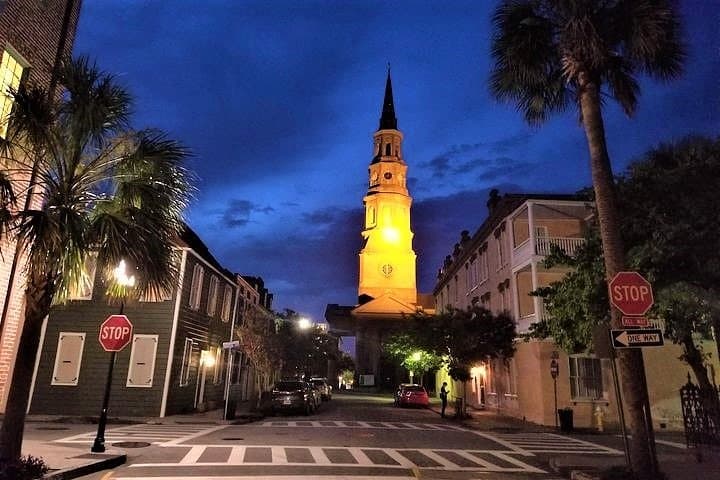
What the day feels like
The lantern light catches on damp brick and the sound of your own footsteps seems too loud for a city that has learned to whisper. Charleston at night is a slow, cool thing—Spanish moss draping the live oaks like old shawls, gas lamps reflected in puddles, and a humidity that clings to your jacket. At the corner where King Street narrows into a cluster of shuttered clapboard houses, Mike Brown begins to speak. He doesn’t just tell stories; he stitches them into place, the way the city itself is sewn together by its past. This is the Pleasing Terrors Night-Time Walking Ghost Tour, a 90-minute, front-row seat to Charleston’s uncanny history led by a native storyteller who’s been giving tours for more than three decades.
You’ll move at an easy pace—throughs cobble, across squares, past the ironwork and the verandas that keep watch over the Battery. The tour covers roughly a mile to a mile and a half of the Historic District, the kind of distance that feels intimate after dark. What makes the evening is less the distance than the context: Brown anchors each ghost story to verifiable moments in Charleston’s history, bringing things like the Revolutionary War, antebellum fortunes, yellow fever epidemics, and Reconstruction into the same frame as folklore. In his voice, a rumor becomes a portrait, and the buildings—brick, clapboard, and stucco—become active characters with reputations and grudges of their own.
Charleston is a city that knows its ghosts because it knows its layers. Founded in 1670, it was a mercantile powerhouse, a colonial capital, and a crucible of the Civil War and its aftermath. Its architecture is a timeline: Georgian symmetry, Federal lines, Greek Revival columns, and the narrow single houses squeezed between neighbors like memories pressed into a scrapbook. That history is fertile ground for the types of hauntings Brown describes—lost sailors, enslaved people whose stories were written over, fever victims who never quite left the hospital yards. He weaves archival context with local rumor, and the result is both eerie and instructive: a lesson in how myth and history can inform one another.
There’s also practical theater to the experience. Brown is the host of the Pleasing Terrors Podcast and has been featured on television and radio programs including the BBC, HGTV, Voice of America Radio, and Destination America's Ghost Asylum, which explains the measured cadence of the performance—equal parts research, showmanship, and respect. The tour runs nightly (check schedules) and offers instant confirmation and free cancellation, making it an easy add-on for travelers planning a Charleston weekend. Prices start at $29, which places it squarely in the experiential-tour sweet spot: high-value storytelling that doesn’t require specialty gear or a full day out.
For travelers who want more than spine-tingles, the walk doubles as a primer on how Charleston preserves and presents its past. Brown points out historic markers and explains the pragmatic reasons for the city’s layout: how public squares were part of early town planning, why certain neighborhoods were built higher or lower, and the ways that sea-level and storm risk have shaped urban life. You come away understanding why certain property records or family names recur in the stories—and how those names shaped local policy, architecture, and myth.
This tour is also a photographer’s odd delight. After dark the city compresses; gaslight and neon make for high-contrast frames, and the ancients of the town—oaks, wrought iron, brick—take on sculptural qualities. Keep your phone or a small camera ready, but be mindful of other guests: the show depends on the hush of the group.
Practicalities: the walk mostly follows paved and cobbled streets, with short stretches of uneven footing and occasional stairs into historic courtyards. Expect to be on your feet for the full 90 minutes; plan for low visibility in places and dress in layers—the coastal night can be warm one minute, breezy the next. The tour is family-friendly in a macabre way, but note that the subject matter includes death, disease, and slavery; discretion for younger riders is advised.
Why go? It’s a way to put emotion back into history. In daylight you can read the plaques and admire the homes, but at night the city’s past hums with presence. If you’re the kind of traveler who wants context with your curiosity—who wants to know why a building looks the way it does, who lived and died there, and how those stories echo into the present—this tour delivers. Book early for weekend evenings and holidays, and if you want to lock in the original host, ensure you’re reserving the Pleasing Terrors walk led by Mike Brown through this native experts page: <a href="https://app.advcollective.com/local-experts/haunted-charleston-night-walking-tour-with-mike-brown-pleasing-terrors">Haunted Charleston night walking tour with Mike Brown</a>.
Take the tour and you’ll leave with a roster of names and places that will change how you read Charleston’s facades. You’ll also carry a practical knowledge of how life, rumor, and preservation intermingle here. And if you must know whether Charleston is haunted? The city will answer in a dozen small ways—an unexpected chill, a lamp suddenly swinging, an old story landing exactly where it should. That’s the kind of encounter that makes walking after dark worth the trip.
Trail wisdom
Small choices, better day.
Wear stable footwear
Streets are cobblestone and uneven; low-profile hiking shoes or sturdy sneakers reduce the risk of twists and slips.
Bring a small light
A headlamp or compact flashlight helps when pathways are dim but avoid bright beams that disturb the group.
Mind the cadence
The tour relies on listening—keep conversations minimal and phones on silent so you don’t miss storytelling beats.
Stay hydrated
Ninety minutes of walking at night in coastal humidity can still dehydrate—carry a small water bottle.
Local knowledge
Read the place, not just the route.
Watch for native species including Nocturnal urban birds like night herons near the Battery, Opossums rummaging in quiet alleys.
Keep an eye out for wildlife during the transition between areas and habitats. Respect distance guidelines.
Historic Charleston relies on preservation ordinances and careful tourism management—stick to sidewalks and respect private property to minimize impact.
Follow the guide's instructions on size limits, ethical handling, and leave-no-trace practices.
Unmarked side courtyards with historic plaques. Small alleys off Broad Street with preserved 18th-century facades
Locally recommended viewpoints and quiet spots known best to local operators.
Charleston was founded in 1670 and served as a major colonial port and Confederate city; its layered history fuels many local ghost narratives.
Maritime roots and regional tradition shape the waterways and working coasts.
Seasonal guide
Four versions of the same landscape.
Spring
Best forMild evenings · Blooming gardens near historic homes
ChallengesAllergy season · Occasional spring storms
Spring offers comfortable temperatures and fragrant streets, but bring a light rain layer for spring squalls.
Summer
Best forWarm nights · Extended dusk for later tour times
ChallengesHigh humidity · Mosquitoes
Summer evenings are warm and sticky—light, breathable clothing and mosquito repellent are recommended.
Fall
Best forHalloween programming · Crisper air that sharpens ambiance
ChallengesHigher demand during festivals · Cooler late-night temps
Fall is prime season—book early for October dates, and pack a light jacket for late-night chills.
Winter
Best forClear, crisp nights · Fewer crowds
ChallengesCooler temperatures · Shorter daylight hours affecting pre-tour plans
Winters are milder than inland areas, but bring warm layers; tours run year-round when scheduled.
Operator details
What the booking data adds.
Included
- ✓Learn about Charleston's most fascinating and terrifying ghost encounters, history and folklore
- ✓Complimentary Bottled Water included during summer months
- ✓90-Minute Pleasing Terrors Night-Time Walking Ghost Tour of Charleston
- ✓Hear suspenseful storytelling with knowledge of the hidden stories lurking in Charleston's past
- ✓Tours led by Mike Brown, a Charleston native who has been giving ghost tours for 30 years.
Good to know
- ✓Wheelchair accessible
- ✓Infants and small children can ride in a pram or stroller
- ✓Service animals allowed
- ✓Public transportation options are available nearby
- ✓Transportation options are wheelchair accessible
- ✓All areas and surfaces are wheelchair accessible
- ✓Suitable for all physical fitness levels
Pack with intention
What to bring.
Good to know
Common questions.
The walking tour lasts approximately 90 minutes and covers about 1–1.5 miles through Charleston’s Historic District.
Plan the edges
The details that make the day easier.
Charleston’s Historic District contains one of the largest collections of antebellum architecture in the United States, with many structures dating to the 18th and early 19th centuries.
After the tour, head to the Historic District for Lowcountry cuisine—look for shrimp and grits, she-crab soup, and local oysters. For dinner or a post-walk beer, try one of the neighborhood taverns or courtyard restaurants that keep late hours; the city center’s walkable scale makes bar-hopping easy.
- Closest airport
- Charleston International Airport (CHS)
- Trailhead
- Historic District meeting point provided at booking
- Driving distance from downtown
- typically within 1–3 miles of most hotels in the Historic District
- Cell service
- generally good in downtown but can be spotty near dense masonry courtyards
- Permits
- none required for participants
Respect the Historic District: avoid trampling landscapes, do not enter private properties, and support local preservation efforts by staying on marked paths and following guide instructions.
Explore by topic
Follow the threads.
Keep exploring
Make the story part of the trip.
 Related story
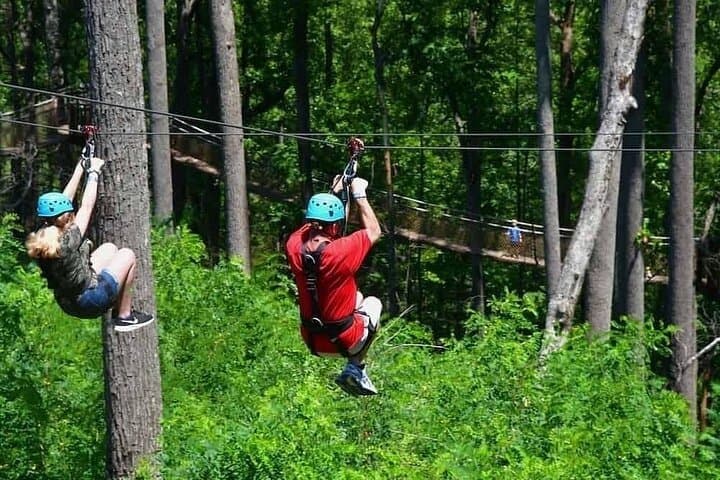
Less than two hours from Nairobi, Kereita Forest pairs hands-on canopy adventure with quiet montane trails and a sobering colonial history—perfect for families, teams, and curious travelers seeking a full-day pulse of nature.
Set out from Bass Harbor for a private, customizable day on Blue Hill Bay — lighthouses, puffins, seals, and the chance to feel Acadia from the water. Small groups, local captains, unforgettable views.
In four hours you can move from shaded canyon ferns to wind-scoured coastal ridgelines, guided by someone who knows where the light—and the hidden views—live. This private half-day hike on the Monterey Peninsula or Big Sur is compact, curated, and perfect for travelers who want depth without a multiday commitment.