
Macquarie Island World Heritage Site Adventures
Macquarie Island, located in the Southwest Pacific Ocean, is renowned for its unique geology and diverse wildlife, including massive colonies of penguins and seals.
About Macquarie Island World Heritage Site
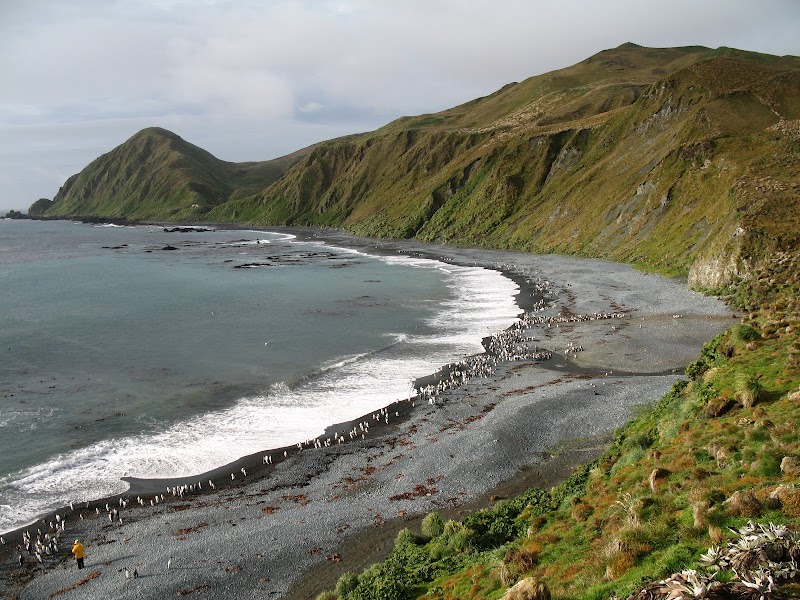
Macquarie Island World Heritage Site is a remote place located halfway between New Zealand and Antarctica, under the jurisdiction of Australia. Known for its unique geological activity, the island is the only place on earth where rocks from the earth’s mantle are actively exposed above sea level. This site plays a significant role in biodiversity, hosting large colonies of royal, king, and gentoo penguins, as well as elephant seals and albatrosses. First discovered in 1810 by Frederic Hasselborough, the island has a rich history as a sealing ground. Today, the island is a critical conservation area, offering limited access to scientists and a select number of tourists. Its isolated nature provides a pristine environment, making it a hotspot for ecological research. With no permanent human inhabitants, it offers a unique, undisturbed habitat that contributes significantly to our understanding of subantarctic ecosystems.
Highlights
Geological formations exposing mantle rocks
Large colonies of penguins and seals
Pristine environment for subantarctic research
Rich historical sites from the early sealing era
Notable Natural Features
Penguin Colonies
Home to thousands of royal, king, and gentoo penguins.
Elephant Seal Haulouts
One of the largest elephant seal colonies in the world.
Geological Features
Unique exposure of Earth's mantle above sea level.