Wilderness Landscape & Natural Heritage
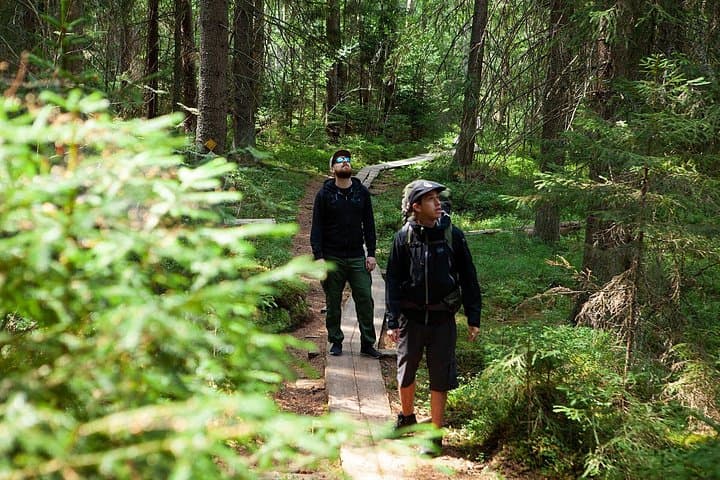
Kurjenrahka National Park, located approximately 30 kilometers north of Turku in southwestern Finland, covers around 29,000 hectares of protected landscapes dominated by large peat bogs, coniferous forests, and ancient woodland areas. The park’s geography is characterized by vast mires, small lakes, and gently rolling terrain shaped by the last Ice Age. Ecologically, it is valuable for supporting a range of species adapted to wetland and forest environments, including the endangered Siberian jay and moose, as well as rich plant life such as cloudberries and carnivorous sundews. The history of the area is rooted in traditional peatland use, with remnants of old forestry and agricultural practices still visible. For visitors, Kurjenrahka offers a network of well-maintained hiking trails with boardwalks crossing the marshy areas to protect sensitive habitat while enabling access. The park is especially popular for hiking, birdwatching, nature photography, and mushroom picking in the late summer and autumn. Key landmarks include the scenic Kotanevan bog, observation towers for wildlife viewing, and several historical sites such as ancient campfire places. Winter visitors can explore the park on snowshoes or cross-country skis, enjoying its quiet, snow-covered forests and frozen bogs. The park’s visitor center in Suontaka provides maps, guidance, and information about ongoing conservation efforts that protect its fragile ecosystems. Kurjenrahka’s diverse environment and tranquil setting provide an appealing destination for those interested in Nordic wilderness experiences and ecological study.