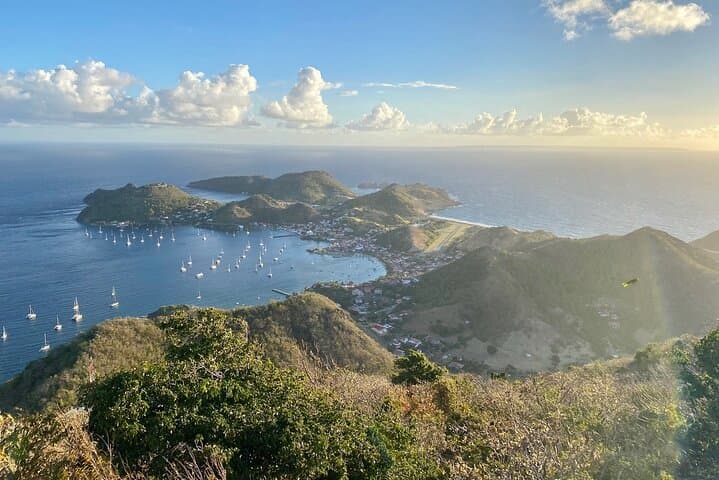
Wilderness Landscape & Natural Heritage
Guadeloupe National Park, established in 1989, covers much of the mountainous southern half of Basse-Terre Island, a part of the French overseas region of Guadeloupe. The park encompasses a volcanic massif dominated by La Soufrière, an active stratovolcano standing at 1,467 meters (4,813 feet), the highest point in the Lesser Antilles. The park's landscape features dense tropical rainforest, waterfalls, rivers, and rugged volcanic terrain. Biodiversity is rich, with over 1,000 plant species including rare orchids and endemic trees, as well as diverse wildlife such as the Guadeloupean anole lizard, the Guadeloupe woodpecker (the only woodpecker native to the Lesser Antilles), and various tropical birds and amphibians. The park preserves both natural heritage and cultural history, reflecting the island's indigenous and colonial past. Popular recreation opportunities include multi-day hiking routes such as the ascent of La Soufrière, bird watching, waterfall explorations, and river bathing. Notable landmarks within the park include the Carbet Falls, a spectacular three-tiered waterfall complex, and the heated sulfur springs near La Soufrière crater. With well-maintained trails, visitor centers, and camping areas, Guadeloupe National Park attracts nature lovers seeking vibrant tropical landscapes, active volcano experiences, and immersive rainforest trekking in the Caribbean.