THE ADVENTURE COLLECTIVE® · Independent discovery and booking for outdoor travel

A single-day loop from Munich puts you atop Germany’s highest point: ten minutes in a new cable car, a short walk to the golden summit cross, lunch with glacier views, and a descent on a historic cogwheel train. Practical, scenic, and accessible, the tour delivers peak Alpine drama in one efficient day.
A single-day loop from Munich puts you atop Germany’s highest point: ten minutes in a new cable car, a short walk to the golden summit cross, lunch with glacier views, and a descent on a historic cogwheel train. Practical, scenic, and accessible, the tour delivers peak Alpine drama in one efficient day.
The bus eases out of Munich before the suburbs give way to Alpine foothills. Windows frame a ribbon of road and forest; by the time the vehicle hugs the shore of Eibsee, the jagged arc of the Zugspitze looms—raw and immediate, a glacier-worn peak rising to 2,962 meters. The new cable car rips through the air in ten minutes, lifting you above pine crowns and a bowl of emerald lakes. Up here, wind has an agenda: it pushes, it cools, it makes you move your scarf and take another photograph.
Verified experiences and guided adventures in the surrounding area.
Operated by Gray Line Münchener Stadtrundfahrten · Garmisch-Partenkirchen, Bavaria
The bus eases out of Munich before the suburbs give way to Alpine foothills. Windows frame a ribbon of road and forest; by the time the vehicle hugs the shore of Eibsee, the jagged arc of the Zugspitze looms—raw and immediate, a glacier-worn peak rising to 2,962 meters. The new cable car rips through the air in ten minutes, lifting you above pine crowns and a bowl of emerald lakes. Up here, wind has an agenda: it pushes, it cools, it makes you move your scarf and take another photograph.
Zugspitze has long been where Bavarian mountain culture meets engineering ambition. The summit cross—golden and weathered—dates to the 1850s mountaineering era; the cogwheel railway that takes you down has been hauling visitors since the early 20th century. Geologically the massif is a mix of Wetterstein limestone and glacial plates; the Zugspitzplatt holds perennial ice where summer tobogganing is still possible on compact glacier snow.
Culturally, this is a working mountain: restaurants serve hearty Bavarian dishes alongside vegetarian and halal options, while guides and rail crews keep a steady cadence of safety and storytelling. The day trip from Munich gives you the essentials: a two-hour drive with live commentary, a swift cable-car ascent, a 45–60 minute walk to the summit cross over paved and rocky terrain, time to explore the Zugspitzplatt and glacier, and a nostalgic ride down on the cogwheel train.
Practicalities matter up here. Expect a short, exposed hike from the viewing platform to the summit—roughly a kilometer with some steep sections—so sturdy footwear and a windproof layer are useful. Weather at almost 3,000 meters can change fast; clear mornings can cloud over by midday. Altitude affects people differently; take it slow, hydrate, and listen to your body.
For photographers, the cable car provides dramatic approach shots while the summit yields 360-degree panoramas of over 400 peaks—best mid-morning or late afternoon for softer light. Families can borrow toboggans in summer on the glacier; the day’s transport, cable car and cogwheel train are included in your ticket, and guides provide English and German commentary.
If you’re planning this as a full-day out of Munich, aim for an early start, bring layered clothing, sun protection, and a small daypack with water and snacks. The combination of high-altitude scenery, mechanical heritage, and an easy-access summit makes Zugspitze a compact, unforgettable Alpine introduction.
moderate.
8 hours.
Suitable for travelers in reasonable health who can manage a short steep walk at altitude; minimal endurance required.
From the viewing platform it’s approximately a 45–60 minute walk—about 1 km over paved and rocky terrain with some short steep sections.
Yes. The tour price includes the cable car ascent and the historic cogwheel train descent.
Possibly—at nearly 3,000 m some visitors experience mild symptoms like shortness of breath or headache; hydrate, eat, and descend if symptoms worsen.
Yes. There are self-service restaurants and mountain eateries offering Bavarian dishes as well as vegetarian and halal options.
In summer months you can use a short toboggan run on compact glacier snow; toboggans are often available to borrow free of charge.
Children can join, though infants must sit on laps; the activity is not recommended for pregnant travelers or those with serious heart conditions.
The Zugspitze summit cross and early summit tourism date to 19th-century alpine exploration; the cogwheel railway and cable systems reflect decades of mountain transport engineering.
High-altitude ecosystems are fragile—stick to marked paths, dispose of waste properly, and respect restricted glacier areas to limit erosion and preserve water sources.
Gray Line Münchener Stadtrundfahrten operates guided outdoor trips and adventures with an emphasis on safety, stewardship, and memorable experiences.
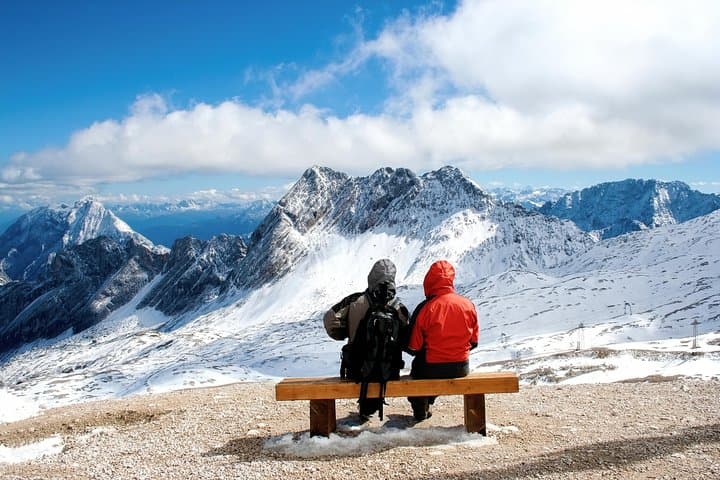
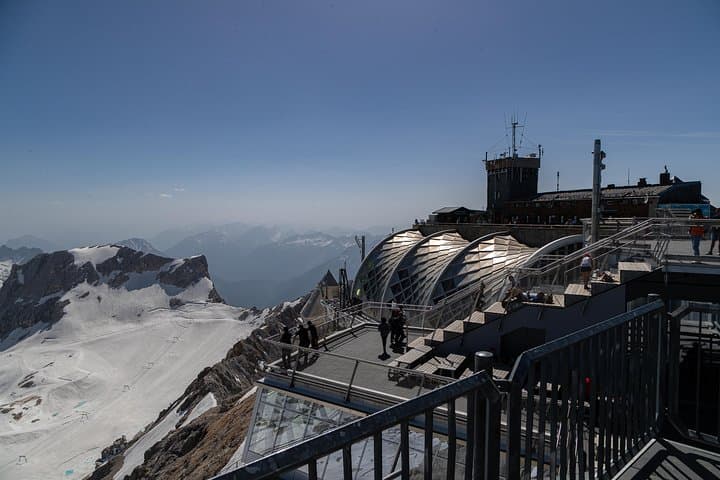
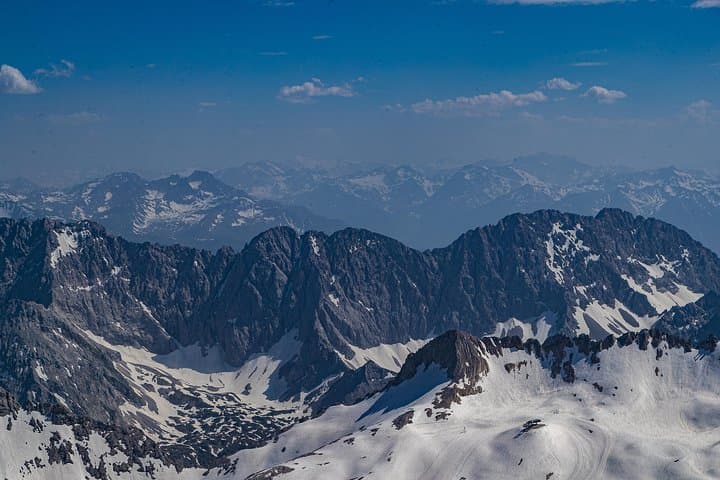
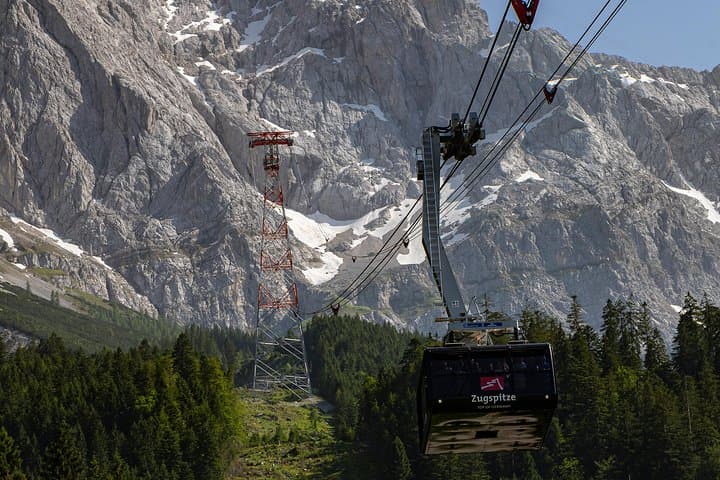
The bus eases out of Munich before the suburbs give way to Alpine foothills. Windows frame a ribbon of road and forest; by the time the vehicle hugs the shore of Eibsee, the jagged arc of the Zugspitze looms—raw and immediate, a glacier-worn peak rising to 2,962 meters. The new cable car rips through the air in ten minutes, lifting you above pine crowns and a bowl of emerald lakes. Up here, wind has an agenda: it pushes, it cools, it makes you move your scarf and take another photograph.
The bus eases out of Munich before the suburbs give way to Alpine foothills. Windows frame a ribbon of road and forest; by the time the vehicle hugs the shore of Eibsee, the jagged arc of the Zugspitze looms—raw and immediate, a glacier-worn peak rising to 2,962 meters. The new cable car rips through the air in ten minutes, lifting you above pine crowns and a bowl of emerald lakes. Up here, wind has an agenda: it pushes, it cools, it makes you move your scarf and take another photograph.
Zugspitze has long been where Bavarian mountain culture meets engineering ambition. The summit cross—golden and weathered—dates to the 1850s mountaineering era; the cogwheel railway that takes you down has been hauling visitors since the early 20th century. Geologically the massif is a mix of Wetterstein limestone and glacial plates; the Zugspitzplatt holds perennial ice where summer tobogganing is still possible on compact glacier snow.
Culturally, this is a working mountain: restaurants serve hearty Bavarian dishes alongside vegetarian and halal options, while guides and rail crews keep a steady cadence of safety and storytelling. The day trip from Munich gives you the essentials: a two-hour drive with live commentary, a swift cable-car ascent, a 45–60 minute walk to the summit cross over paved and rocky terrain, time to explore the Zugspitzplatt and glacier, and a nostalgic ride down on the cogwheel train.
Practicalities matter up here. Expect a short, exposed hike from the viewing platform to the summit—roughly a kilometer with some steep sections—so sturdy footwear and a windproof layer are useful. Weather at almost 3,000 meters can change fast; clear mornings can cloud over by midday. Altitude affects people differently; take it slow, hydrate, and listen to your body.
For photographers, the cable car provides dramatic approach shots while the summit yields 360-degree panoramas of over 400 peaks—best mid-morning or late afternoon for softer light. Families can borrow toboggans in summer on the glacier; the day’s transport, cable car and cogwheel train are included in your ticket, and guides provide English and German commentary.
If you’re planning this as a full-day out of Munich, aim for an early start, bring layered clothing, sun protection, and a small daypack with water and snacks. The combination of high-altitude scenery, mechanical heritage, and an easy-access summit makes Zugspitze a compact, unforgettable Alpine introduction.