THE ADVENTURE COLLECTIVE® · Independent discovery and booking for outdoor travel

Turn St. Louis into a post-apocalyptic playground with an app-based scavenger hunt that guides you through historic districts, riverfronts, and hidden alleys. This one-hour, self-guided game blends local history and urban navigation with playful challenges and remote support.
Turn St. Louis into a post-apocalyptic playground with an app-based scavenger hunt that guides you through historic districts, riverfronts, and hidden alleys. This one-hour, self-guided game blends local history and urban navigation with playful challenges and remote support.
You start with your phone lit and a map of St. Louis at your feet — the Arch rising like a compass behind you and the Mississippi murmuring to the east. The app pings: your first objective is somewhere in the old brick corridors of Laclede's Landing. From there the city unfolds in tiles — riverfront promenades, faded brewery blocks, and side streets with murals daring you to take a detour.
Verified experiences and guided adventures in the surrounding area.
Operated by Zombie Scavengers Hunts · St. Louis, Missouri
You start with your phone lit and a map of St. Louis at your feet — the Arch rising like a compass behind you and the Mississippi murmuring to the east. The app pings: your first objective is somewhere in the old brick corridors of Laclede's Landing. From there the city unfolds in tiles — riverfront promenades, faded brewery blocks, and side streets with murals daring you to take a detour.
St. Louis wears history on its streets. Once a river-trade hub and departure point for Lewis and Clark, the city’s neighborhoods reflect waves of immigrants, industry and river geology: limestone bluffs to the west and low-lying flood plain to the east. The game invites you to cut through that story, hunting for mundane objects turned survival loot while learning local landmarks and trivia.
Culturally, this is a city of blues clubs, barbecue joints, and neighborhood markets like Soulard — all potential pit-stops between app challenges. Expect a mix of wide sidewalks and tighter, older blocks; many tasks are solved by observation rather than speed, so strategy beats sprinting.
Practical guidance: the experience is a one-hour, self-guided urban walk. Charge your phone and enable location services; bring a small power bank, wear comfortable walking shoes, and plan a start near public transit or the Arch Riverfront for easy access. Keep an eye on traffic and private property — the app encourages public-space exploration, not trespass. If you need help, a remote host is reachable by chat. Finish with a score compared nationally and use it as an excuse to linger at a nearby café or museum — the city rewards a curious, measured pace.
easy.
60 minutes.
Light walking fitness; suitable for most ages and mobility levels though you should be comfortable walking 1–3 miles.
You’ll receive a message before your scheduled time with instructions and a link to launch the app; follow that link, enable location services, and start from your preferred public meeting point.
Yes — the provider notes it is stroller-accessible and suitable for a range of ages, though younger children may need assistance with reading tasks and navigating busy streets.
A remote host monitors the game via chat and can provide hints or troubleshooting; keep the chat window available in the app throughout your session.
Service animals are allowed, but pets should be left at home due to urban traffic and the fast-paced nature of some tasks.
St. Louis was a 19th-century river port and launching point for westward exploration; its neighborhoods grew around industry, rail lines and the Mississippi trade.
Stick to sidewalks and public parks, dispose of trash responsibly, and avoid disturbing riverbanks — urban green spaces and the Mississippi corridor are active restoration areas.
Zombie Scavengers Hunts operates guided outdoor trips and adventures with an emphasis on safety, stewardship, and memorable experiences.


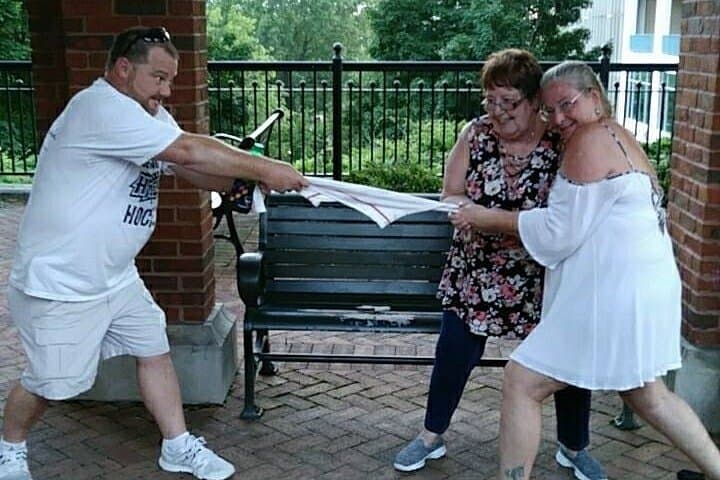

You start with your phone lit and a map of St. Louis at your feet — the Arch rising like a compass behind you and the Mississippi murmuring to the east. The app pings: your first objective is somewhere in the old brick corridors of Laclede's Landing. From there the city unfolds in tiles — riverfront promenades, faded brewery blocks, and side streets with murals daring you to take a detour.
You start with your phone lit and a map of St. Louis at your feet — the Arch rising like a compass behind you and the Mississippi murmuring to the east. The app pings: your first objective is somewhere in the old brick corridors of Laclede's Landing. From there the city unfolds in tiles — riverfront promenades, faded brewery blocks, and side streets with murals daring you to take a detour.
St. Louis wears history on its streets. Once a river-trade hub and departure point for Lewis and Clark, the city’s neighborhoods reflect waves of immigrants, industry and river geology: limestone bluffs to the west and low-lying flood plain to the east. The game invites you to cut through that story, hunting for mundane objects turned survival loot while learning local landmarks and trivia.
Culturally, this is a city of blues clubs, barbecue joints, and neighborhood markets like Soulard — all potential pit-stops between app challenges. Expect a mix of wide sidewalks and tighter, older blocks; many tasks are solved by observation rather than speed, so strategy beats sprinting.
Practical guidance: the experience is a one-hour, self-guided urban walk. Charge your phone and enable location services; bring a small power bank, wear comfortable walking shoes, and plan a start near public transit or the Arch Riverfront for easy access. Keep an eye on traffic and private property — the app encourages public-space exploration, not trespass. If you need help, a remote host is reachable by chat. Finish with a score compared nationally and use it as an excuse to linger at a nearby café or museum — the city rewards a curious, measured pace.