THE ADVENTURE COLLECTIVE® · Independent discovery and booking for outdoor travel

Board a Zodiac off Cabo San Lucas for a focused, educational whale-watch across the Sea of Cortez. Expect small groups, expert guides, and a 2.5-hour search for humpbacks, dolphins and other large marine life.
Board a Zodiac off Cabo San Lucas for a focused, educational whale-watch across the Sea of Cortez. Expect small groups, expert guides, and a 2.5-hour search for humpbacks, dolphins and other large marine life.
The Zodiac cuts through the blue of the Sea of Cortez and salt spray pins the air to your face — within minutes the shore of Cabo San Lucas recedes and only open water and a horizon of promise remain.
Verified experiences and guided adventures in the surrounding area.
Operated by WISEST TRAVEL · Cabo San Lucas, Baja California Sur
The Zodiac cuts through the blue of the Sea of Cortez and salt spray pins the air to your face — within minutes the shore of Cabo San Lucas recedes and only open water and a horizon of promise remain.
This is not a lazy cruise but a focused search: captains follow migration lanes and local whale behavior to find humpbacks, occasional sperm whales, and playful pods of dolphins. The Gulf's complex geology — a rifted basin between the Baja Peninsula and mainland Mexico — creates nutrient-rich upwellings that feed krill and small fish, which in turn draw large mammals each season. Jacques Cousteau once called the Sea of Cortez “the world’s aquarium”; that history of scientific curiosity feeds local conservation and interpretive guiding here.
Cabo's modern tourist culture grew from fishing camps to an international sport-fishing and eco-tourism hub; Zodiac trips reflect that mix of hands-on marine knowledge and recreational access. Guides explain regulations that keep boats at respectful distances while still offering dramatic viewing and photo opportunities.
Practical guidance: tours run about 2.5 hours and use rigid-hulled inflatable (Zodiac) boats — expect brief bursts of speed and standing room. Bring layered windproof clothing, sun protection, and motion-sickness remedies if you’re sensitive. Guided groups are small (around 15), bottled water and soft drinks are provided, and minimum age is five. Avoid bringing single-use plastics and follow guide instructions for closest approach; the best sightings happen on calm mornings between December and April, and again for different species in summer months.
easy.
2–3 hours.
Light activity — must be able to board a small boat and stand for periods; suitable for most fitness levels
Tours are approximately 2.5 hours and typically head a few miles offshore following whale activity; exact distance varies with sightings and sea conditions.
Yes — children are allowed but the minimum age is five; infants must sit on a lap and all minors require adult supervision.
Bring layered clothing, sun protection, motion-sickness meds if needed, and a camera; the tour provides bottled water and soft drinks.
Not recommended for pregnant travelers or those with serious spinal or heart conditions due to occasional rough motion and boarding steps.
The Sea of Cortez (Gulf of California) has long been a crossroads of indigenous fishing communities and later scientific exploration; researchers like Jacques Cousteau highlighted its global importance.
Operators pay an environmental management fee and follow whale-watching regulations; visitors should avoid single-use plastics and obey approach distances to reduce disturbance.
WISEST TRAVEL operates guided outdoor trips and adventures with an emphasis on safety, stewardship, and memorable experiences.
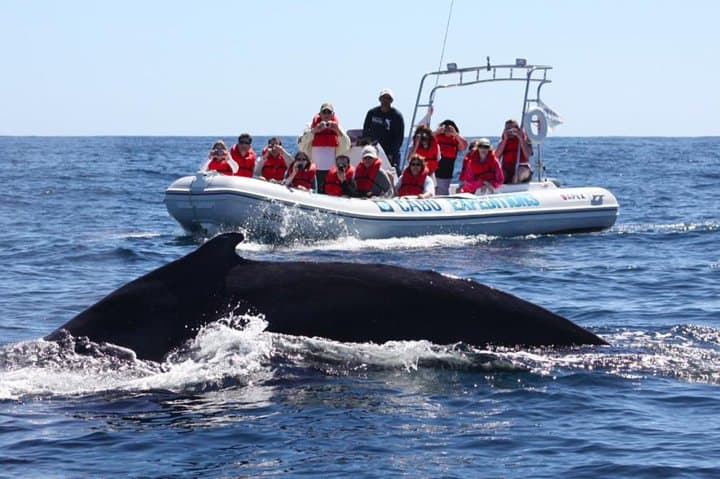
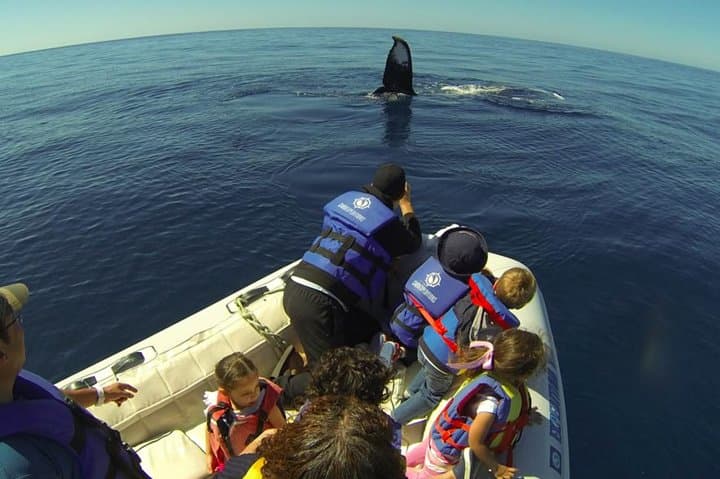
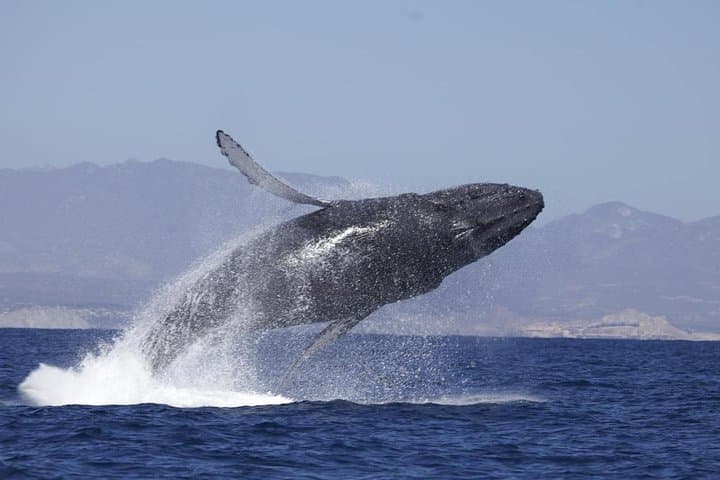
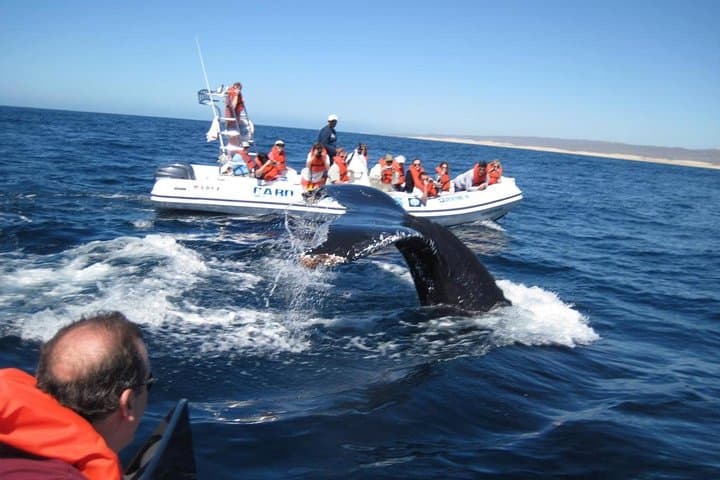
The Zodiac cuts through the blue of the Sea of Cortez and salt spray pins the air to your face — within minutes the shore of Cabo San Lucas recedes and only open water and a horizon of promise remain.
The Zodiac cuts through the blue of the Sea of Cortez and salt spray pins the air to your face — within minutes the shore of Cabo San Lucas recedes and only open water and a horizon of promise remain.
This is not a lazy cruise but a focused search: captains follow migration lanes and local whale behavior to find humpbacks, occasional sperm whales, and playful pods of dolphins. The Gulf's complex geology — a rifted basin between the Baja Peninsula and mainland Mexico — creates nutrient-rich upwellings that feed krill and small fish, which in turn draw large mammals each season. Jacques Cousteau once called the Sea of Cortez “the world’s aquarium”; that history of scientific curiosity feeds local conservation and interpretive guiding here.
Cabo's modern tourist culture grew from fishing camps to an international sport-fishing and eco-tourism hub; Zodiac trips reflect that mix of hands-on marine knowledge and recreational access. Guides explain regulations that keep boats at respectful distances while still offering dramatic viewing and photo opportunities.
Practical guidance: tours run about 2.5 hours and use rigid-hulled inflatable (Zodiac) boats — expect brief bursts of speed and standing room. Bring layered windproof clothing, sun protection, and motion-sickness remedies if you’re sensitive. Guided groups are small (around 15), bottled water and soft drinks are provided, and minimum age is five. Avoid bringing single-use plastics and follow guide instructions for closest approach; the best sightings happen on calm mornings between December and April, and again for different species in summer months.