THE ADVENTURE COLLECTIVE® · Independent discovery and booking for outdoor travel

Take an observatory ticket to Prague’s controversial Žižkov TV Tower and follow a self-guided digital tour through Novi Grad. Panoramic city views meet provocative public art and modern urban history in this accessible two-hour experience.
Take an observatory ticket to Prague’s controversial Žižkov TV Tower and follow a self-guided digital tour through Novi Grad. Panoramic city views meet provocative public art and modern urban history in this accessible two-hour experience.
A winded tram climb drops you into Žižkov’s concrete geometry—streets that feel half-industrial, half-studio district—then the tower rises, a chrome spine puncturing the skyline. From the observatory platform the city unfolds: red roofs, the looping Vltava, and church spires threading the horizon. The tower’s pods peer over neighborhoods that were once margins and are now part of Prague’s modern edge.
Verified experiences and guided adventures in the surrounding area.
Operated by WGTickets · Prague, Prague
A winded tram climb drops you into Žižkov’s concrete geometry—streets that feel half-industrial, half-studio district—then the tower rises, a chrome spine puncturing the skyline. From the observatory platform the city unfolds: red roofs, the looping Vltava, and church spires threading the horizon. The tower’s pods peer over neighborhoods that were once margins and are now part of Prague’s modern edge.
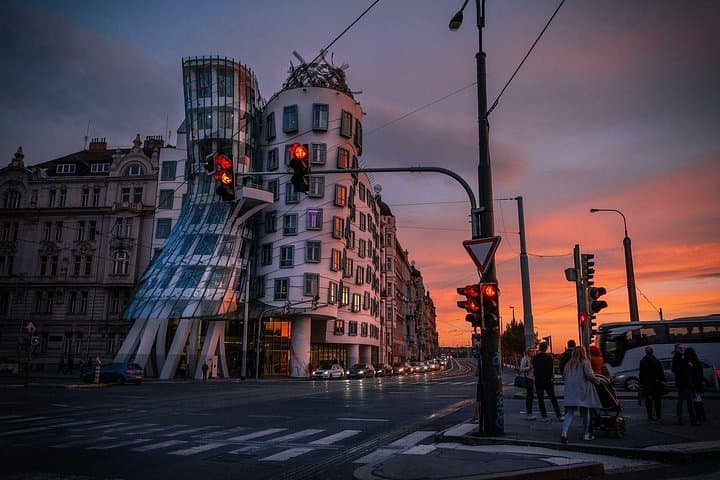
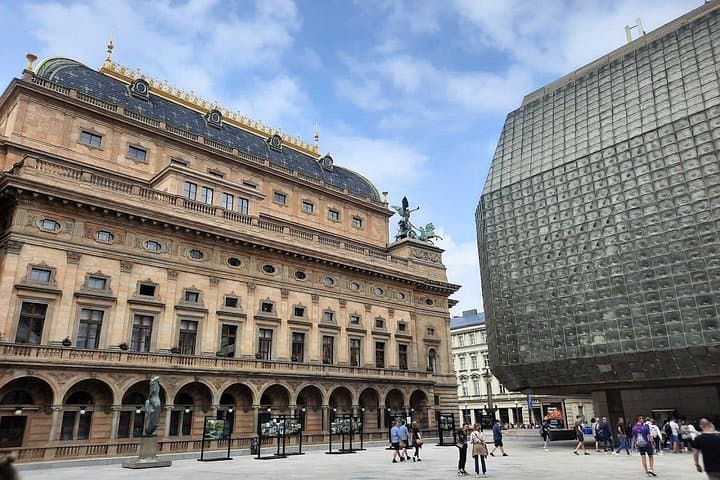
Built during the late 20th century, the Žižkov Television Tower is one of Prague’s most debated structures—engineered for function, criticized for form. Its steel-and-concrete profile contrasts with the baroque and Gothic fabric below; David Černý’s giant crawling baby sculptures later added a playful, provocative counterpoint. Novi Grad (New Town) itself carries layers of Czech urban life: 19th-century industrial remnants, working-class quarters, and contemporary galleries and cafés.
Expect short urban walks between viewpoints, street-level encounters with contemporary sculpture, and a self-paced in-app audio route through Novi Grad’s architectural highlights. The observatory ticket gives a clear panorama but not a guided interior audio program; the digital tour fills that role with neighborhood context and directional cues.
Practical notes: the experience is low-impact physically but involves stairs and elevator queues—buy mobile tickets in advance to skip lines where possible. Public transit serves the area well; bring a charged phone for the audio guide and headphones for clarity. Midday light offers the best long-range visibility; golden hour softens stone and rooflines for photography. Respect local signage around private residences and neighboring cultural sites—this is a living neighborhood, not a theme park.
easy.
2 hours.
Suitable for most fitness levels; requires short walks and standing, plus elevator/stair use.
Yes—the Žižkov TV Tower has elevator access to the observatory platform, though short queues can form at busy times.
No—the ticket provides observatory admission, but the digital Novi Grad audio tour is delivered via an app and covers neighborhood sites separately.
Plan about two hours to include observatory time, walking portions of the digital tour, and brief stops for photos or cafés.
There are cafés and public restrooms in the surrounding Žižkov and New Town neighborhoods, but bring small change and check opening hours.
Erected during the late socialist era, the Žižkov TV Tower symbolized technological progress and provoked debate about modern architecture against Prague’s historic core.
Visitors are encouraged to use public transit, stay on designated paths, and avoid littering—responsible behavior helps protect urban green spaces and historic streets.
WGTickets operates guided outdoor trips and adventures with an emphasis on safety, stewardship, and memorable experiences.
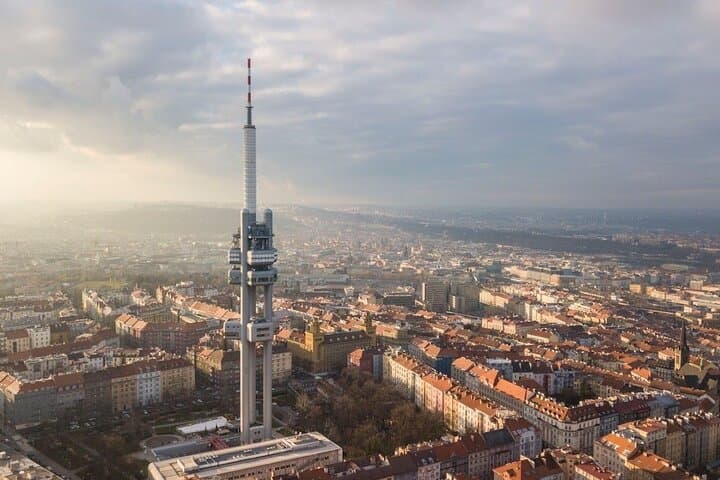
A winded tram climb drops you into Žižkov’s concrete geometry—streets that feel half-industrial, half-studio district—then the tower rises, a chrome spine puncturing the skyline. From the observatory platform the city unfolds: red roofs, the looping Vltava, and church spires threading the horizon. The tower’s pods peer over neighborhoods that were once margins and are now part of Prague’s modern edge.
A winded tram climb drops you into Žižkov’s concrete geometry—streets that feel half-industrial, half-studio district—then the tower rises, a chrome spine puncturing the skyline. From the observatory platform the city unfolds: red roofs, the looping Vltava, and church spires threading the horizon. The tower’s pods peer over neighborhoods that were once margins and are now part of Prague’s modern edge.
Built during the late 20th century, the Žižkov Television Tower is one of Prague’s most debated structures—engineered for function, criticized for form. Its steel-and-concrete profile contrasts with the baroque and Gothic fabric below; David Černý’s giant crawling baby sculptures later added a playful, provocative counterpoint. Novi Grad (New Town) itself carries layers of Czech urban life: 19th-century industrial remnants, working-class quarters, and contemporary galleries and cafés.
Expect short urban walks between viewpoints, street-level encounters with contemporary sculpture, and a self-paced in-app audio route through Novi Grad’s architectural highlights. The observatory ticket gives a clear panorama but not a guided interior audio program; the digital tour fills that role with neighborhood context and directional cues.
Practical notes: the experience is low-impact physically but involves stairs and elevator queues—buy mobile tickets in advance to skip lines where possible. Public transit serves the area well; bring a charged phone for the audio guide and headphones for clarity. Midday light offers the best long-range visibility; golden hour softens stone and rooflines for photography. Respect local signage around private residences and neighboring cultural sites—this is a living neighborhood, not a theme park.