THE ADVENTURE COLLECTIVE® · Independent discovery and booking for outdoor travel

Ride the lift to 93 meters and peer across Prague from a modernist tower that divides opinion and rewards curiosity. The observatory combines panoramic views, topical capsules, and playful public art for a compact urban experience.
Ride the lift to 93 meters and peer across Prague from a modernist tower that divides opinion and rewards curiosity. The observatory combines panoramic views, topical capsules, and playful public art for a compact urban experience.
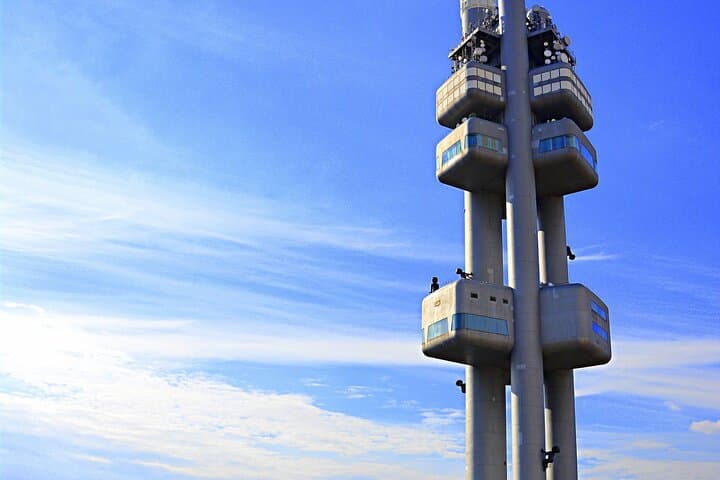
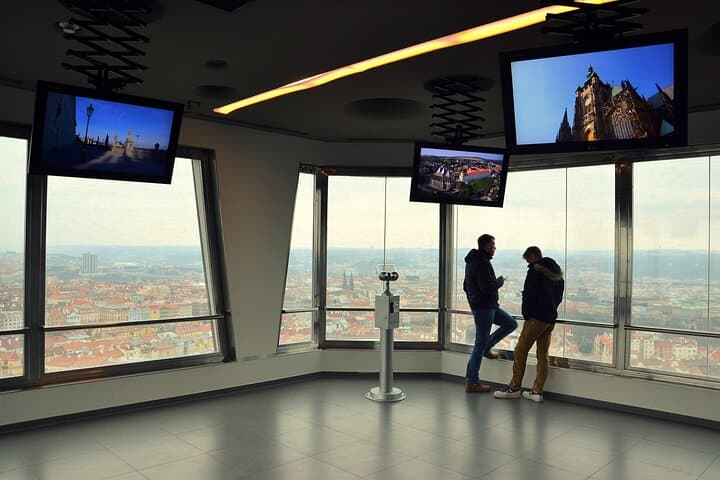
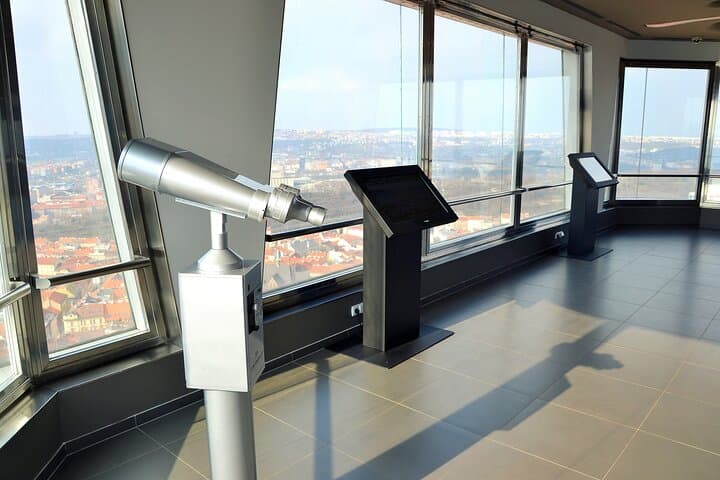
From the base, the Žižkov Television Tower pushes skyward like a modern pillar through Prague’s skyline — its metal pods glinting above the red tile roofs. On arrival the city hums below; inside, a lift whips you to the observatory at 93 meters where the city opens in rings of streets, Vltava curves and distant ridgelines that can reach 100 km on a clear day.
Verified experiences and guided adventures in the surrounding area.
Operated by Prague TV tower - Zizkov Television Tower · Prague, Prague
From the base, the Žižkov Television Tower pushes skyward like a modern pillar through Prague’s skyline — its metal pods glinting above the red tile roofs. On arrival the city hums below; inside, a lift whips you to the observatory at 93 meters where the city opens in rings of streets, Vltava curves and distant ridgelines that can reach 100 km on a clear day.
Built between the late 1980s and early 1990s by architect Václav Aulický, the tower was intended as a functional broadcast mast and became one of Prague’s most divisive modern landmarks. Its structural steelwork and cylindrical pods reflect late-20th-century engineering and a period when Prague balanced technology with historic fabric. David Černý’s giant crawling infant sculptures add a dose of local satire, a cultural wink visible from ground and sky.
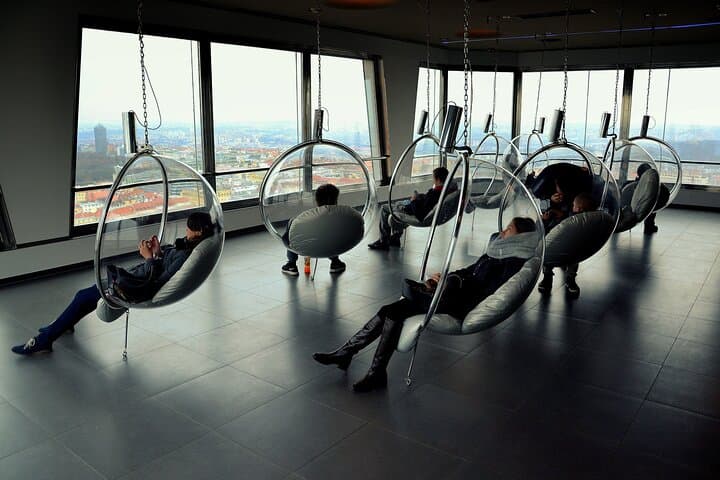
The observatory’s capsules each emphasize a different topic — city history, geology of the Bohemian Massif, and Prague’s urban development — making the visit part lookout, part mini-museum. Practicalities matter: timed visits run 10–60 minutes, and the site is wheelchair- and stroller-accessible. Expect crisp panoramas in morning light and warmer, photogenic tones at sunset; visibility depends on air clarity and weather.
Plan for queues during peak season, bring a light layer for the breezy platform, and allow at least 30–45 minutes to take in interactive displays and the view. Public transport drops you nearby; the observatory is an efficient, urban vantage point that repays even a short stop with layered perspectives on Prague’s history and geography.
easy.
10–60 minutes.
Suitable for all fitness levels; mostly elevator access with short walking segments
Visits range from about 10 minutes for a quick look to 60 minutes if you explore exhibits and linger at viewpoints; plan 30–45 minutes for a relaxed visit.
Yes — the observatory and onsite facilities are wheelchair- and stroller-accessible, and staff can advise on accessibility accommodations.
On very clear days visibility can approach 100 km, revealing surrounding Bohemian ridgelines and distant townscapes; typical urban visibility is shorter depending on weather and air quality.
The observatory includes topical capsules and informational displays; private guided tours are not standard but check the operator for special programming or temporary exhibits.
Constructed between 1985–1992, the Žižkov Tower was designed as a functional TV and radio mast and later became a prominent, controversial modern landmark in Prague.
Visitors are encouraged to follow waste-disposal guidance and avoid leaning on historic railings; light pollution and visitor impact are managed through limited access and onsite signage.
Prague TV tower - Zizkov Television Tower operates guided outdoor trips and adventures with an emphasis on safety, stewardship, and memorable experiences.
From the base, the Žižkov Television Tower pushes skyward like a modern pillar through Prague’s skyline — its metal pods glinting above the red tile roofs. On arrival the city hums below; inside, a lift whips you to the observatory at 93 meters where the city opens in rings of streets, Vltava curves and distant ridgelines that can reach 100 km on a clear day.
From the base, the Žižkov Television Tower pushes skyward like a modern pillar through Prague’s skyline — its metal pods glinting above the red tile roofs. On arrival the city hums below; inside, a lift whips you to the observatory at 93 meters where the city opens in rings of streets, Vltava curves and distant ridgelines that can reach 100 km on a clear day.
Built between the late 1980s and early 1990s by architect Václav Aulický, the tower was intended as a functional broadcast mast and became one of Prague’s most divisive modern landmarks. Its structural steelwork and cylindrical pods reflect late-20th-century engineering and a period when Prague balanced technology with historic fabric. David Černý’s giant crawling infant sculptures add a dose of local satire, a cultural wink visible from ground and sky.
The observatory’s capsules each emphasize a different topic — city history, geology of the Bohemian Massif, and Prague’s urban development — making the visit part lookout, part mini-museum. Practicalities matter: timed visits run 10–60 minutes, and the site is wheelchair- and stroller-accessible. Expect crisp panoramas in morning light and warmer, photogenic tones at sunset; visibility depends on air clarity and weather.
Plan for queues during peak season, bring a light layer for the breezy platform, and allow at least 30–45 minutes to take in interactive displays and the view. Public transport drops you nearby; the observatory is an efficient, urban vantage point that repays even a short stop with layered perspectives on Prague’s history and geography.