THE ADVENTURE COLLECTIVE® · Independent discovery and booking for outdoor travel

Trade the rumble of a game drive for the hush of footfalls at Ziwa Rhino Sanctuary. This guided walking safari brings you close to reintroduced southern white rhinos while teaching tracking, behavior and conservation in just a half-day outing.
Trade the rumble of a game drive for the hush of footfalls at Ziwa Rhino Sanctuary. This guided walking safari brings you close to reintroduced southern white rhinos while teaching tracking, behavior and conservation in just a half-day outing.
Low grass parts underfoot, a wide sky pressing down, and the muffled shuffle of hooves—this is the tone of a Ziwa Rhino walking safari. Guests step away from vehicles into open savannah and bushland, guided by armed rangers whose quiet confidence shapes every pace. The landscape is gentle but alive: termite mounds punctuate grasses, acacia skeletons cast sharp shadows, and birds wheel overhead, alert to the group’s passage.
Verified experiences and guided adventures in the surrounding area.
Operated by Murchison Backpackers · Masindi, Nakasongola District
Low grass parts underfoot, a wide sky pressing down, and the muffled shuffle of hooves—this is the tone of a Ziwa Rhino walking safari. Guests step away from vehicles into open savannah and bushland, guided by armed rangers whose quiet confidence shapes every pace. The landscape is gentle but alive: termite mounds punctuate grasses, acacia skeletons cast sharp shadows, and birds wheel overhead, alert to the group’s passage.
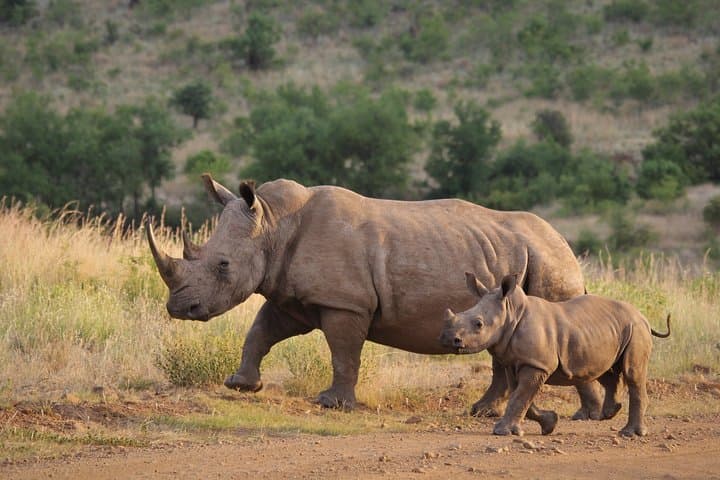
Ziwa Rhino Sanctuary is Uganda’s successful reintroduction site for southern white rhinos, created in the 2000s to restore species lost to poaching. The walk is as much about tracking and behavior as it is about sight—rangers read dung, prints and grass scars to locate rhino groups. Alongside rhinos, the sanctuary supports bushbucks, waterbucks and a rich bird community, and nearby villages contribute to conservation through community-centered programs.
Practical guidance is straightforward: expect 3–4 hours on foot across uneven grassy terrain, with long stretches of sun and little shade. Wear sturdy closed-toe shoes, sun protection and carry water; guides provide direction, context and safety but the experience depends on remaining quiet and cooperative. Photography is permitted from safe distances, and group sizes are kept small to minimize disturbance. Morning walks are cooler and increase chances of seeing active rhinos; afternoons may be still and intimate as animals graze. For travelers seeking an up-close wildlife encounter that emphasizes tracking skills, conservation insight and the raw presence of endangered megafauna, Ziwa delivers a focused, manageable and deeply memorable walking safari.
moderate.
3–4 hours.
Suitable for those who can walk several hours at a steady pace over uneven terrain; minimal steep elevation.
Guides keep groups at a safe distance determined by animal behavior; you should expect unobstructed views but not direct contact—safety and minimal disturbance are priorities.
Children are allowed but must be closely supervised; check age or guardian requirements with the operator and note that long periods of quiet walking may be challenging for very young kids.
Guides typically speak English and may offer local-language insights; confirm specific language needs when booking.
Many bookings include private or shared transport from nearby towns—verify pickup details at booking and allow travel time from Masindi or Kampala.
Ziwa was established in the early 2000s as a safe, fenced sanctuary and hosted rhino translocations to reintroduce white rhinos to Uganda after decades of extirpation.
The sanctuary operates as a community-driven conservation model—visitor fees support anti-poaching patrols and local development, and small group sizes limit disturbance to wildlife.
Murchison Backpackers operates guided outdoor trips and adventures with an emphasis on safety, stewardship, and memorable experiences.
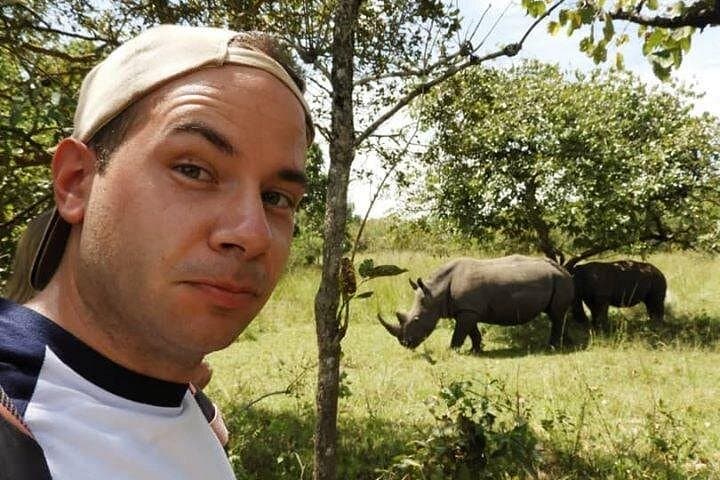
Low grass parts underfoot, a wide sky pressing down, and the muffled shuffle of hooves—this is the tone of a Ziwa Rhino walking safari. Guests step away from vehicles into open savannah and bushland, guided by armed rangers whose quiet confidence shapes every pace. The landscape is gentle but alive: termite mounds punctuate grasses, acacia skeletons cast sharp shadows, and birds wheel overhead, alert to the group’s passage.
Low grass parts underfoot, a wide sky pressing down, and the muffled shuffle of hooves—this is the tone of a Ziwa Rhino walking safari. Guests step away from vehicles into open savannah and bushland, guided by armed rangers whose quiet confidence shapes every pace. The landscape is gentle but alive: termite mounds punctuate grasses, acacia skeletons cast sharp shadows, and birds wheel overhead, alert to the group’s passage.
Ziwa Rhino Sanctuary is Uganda’s successful reintroduction site for southern white rhinos, created in the 2000s to restore species lost to poaching. The walk is as much about tracking and behavior as it is about sight—rangers read dung, prints and grass scars to locate rhino groups. Alongside rhinos, the sanctuary supports bushbucks, waterbucks and a rich bird community, and nearby villages contribute to conservation through community-centered programs.
Practical guidance is straightforward: expect 3–4 hours on foot across uneven grassy terrain, with long stretches of sun and little shade. Wear sturdy closed-toe shoes, sun protection and carry water; guides provide direction, context and safety but the experience depends on remaining quiet and cooperative. Photography is permitted from safe distances, and group sizes are kept small to minimize disturbance. Morning walks are cooler and increase chances of seeing active rhinos; afternoons may be still and intimate as animals graze. For travelers seeking an up-close wildlife encounter that emphasizes tracking skills, conservation insight and the raw presence of endangered megafauna, Ziwa delivers a focused, manageable and deeply memorable walking safari.