THE ADVENTURE COLLECTIVE® · Independent discovery and booking for outdoor travel

Walk into Uganda’s only rhino sanctuary and track southern white rhinos on foot with a ranger. This full-day outing from Kampala mixes a 2–3 hour guided trek with a close, one-hour viewing and a conservation briefing.
Walk into Uganda’s only rhino sanctuary and track southern white rhinos on foot with a ranger. This full-day outing from Kampala mixes a 2–3 hour guided trek with a close, one-hour viewing and a conservation briefing.
Dawn on the Kampala–Gulu highway is a slow, sharpening light; the bus hums north and the landscape opens from suburbs into broad, sun-bleached grassland. By midmorning the ranger briefing at Ziwa Rhino Sanctuary has everyone quiet—maps, rules, and the rhythm of a walking safari set the tone. The walk itself moves deliberately: flat savannah, scrubby woodland and riverine pockets where birds call and the grass parts for the heavy, grey shapes of white rhinos.
Verified experiences and guided adventures in the surrounding area.
Operated by MuAfrika Adventures Ltd · Ziwa Rhino Sanctuary, Nakasongola District
Dawn on the Kampala–Gulu highway is a slow, sharpening light; the bus hums north and the landscape opens from suburbs into broad, sun-bleached grassland. By midmorning the ranger briefing at Ziwa Rhino Sanctuary has everyone quiet—maps, rules, and the rhythm of a walking safari set the tone. The walk itself moves deliberately: flat savannah, scrubby woodland and riverine pockets where birds call and the grass parts for the heavy, grey shapes of white rhinos.
Ziwa is Uganda’s only site where visitors can trek to see free-roaming rhinos on foot—southern white rhinos reintroduced to the ranch to restore a species lost to the country decades earlier. Geologically this part of Central Uganda is low and largely flat, formed on ancient lake-bed soils with intermittent river channels that feed seasonal wetlands; vegetation swings from short grass to thickets that hide oribi and duiker.
Culturally the sanctuary bridges conservation and community: local guides and rangers explain anti-poaching work and how entrance fees fund habitat management. Expect a 2–3 hour guided walk led by armed, trained rangers, with roughly an hour allocated to view rhinos at a safe distance.
Practicalities: wear sturdy boots and sun protection, carry at least 1.5 liters of water, and be ready for warm mid-day heat and dusty trails. Photography is allowed but follow the ranger’s instructions—quick, sudden moves are the biggest risk. The trip returns to the sanctuary restaurant for lunch before the drive back to Kampala, making this a full, rewarding day for wildlife-focused travelers.
moderate.
10 hours (full-day; includes 2–3 hour trek).
Suitable for people with basic fitness who can walk 2–3 hours over uneven terrain; minimal stamina required but no steep climbs.
Rangers maintain safe viewing distances depending on rhino behavior; visitors are typically allowed up to one hour within a managed proximity but must follow all ranger instructions.
The trek is rated accessible for most fitness levels, but walking 2–3 hours over uneven ground may be challenging for small children or people with limited mobility—consult with operators about alternatives.
Yes—photography is permitted, but use quiet, non-intrusive techniques, avoid flash, and follow ranger guidance to prevent alarming the animals.
Expect roughly 3–4 hours each way depending on traffic; the itinerary typically departs early morning to maximise viewing time and returns late afternoon.
Ziwa was established to reintroduce southern white rhinos to Uganda after local extirpation; it functions as a conservation and breeding site run in partnership with local communities.
Visitor fees directly support anti-poaching patrols, habitat management and community programs—follow low-impact practices and respect park rules to help sustain the project.
MuAfrika Adventures Ltd operates guided outdoor trips and adventures with an emphasis on safety, stewardship, and memorable experiences.
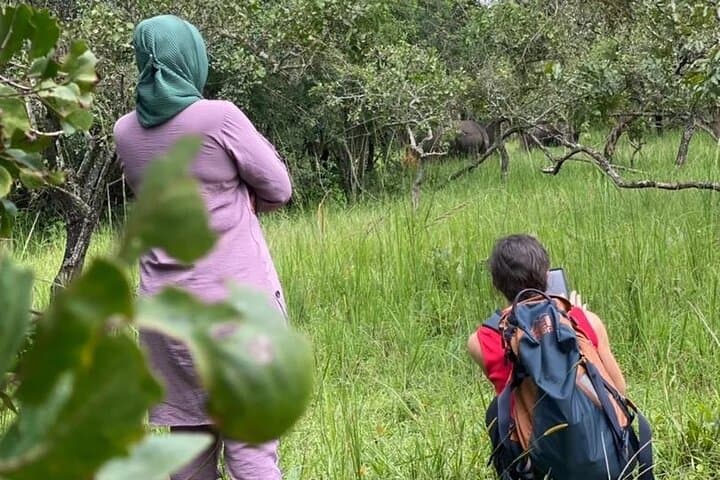
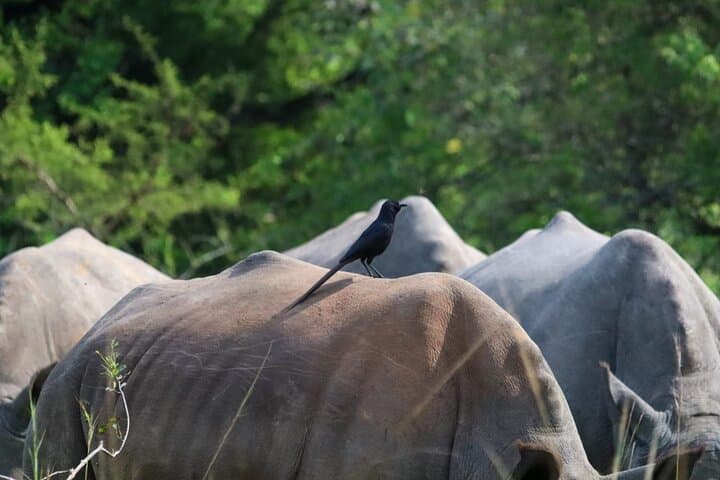
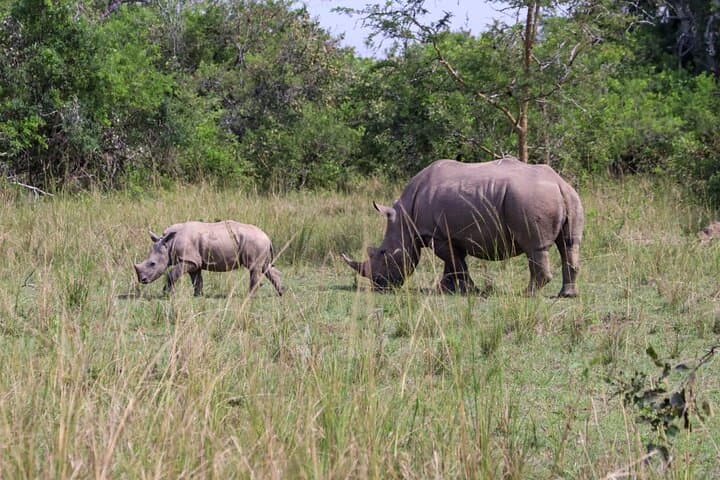
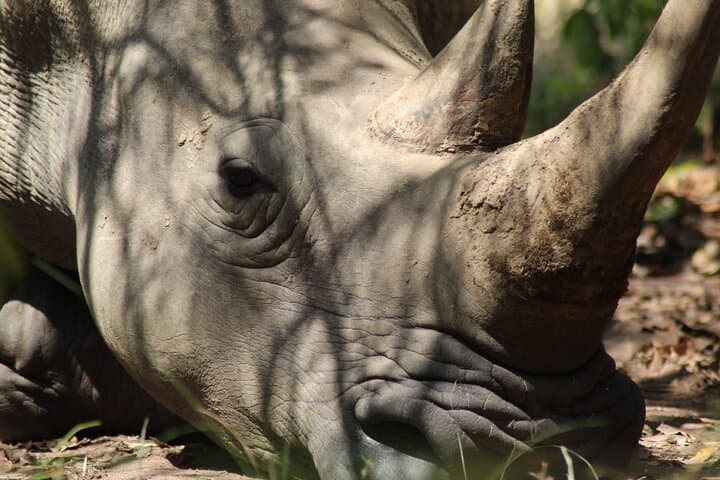
Dawn on the Kampala–Gulu highway is a slow, sharpening light; the bus hums north and the landscape opens from suburbs into broad, sun-bleached grassland. By midmorning the ranger briefing at Ziwa Rhino Sanctuary has everyone quiet—maps, rules, and the rhythm of a walking safari set the tone. The walk itself moves deliberately: flat savannah, scrubby woodland and riverine pockets where birds call and the grass parts for the heavy, grey shapes of white rhinos.
Dawn on the Kampala–Gulu highway is a slow, sharpening light; the bus hums north and the landscape opens from suburbs into broad, sun-bleached grassland. By midmorning the ranger briefing at Ziwa Rhino Sanctuary has everyone quiet—maps, rules, and the rhythm of a walking safari set the tone. The walk itself moves deliberately: flat savannah, scrubby woodland and riverine pockets where birds call and the grass parts for the heavy, grey shapes of white rhinos.
Ziwa is Uganda’s only site where visitors can trek to see free-roaming rhinos on foot—southern white rhinos reintroduced to the ranch to restore a species lost to the country decades earlier. Geologically this part of Central Uganda is low and largely flat, formed on ancient lake-bed soils with intermittent river channels that feed seasonal wetlands; vegetation swings from short grass to thickets that hide oribi and duiker.
Culturally the sanctuary bridges conservation and community: local guides and rangers explain anti-poaching work and how entrance fees fund habitat management. Expect a 2–3 hour guided walk led by armed, trained rangers, with roughly an hour allocated to view rhinos at a safe distance.
Practicalities: wear sturdy boots and sun protection, carry at least 1.5 liters of water, and be ready for warm mid-day heat and dusty trails. Photography is allowed but follow the ranger’s instructions—quick, sudden moves are the biggest risk. The trip returns to the sanctuary restaurant for lunch before the drive back to Kampala, making this a full, rewarding day for wildlife-focused travelers.