THE ADVENTURE COLLECTIVE® · Independent discovery and booking for outdoor travel

Trek on foot among Uganda’s reintroduced white rhinos on a guided one-day trip from Kampala. Learn about the sanctuary’s conservation work, what to expect on the walk, and practical tips for safety and comfort.
Trek on foot among Uganda’s reintroduced white rhinos on a guided one-day trip from Kampala. Learn about the sanctuary’s conservation work, what to expect on the walk, and practical tips for safety and comfort.
You step off the 4x4 and the air opens into grassland and riverine pockets; the scrub seems to watch you back. Rangers move with a calm purpose, radios low, boots finding soft earth as you follow a narrow line toward a thunderous, steady bulk — a rhino that has lived its wild life beyond zoo bars. For up to an hour you observe at a respectful distance under ranger direction, the animals grazing, scratching, and shifting the landscape with heavy feet.
Verified experiences and guided adventures in the surrounding area.
Operated by Peak Cruise Safaris · Nakasongola, Nakasongola District
You step off the 4x4 and the air opens into grassland and riverine pockets; the scrub seems to watch you back. Rangers move with a calm purpose, radios low, boots finding soft earth as you follow a narrow line toward a thunderous, steady bulk — a rhino that has lived its wild life beyond zoo bars. For up to an hour you observe at a respectful distance under ranger direction, the animals grazing, scratching, and shifting the landscape with heavy feet.
Ziwa is Uganda’s only place where guided, on-foot rhino trekking is permitted; the ranch-style sanctuary began reintroductions in the mid-2000s to restore white rhino to Ugandan ranges. Geologically the area sits on gentle savannah plateaus with seasonal rivers that shape grassy floodplains and pockets of fig and acacia woodland. Culturally, the sanctuary connects conservation jobs to nearby communities through guiding and land management.
Expect 7–9 hours total for a day trip from Kampala, including drive time; the walking portion is typically short but variable depending on where rhinos are located. Terrain is uneven grassland with wet patches after rains; boots with grip are essential, and the rangers set strict safety rules — follow them. Bring sun protection, insect repellent, water, light layers, and binoculars; keep camera flashes off and voices low.
Beyond rhinos you may spot kobs, bushbuck, waterbuck and a scatter of birdlife. The trek is as much about careful observation as it is about distance: move deliberately, listen, and the sanctuary will reveal itself in tracks, dung, and the slow shuffle of a rhinoceros reshaping the horizon.
moderate.
7–9 hours.
Suitable for people who can walk 2–4 km on uneven ground and tolerate a full day including vehicle transfers
Rangers typically allow up to one hour at the rhino site to minimize disturbance and ensure safety.
No; guided treks are suitable for most fitness levels, but you should be able to walk over uneven ground for short distances.
Children may join but must follow safety rules and sit on laps for transport if infants; check operator age policies when booking.
Leopards are rare but possible; sightings are uncommon compared to antelope and waterbuck.
Ziwa Rhino Sanctuary was established in the 2000s to reintroduce white rhinos to Uganda after local extirpation; it operates as a semi-wild ranch focused on breeding and protection.
The sanctuary combines tourism fees and community employment to fund anti-poaching patrols and habitat management; visitors are required to follow strict low-impact rules to minimize disturbance.
Peak Cruise Safaris operates guided outdoor trips and adventures with an emphasis on safety, stewardship, and memorable experiences.
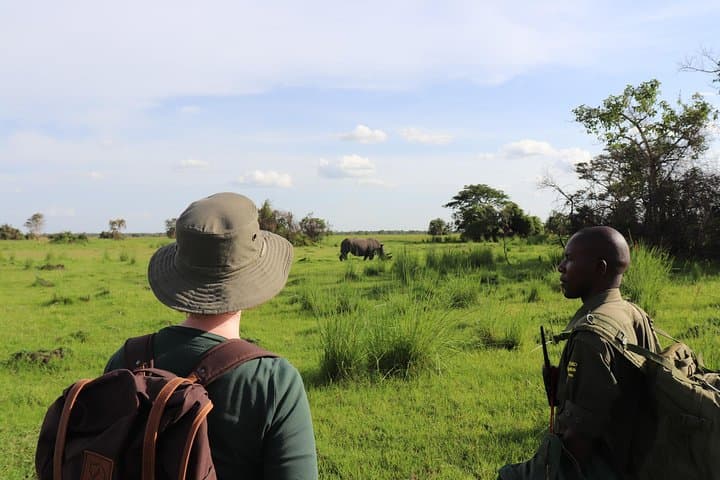
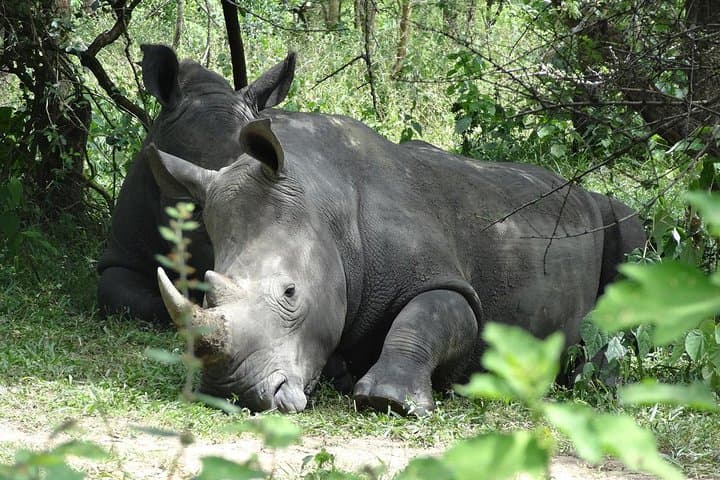
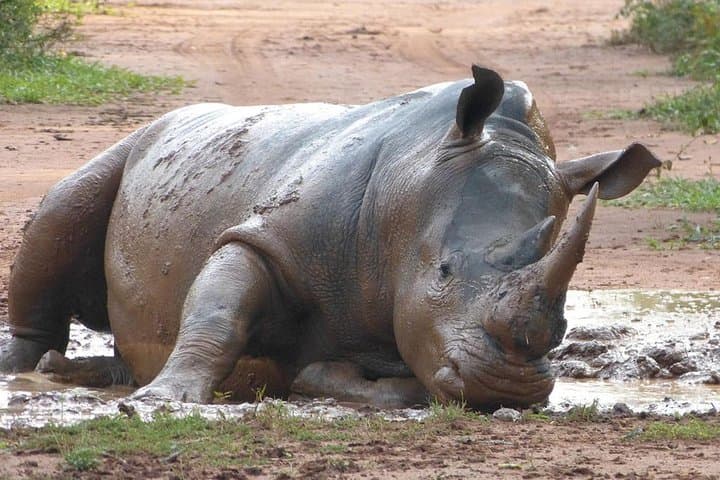
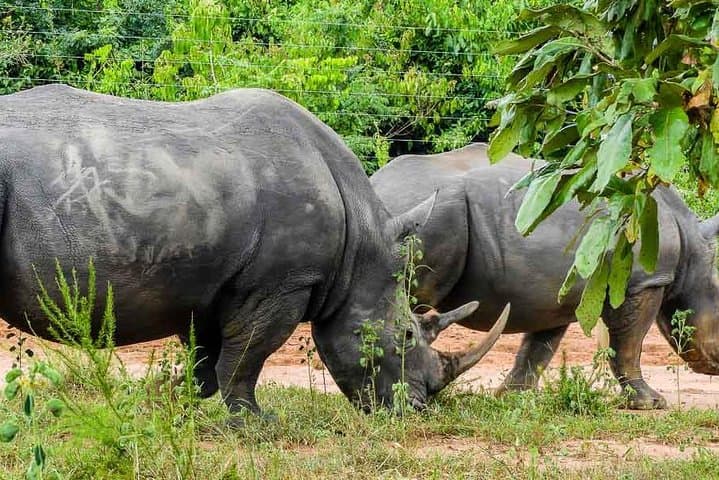
You step off the 4x4 and the air opens into grassland and riverine pockets; the scrub seems to watch you back. Rangers move with a calm purpose, radios low, boots finding soft earth as you follow a narrow line toward a thunderous, steady bulk — a rhino that has lived its wild life beyond zoo bars. For up to an hour you observe at a respectful distance under ranger direction, the animals grazing, scratching, and shifting the landscape with heavy feet.
You step off the 4x4 and the air opens into grassland and riverine pockets; the scrub seems to watch you back. Rangers move with a calm purpose, radios low, boots finding soft earth as you follow a narrow line toward a thunderous, steady bulk — a rhino that has lived its wild life beyond zoo bars. For up to an hour you observe at a respectful distance under ranger direction, the animals grazing, scratching, and shifting the landscape with heavy feet.
Ziwa is Uganda’s only place where guided, on-foot rhino trekking is permitted; the ranch-style sanctuary began reintroductions in the mid-2000s to restore white rhino to Ugandan ranges. Geologically the area sits on gentle savannah plateaus with seasonal rivers that shape grassy floodplains and pockets of fig and acacia woodland. Culturally, the sanctuary connects conservation jobs to nearby communities through guiding and land management.
Expect 7–9 hours total for a day trip from Kampala, including drive time; the walking portion is typically short but variable depending on where rhinos are located. Terrain is uneven grassland with wet patches after rains; boots with grip are essential, and the rangers set strict safety rules — follow them. Bring sun protection, insect repellent, water, light layers, and binoculars; keep camera flashes off and voices low.
Beyond rhinos you may spot kobs, bushbuck, waterbuck and a scatter of birdlife. The trek is as much about careful observation as it is about distance: move deliberately, listen, and the sanctuary will reveal itself in tracks, dung, and the slow shuffle of a rhinoceros reshaping the horizon.