THE ADVENTURE COLLECTIVE® · Independent discovery and booking for outdoor travel

Step off a zelkova treehouse into a 15-station aerial course that threads suspension bridges, single-logs and a final 100m zipline through conifer canopy. This 90-minute Forest Adventure near Tottori blends practical safety, local ecology, and a brisk hit of adrenaline.
Step off a zelkova treehouse into a 15-station aerial course that threads suspension bridges, single-logs and a final 100m zipline through conifer canopy. This 90-minute Forest Adventure near Tottori blends practical safety, local ecology, and a brisk hit of adrenaline.
You clip in at the base of a huge zelkova tree and the forest pulls you upward. The first platform creaks a polite welcome as instructors fit your harness and double-check carabiners. From there you step off into a green cathedral — laced suspension bridges, wobbling single-logs and wooden minecarts hung between trunks 5–6 meters above the leaf litter. Birdsong threads through the conifers; a breeze occasionally lifts fallen needles like small applause.
Verified experiences and guided adventures in the surrounding area.
Operated by 森の国 · Tottori, Tottori Prefecture
You clip in at the base of a huge zelkova tree and the forest pulls you upward. The first platform creaks a polite welcome as instructors fit your harness and double-check carabiners. From there you step off into a green cathedral — laced suspension bridges, wobbling single-logs and wooden minecarts hung between trunks 5–6 meters above the leaf litter. Birdsong threads through the conifers; a breeze occasionally lifts fallen needles like small applause.
This is not a fabricated theme-park route but an athletic forest rooted in the San’in region’s quieter landscapes. Tottori Prefecture, better known for its rippling sand dunes, also carries pockets of volcanic soils and dense mountain forest fed by Daisen’s long geological history. The zelkova — a broad, strong tree valued in Japan for temple joinery and public squares — is an apt starting point: both structural and symbolic, it anchors the course in local timber traditions.
Culture here moves at two paces: the deliberate rituals of onsen and seasonal festivals, and the quicker rhythm of outdoor challenge. The course borrows both. Stations are spaced so you take breath between demands: a balance-testing log, then a suspension bridge that sways like a giant hammock. Coaches point out the regional ecology as often as they correct foot placement, linking the physical route to the living canopy above.
Practicalities are straightforward. The advertised run is 90 minutes total, including a short 5-minute walk from the parking/meeting area into the athletic forest and a final zipline of roughly 100 meters through the conifer stand. Staff provide helmet, harness and gloves; participants should arrive in long-sleeved shirts and long trousers that allow free movement. The course includes about 15 sections at 5–6 meters height; a fall-prevention tether is always attached, but the course demands balance and a calm head. It’s not recommended for pregnant travelers or those with cardiovascular concerns.
Booking is mobile-ticket friendly and requires basic info including age, height and weight; cancel at least 24 hours in advance for a full refund. Expect a small group format with up to 20 people and attentive staff who brief you thoroughly on clipping procedures and emergency signals. Bring closed-toe shoes with firm tread, a small water bottle, and a light daypack for a jacket and camera.
For travelers pairing this with other regional highlights, combine the course with a visit to nearby Daisen’s footpaths or an evening dipping into a local onsen — a relaxing contrast to a day spent flying between trees.
moderate.
1.5 hours (90 minutes).
Suitable for most active people who can balance and climb short ladders; not for those with serious heart conditions or pregnancy.
Elements are typically 5–6 meters above the ground, with a final zipline around 100 meters long.
Yes—helmet, harness and gloves are supplied; you should bring clothing that covers arms and legs.
Booking requires age, height and weight; specific limits are confirmed at reservation and during check-in.
The operator may cancel activities for heavy rain or unsafe conditions; check the 24-hour cancellation policy for refunds.
Yes—the course is designed for various skill levels and staff provide instruction, though it requires basic balance and mobility.
Public transport options exist nearby, but you’ll typically meet at the start point; confirm meeting directions on booking confirmation.
The area’s forestry reflects centuries of timber use in San’in; large zelkovas are historically used in community spaces and shrine architecture.
Operators manage courses to minimize tree damage and restrict group sizes; stick to marked trails and leave no trace to protect root systems.
森の国 operates guided outdoor trips and adventures with an emphasis on safety, stewardship, and memorable experiences.
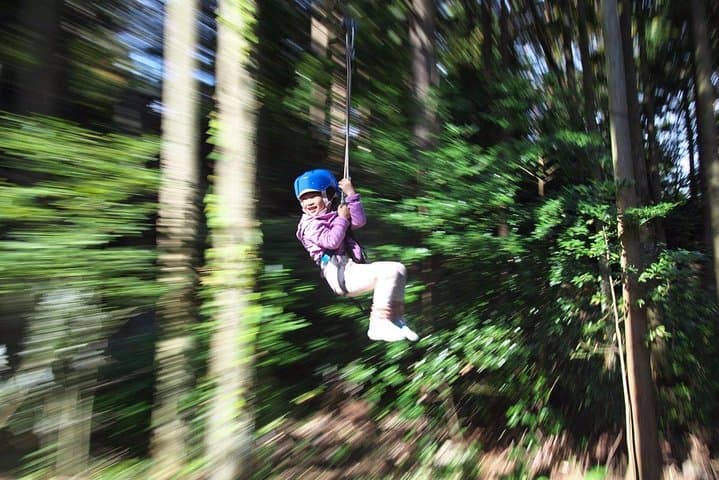
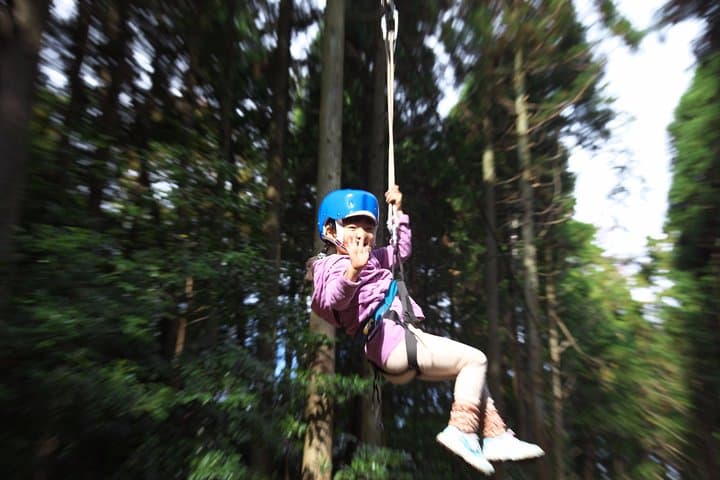
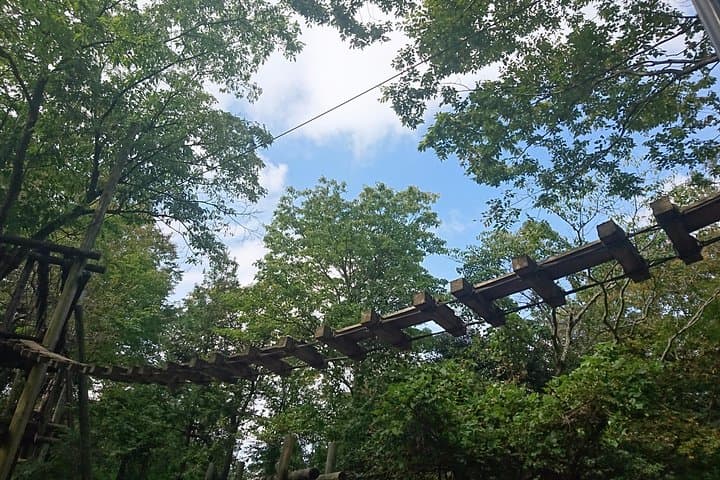
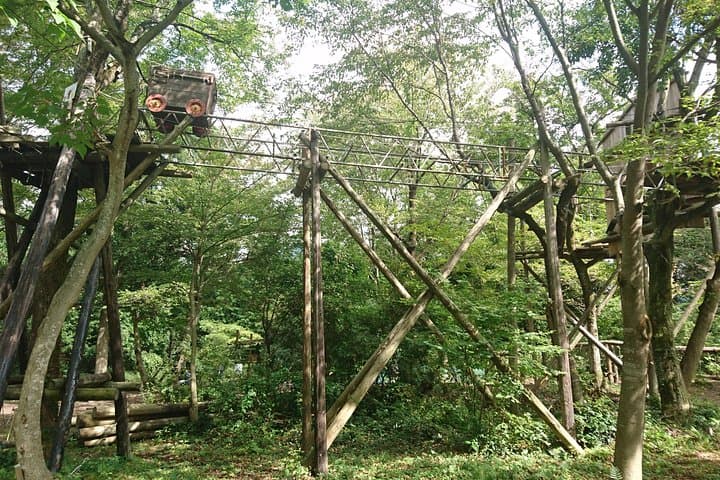
You clip in at the base of a huge zelkova tree and the forest pulls you upward. The first platform creaks a polite welcome as instructors fit your harness and double-check carabiners. From there you step off into a green cathedral — laced suspension bridges, wobbling single-logs and wooden minecarts hung between trunks 5–6 meters above the leaf litter. Birdsong threads through the conifers; a breeze occasionally lifts fallen needles like small applause.
You clip in at the base of a huge zelkova tree and the forest pulls you upward. The first platform creaks a polite welcome as instructors fit your harness and double-check carabiners. From there you step off into a green cathedral — laced suspension bridges, wobbling single-logs and wooden minecarts hung between trunks 5–6 meters above the leaf litter. Birdsong threads through the conifers; a breeze occasionally lifts fallen needles like small applause.
This is not a fabricated theme-park route but an athletic forest rooted in the San’in region’s quieter landscapes. Tottori Prefecture, better known for its rippling sand dunes, also carries pockets of volcanic soils and dense mountain forest fed by Daisen’s long geological history. The zelkova — a broad, strong tree valued in Japan for temple joinery and public squares — is an apt starting point: both structural and symbolic, it anchors the course in local timber traditions.
Culture here moves at two paces: the deliberate rituals of onsen and seasonal festivals, and the quicker rhythm of outdoor challenge. The course borrows both. Stations are spaced so you take breath between demands: a balance-testing log, then a suspension bridge that sways like a giant hammock. Coaches point out the regional ecology as often as they correct foot placement, linking the physical route to the living canopy above.
Practicalities are straightforward. The advertised run is 90 minutes total, including a short 5-minute walk from the parking/meeting area into the athletic forest and a final zipline of roughly 100 meters through the conifer stand. Staff provide helmet, harness and gloves; participants should arrive in long-sleeved shirts and long trousers that allow free movement. The course includes about 15 sections at 5–6 meters height; a fall-prevention tether is always attached, but the course demands balance and a calm head. It’s not recommended for pregnant travelers or those with cardiovascular concerns.
Booking is mobile-ticket friendly and requires basic info including age, height and weight; cancel at least 24 hours in advance for a full refund. Expect a small group format with up to 20 people and attentive staff who brief you thoroughly on clipping procedures and emergency signals. Bring closed-toe shoes with firm tread, a small water bottle, and a light daypack for a jacket and camera.
For travelers pairing this with other regional highlights, combine the course with a visit to nearby Daisen’s footpaths or an evening dipping into a local onsen — a relaxing contrast to a day spent flying between trees.