THE ADVENTURE COLLECTIVE® · Independent discovery and booking for outdoor travel

Fly across Tahenaout Valley on a series of ziplines, then sit down for a home-cooked Berber lunch. This half-day outing pairs adrenalized riding with local culture and clear mountain views.
Fly across Tahenaout Valley on a series of ziplines, then sit down for a home-cooked Berber lunch. This half-day outing pairs adrenalized riding with local culture and clear mountain views.
The morning opens with wind against the cliff faces of the Tahenaout valley as a minivan threads down from Marrakech and climbs into the lower High Atlas. Guides gather the group at a small clearing where metal platforms peg into limestone bluffs and the valley’s terraces fall away beneath you.
Verified experiences and guided adventures in the surrounding area.
Operated by Morocco Luxe Tours · Tahenaout, Marrakech-Safi
The morning opens with wind against the cliff faces of the Tahenaout valley as a minivan threads down from Marrakech and climbs into the lower High Atlas. Guides gather the group at a small clearing where metal platforms peg into limestone bluffs and the valley’s terraces fall away beneath you.
This stretch of the High Atlas carries layered geology—Mesozoic limestones cut by ancient river channels—shaped by centuries of human terraces and Berber stonework. The local Berber communities here still practice small-scale agriculture and hospitality; lunch in a family house offers tagine and mint tea and a quick glimpse of daily life at the mountain’s edge.
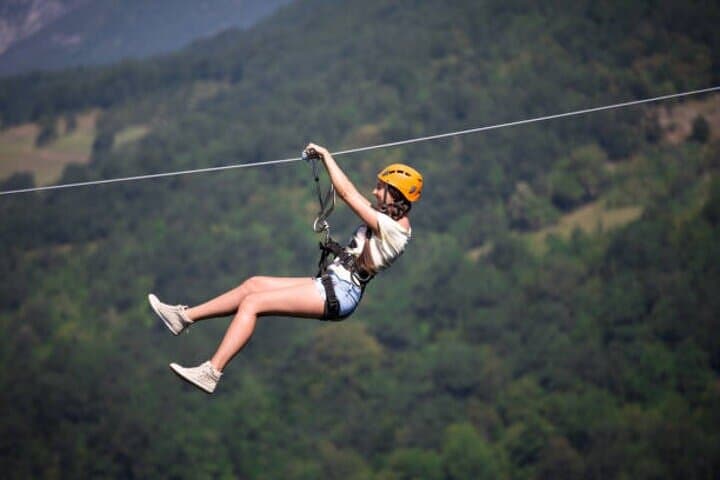
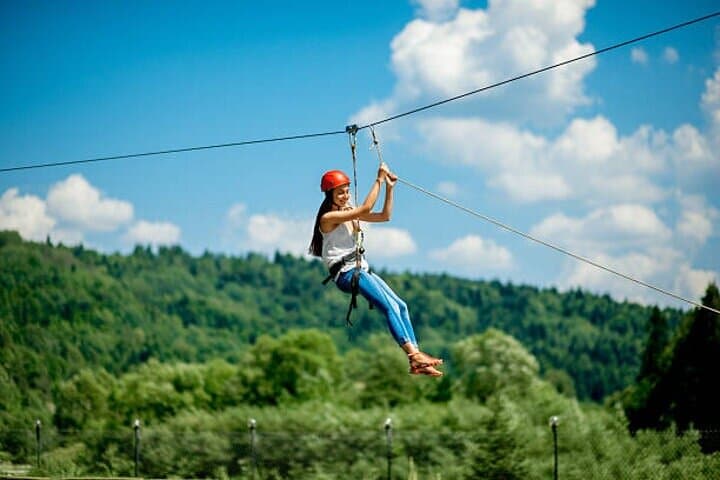
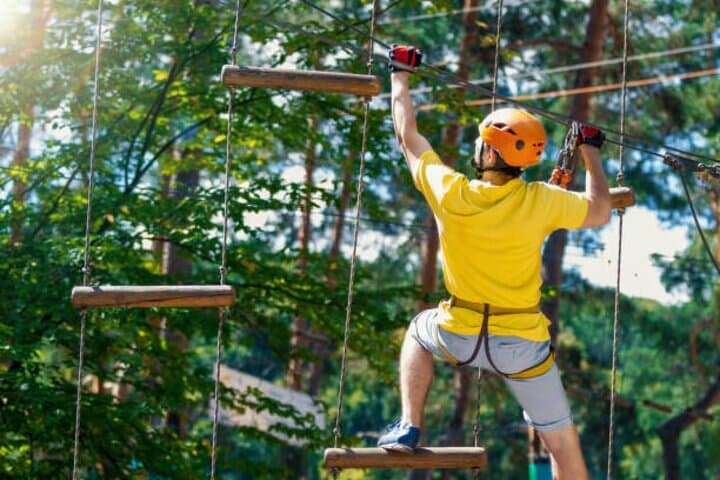
On the course, participants move between platforms via a series of ziplines and short rock scrambles. Expect uneven, rocky approaches and brief elevation changes (often under 100 m between launch points). The installation caters to a mix of beginners and experienced riders: staff provide safety gear, a mandatory briefing and assisted hookups before each run.
Practical notes: the full experience is roughly five hours including pickup from Marrakech (about 45–60 minutes each way). Wear sturdy closed-toe shoes, sun protection and a light layer for changing mountain wind. Hydrate before you go; bottled water is provided, but bring a refillable bottle to cut waste.
Safety is enforced—listen closely to guides, follow weight guidelines and keep camera straps secured. The payoff is immediate: suspended over a valley rim, the mountains feel alive and impatient, daring you forward on each line.
easy.
5 hours.
Suitable for people in light to moderate physical condition who can walk short uneven sections and follow instructions
No. The course accommodates beginners with guided hookups and short practice runs; basic mobility to walk between platforms is helpful.
Operators commonly set minimum ages and weight/maximum weight limits for safety—check booking details and disclose ages and weights when reserving.
Yes. The trip includes air-conditioned pickup and drop-off from central Marrakech points; travel time is typically 45–60 minutes each way.
Inclusions usually cover safety equipment, bottled water, snacks, and an optional Berber family lunch with coffee or tea; confirm if any dietary needs must be arranged in advance.
The High Atlas is home to Amazigh (Berber) communities whose agricultural terraces and stone architecture trace centuries of mountain adaptation and trade routes south of Marrakech.
The region’s dry soils and limited water make low-impact practices important—stay on trails, avoid single-use plastics, and support local guides to keep tourism benefits local.
Morocco Luxe Tours operates guided outdoor trips and adventures with an emphasis on safety, stewardship, and memorable experiences.

The morning opens with wind against the cliff faces of the Tahenaout valley as a minivan threads down from Marrakech and climbs into the lower High Atlas. Guides gather the group at a small clearing where metal platforms peg into limestone bluffs and the valley’s terraces fall away beneath you.
The morning opens with wind against the cliff faces of the Tahenaout valley as a minivan threads down from Marrakech and climbs into the lower High Atlas. Guides gather the group at a small clearing where metal platforms peg into limestone bluffs and the valley’s terraces fall away beneath you.
This stretch of the High Atlas carries layered geology—Mesozoic limestones cut by ancient river channels—shaped by centuries of human terraces and Berber stonework. The local Berber communities here still practice small-scale agriculture and hospitality; lunch in a family house offers tagine and mint tea and a quick glimpse of daily life at the mountain’s edge.
On the course, participants move between platforms via a series of ziplines and short rock scrambles. Expect uneven, rocky approaches and brief elevation changes (often under 100 m between launch points). The installation caters to a mix of beginners and experienced riders: staff provide safety gear, a mandatory briefing and assisted hookups before each run.
Practical notes: the full experience is roughly five hours including pickup from Marrakech (about 45–60 minutes each way). Wear sturdy closed-toe shoes, sun protection and a light layer for changing mountain wind. Hydrate before you go; bottled water is provided, but bring a refillable bottle to cut waste.
Safety is enforced—listen closely to guides, follow weight guidelines and keep camera straps secured. The payoff is immediate: suspended over a valley rim, the mountains feel alive and impatient, daring you forward on each line.