THE ADVENTURE COLLECTIVE® · Independent discovery and booking for outdoor travel

Fly 1.4 kilometers across 10 cables and 12 platforms above the treetops of Soberanía National Park. Zipline Gamboa pairs adrenalized runs with sweeping views of the Panama Canal and Chagres River — ideal for travelers who want both nature and context.
Fly 1.4 kilometers across 10 cables and 12 platforms above the treetops of Soberanía National Park. Zipline Gamboa pairs adrenalized runs with sweeping views of the Panama Canal and Chagres River — ideal for travelers who want both nature and context.
You step off the wooden platform and the canopy takes over — a green roof that hums with insects, birds and the distant pulse of the Chagres River. For the next kilometer and a half the forest rearranges itself beneath your feet: dark trunks become a lattice of shadow, vultures circle like slow question marks over the Canal, and the Panama Canal itself flashes silver through gaps in the leaves. The course at Gamboa threads 1.4 kilometers across 10 cables and 12 platforms, alternating rapid, stomach-lighting runs with calmer lines that let you absorb the scene.
Verified experiences and guided adventures in the surrounding area.
Operated by Gamboa Tours · Gamboa, Panamá Province
You step off the wooden platform and the canopy takes over — a green roof that hums with insects, birds and the distant pulse of the Chagres River. For the next kilometer and a half the forest rearranges itself beneath your feet: dark trunks become a lattice of shadow, vultures circle like slow question marks over the Canal, and the Panama Canal itself flashes silver through gaps in the leaves. The course at Gamboa threads 1.4 kilometers across 10 cables and 12 platforms, alternating rapid, stomach-lighting runs with calmer lines that let you absorb the scene.
The corridor you fly across is part of Soberanía National Park, an area long-protected because it guards the watershed feeding the Canal. Geologically the region is young — uplifted and dissected by rivers — and its soils support dense tropical forest where hardwoods and strangler figs compete for light. Culturally, Gamboa grew up around the Canal: its workers’ housing, a small airstrip and the railway spur tell a 20th-century story of engineering that reshaped global trade and local life.
Operators in Gamboa have leaned into this layered history. Guides point out the same ridgelines that early Canal surveyors used and pause to explain how the Chagres governs both ecosystem and commerce. Birdsong is constant; keel-billed toucans and trogons are often visible, and the guides will call out trees used for traditional crafts.
Practicality steers the experience: expect 2 hours from hotel pickup or check-in through return. The course accepts children over 5; weight caps are 175 lb (77 kg) for women and 250 lb (114 kg) for men. You’ll be fitted with full harnesses and helmets and receive a safety briefing before the first cable. The company provides bottled water, air-conditioned transfer options from Panama City, and standard zipline equipment.
Timing matters: early morning runs are cooler and bird activity is highest; later in the day winds can pick up and operators sometimes pause the course. Dress in closed-toe shoes, breathable clothing and a lightweight long-sleeve layer to fend off insects. If you have back, heart, or pregnancy-related restrictions, this is not the activity for you; guides screen participants on health and weight.
On the ground, leave room for a short nature walk or the small interpretive station; the area is better appreciated slowly after the adrenaline eases. For photographers, the course offers uncluttered, treetop angles on the Canal’s eastern reaches — bring a small chest-mounted camera or secure a wrist-mounted rig; loose gear isn’t allowed.
In two hours you’ll have a fresh perspective: the Canal not just as a shipping lane but as a living landscape that dares you to see it from above.
moderate.
2 hours.
Moderate fitness — able to stand, climb short ladders and handle short hikes between platforms.
Children must be over 5 years old. Maximum participant weight is 175 lbs (77 kg) for women and 250 lbs (114 kg) for men.
Pickup options from Panama City hotels are available; confirm your pickup point at booking and be ready roughly 75 minutes before departure time.
The full activity, including transfers and briefing, is approximately 2 hours; time on the course is shorter within that window.
You’ll be fitted with a full harness and helmet, receive a safety briefing, and be supervised by trained guides throughout the course.
Loose items are usually prohibited on the lines; bring a secured chest or wrist mount or leave gear in the vehicle.
The operator may cancel in bad weather for safety — you can get a full refund if canceled at least 24 hours in advance or when weather forces cancellation.
Gamboa expanded as a Canal-era settlement; its infrastructure and small docks grew to support construction and maintenance of the Panama Canal in the 20th century.
Soberanía National Park protects key watershed and bird habitats; operators emphasize Leave No Trace and limit group sizes to reduce trail and noise impact.
Gamboa Tours operates guided outdoor trips and adventures with an emphasis on safety, stewardship, and memorable experiences.
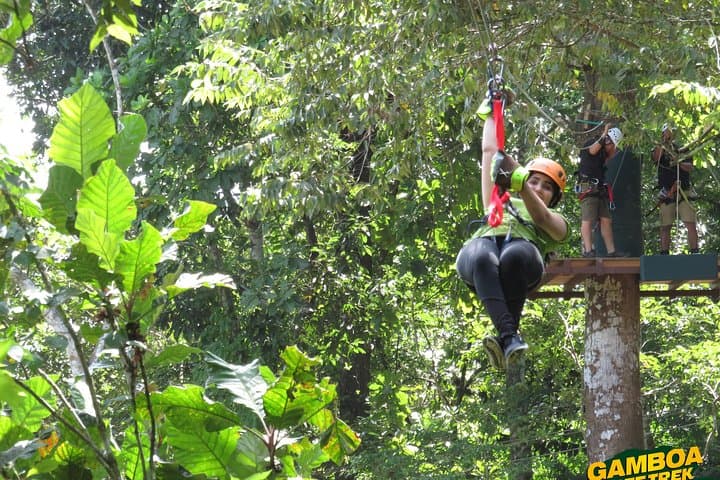
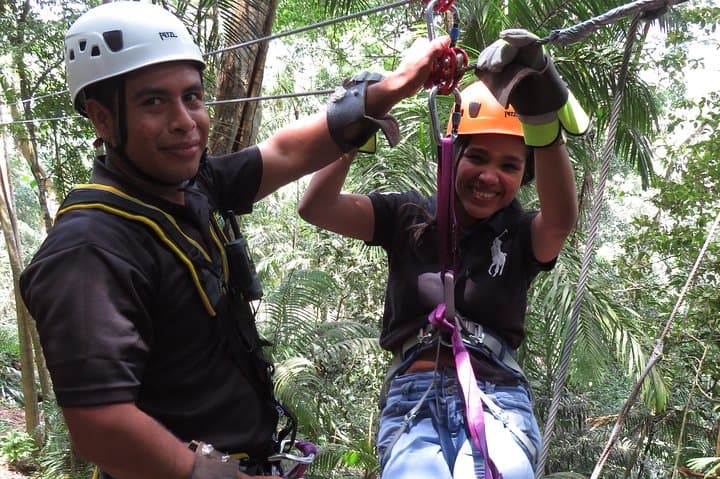
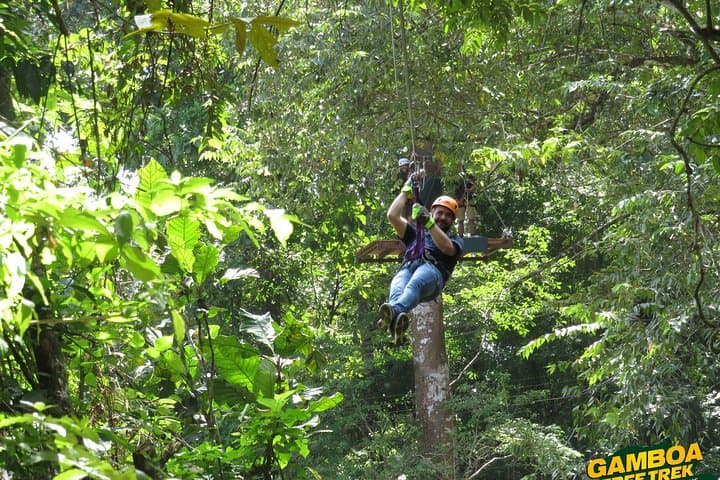
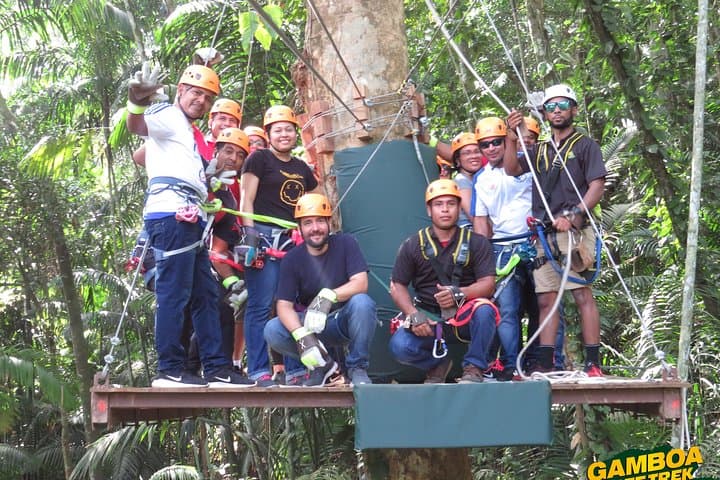
You step off the wooden platform and the canopy takes over — a green roof that hums with insects, birds and the distant pulse of the Chagres River. For the next kilometer and a half the forest rearranges itself beneath your feet: dark trunks become a lattice of shadow, vultures circle like slow question marks over the Canal, and the Panama Canal itself flashes silver through gaps in the leaves. The course at Gamboa threads 1.4 kilometers across 10 cables and 12 platforms, alternating rapid, stomach-lighting runs with calmer lines that let you absorb the scene.
You step off the wooden platform and the canopy takes over — a green roof that hums with insects, birds and the distant pulse of the Chagres River. For the next kilometer and a half the forest rearranges itself beneath your feet: dark trunks become a lattice of shadow, vultures circle like slow question marks over the Canal, and the Panama Canal itself flashes silver through gaps in the leaves. The course at Gamboa threads 1.4 kilometers across 10 cables and 12 platforms, alternating rapid, stomach-lighting runs with calmer lines that let you absorb the scene.
The corridor you fly across is part of Soberanía National Park, an area long-protected because it guards the watershed feeding the Canal. Geologically the region is young — uplifted and dissected by rivers — and its soils support dense tropical forest where hardwoods and strangler figs compete for light. Culturally, Gamboa grew up around the Canal: its workers’ housing, a small airstrip and the railway spur tell a 20th-century story of engineering that reshaped global trade and local life.
Operators in Gamboa have leaned into this layered history. Guides point out the same ridgelines that early Canal surveyors used and pause to explain how the Chagres governs both ecosystem and commerce. Birdsong is constant; keel-billed toucans and trogons are often visible, and the guides will call out trees used for traditional crafts.
Practicality steers the experience: expect 2 hours from hotel pickup or check-in through return. The course accepts children over 5; weight caps are 175 lb (77 kg) for women and 250 lb (114 kg) for men. You’ll be fitted with full harnesses and helmets and receive a safety briefing before the first cable. The company provides bottled water, air-conditioned transfer options from Panama City, and standard zipline equipment.
Timing matters: early morning runs are cooler and bird activity is highest; later in the day winds can pick up and operators sometimes pause the course. Dress in closed-toe shoes, breathable clothing and a lightweight long-sleeve layer to fend off insects. If you have back, heart, or pregnancy-related restrictions, this is not the activity for you; guides screen participants on health and weight.
On the ground, leave room for a short nature walk or the small interpretive station; the area is better appreciated slowly after the adrenaline eases. For photographers, the course offers uncluttered, treetop angles on the Canal’s eastern reaches — bring a small chest-mounted camera or secure a wrist-mounted rig; loose gear isn’t allowed.
In two hours you’ll have a fresh perspective: the Canal not just as a shipping lane but as a living landscape that dares you to see it from above.