THE ADVENTURE COLLECTIVE® · Independent discovery and booking for outdoor travel

Strap in at Carleton Lodge, step off a timber platform, and cross the creek-carved divide between Whistler and Blackcomb on ziplines up to 2,400 feet long. This guided eco-focused tour blends speed with mountain interpretation and runs year-round.
Strap in at Carleton Lodge, step off a timber platform, and cross the creek-carved divide between Whistler and Blackcomb on ziplines up to 2,400 feet long. This guided eco-focused tour blends speed with mountain interpretation and runs year-round.
A cold gust at the upper station cuts through the harness straps as the guide clips you in; below, a ribbon of white-water creek pins the valley between Whistler and Blackcomb like a fast-moving silver thread. You step off a timber landing and the world tilts—trees pull away, mountain air presses at your face, and for a heartbeat you are pulled across the gap, weightless, the line humming under your hands.
Verified experiences and guided adventures in the surrounding area.
Operated by Ziptrek Ecotours · Whistler, British Columbia
A cold gust at the upper station cuts through the harness straps as the guide clips you in; below, a ribbon of white-water creek pins the valley between Whistler and Blackcomb like a fast-moving silver thread. You step off a timber landing and the world tilts—trees pull away, mountain air presses at your face, and for a heartbeat you are pulled across the gap, weightless, the line humming under your hands.
Ziptrek's Whistler routes thread across decades of alpine recreation and the steep, glaciated flanks that define the Coast Mountains. The ziplines sweep from 600 to 2,400 feet, crossing ravines blasted by meltwater during spring runoff and grazing old-growth stands where western hemlock and mountain hemlock have stood for generations. Guides double as interpreters; stops include short talks on avalanche paths, alpine ecology, and how the local Squamish and Lil'wat Nations read the land long before gondolas and condos.
Geologically, these mountains are young — carved by Pleistocene glaciers that left steep cirques and hanging valleys. The creek below dares you with its fury in spring and slows to a reflective ribbon in late summer. Birdsong changes with altitude: robins and thrushes in the village give way to raven calls and the sharp, mechanical whistle of Clark's nutcrackers higher up.
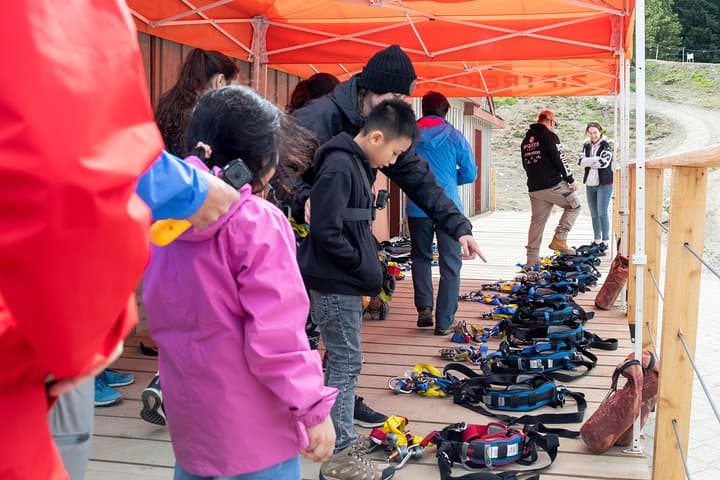
Practically, the tour is designed for accessibility and flow. Meet at the Carleton Lodge in Whistler Village, complete a digital waiver ahead of time, and expect a 15-minute pre-check-in. Tours run year-round; in winter you’ll dress like a skier (think layers and a good pair of gloves), in summer T-shirts and secure shoes suffice. Safety briefings are thorough and guides manage all braking and tethering, so physical exertion is low but attention to instruction is essential.
Photographers should bring a small camera or phone on a wrist tether and plan for wide-angle shots at the platforms where vistas open to valley views. If you’re chasing speed, the Eagle Tour hits up to 80 kph; the Bear Tour is slightly slower but offers longer interpretive stops.
Booking tips: seats sell out in high season—early mornings reduce crowding and often deliver cleaner air and crisper light. Expect 2–3 hours total, including transport to the start point. Weight minimums vary by tour section (65–75 lbs) and there’s an upper limit (275 lbs). The operation emphasizes sustainability—guides discuss local conservation efforts and routes avoid sensitive alpine flora.
At its best, this is not just a rush of speed but a condensed mountain primer—an aerial classroom that leaves you grinning, grounded, and a little smarter about the peaks you just skimmed.
easy.
2–3 hours.
Minimal fitness required—participants should be able to stand, climb short stairs and follow safety instructions.
Minimum ages vary by tour segment (Bear Tour minimum ~6 years for 65 lbs; Eagle Tour minimum ~75 lbs); maximum weight is 275 lbs—check your selected tour for specifics.
Yes—digital waivers via Smartwaiver are required before check-in; participants under 19 need a parent or guardian to sign.
Dress in layers appropriate to mountain weather and wear closed-toe secure shoes—no sandals, Crocs, or slip-ons allowed.
This tour is not recommended for travelers with significant back or cardiovascular conditions—consult your physician before booking.
Small cameras and phones are allowed if tethered; guides may restrict handheld use on certain high-speed lines for safety.
If cancelled due to poor weather you’ll be offered an alternative date or a full refund; cancel at least 24 hours for a full refund on your booking.
The Whistler area has long been a travel corridor for the Squamish and Lil'wat Nations; modern ski tourism reshaped the valley after the 1960s development of ski lifts and lodges.
Operators emphasize low-impact practices—routes avoid sensitive alpine meadows, and guides discuss local conservation programs to reduce human-wildlife conflicts.
Ziptrek Ecotours operates guided outdoor trips and adventures with an emphasis on safety, stewardship, and memorable experiences.
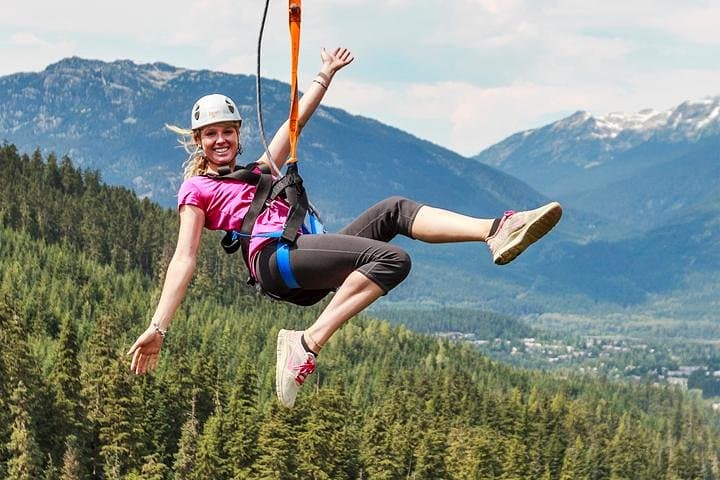
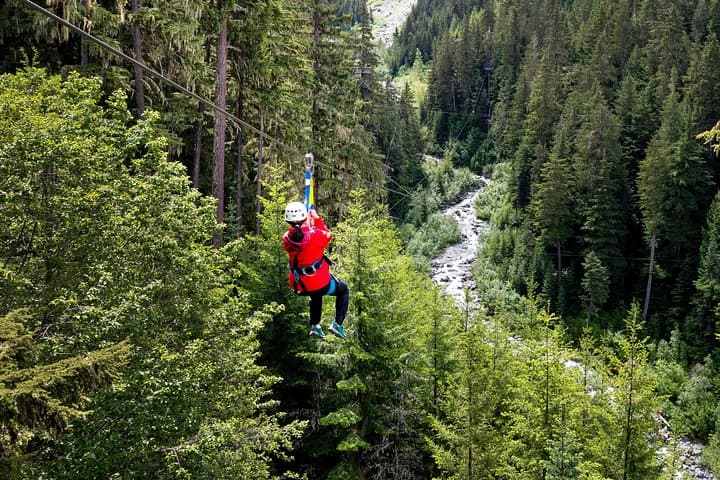
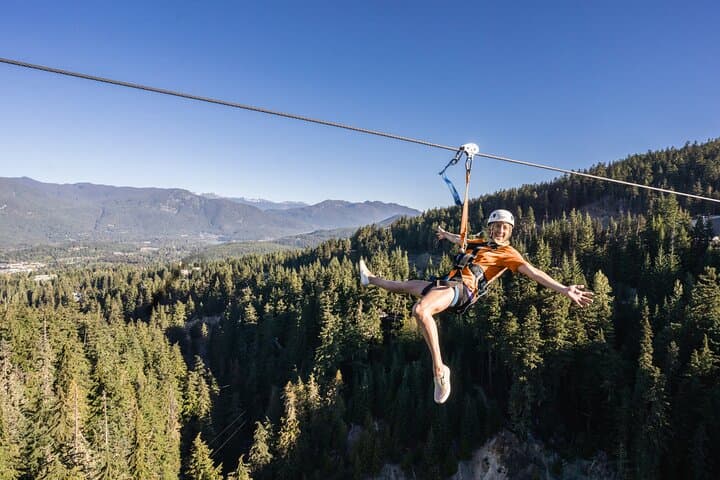
A cold gust at the upper station cuts through the harness straps as the guide clips you in; below, a ribbon of white-water creek pins the valley between Whistler and Blackcomb like a fast-moving silver thread. You step off a timber landing and the world tilts—trees pull away, mountain air presses at your face, and for a heartbeat you are pulled across the gap, weightless, the line humming under your hands.
A cold gust at the upper station cuts through the harness straps as the guide clips you in; below, a ribbon of white-water creek pins the valley between Whistler and Blackcomb like a fast-moving silver thread. You step off a timber landing and the world tilts—trees pull away, mountain air presses at your face, and for a heartbeat you are pulled across the gap, weightless, the line humming under your hands.
Ziptrek's Whistler routes thread across decades of alpine recreation and the steep, glaciated flanks that define the Coast Mountains. The ziplines sweep from 600 to 2,400 feet, crossing ravines blasted by meltwater during spring runoff and grazing old-growth stands where western hemlock and mountain hemlock have stood for generations. Guides double as interpreters; stops include short talks on avalanche paths, alpine ecology, and how the local Squamish and Lil'wat Nations read the land long before gondolas and condos.
Geologically, these mountains are young — carved by Pleistocene glaciers that left steep cirques and hanging valleys. The creek below dares you with its fury in spring and slows to a reflective ribbon in late summer. Birdsong changes with altitude: robins and thrushes in the village give way to raven calls and the sharp, mechanical whistle of Clark's nutcrackers higher up.
Practically, the tour is designed for accessibility and flow. Meet at the Carleton Lodge in Whistler Village, complete a digital waiver ahead of time, and expect a 15-minute pre-check-in. Tours run year-round; in winter you’ll dress like a skier (think layers and a good pair of gloves), in summer T-shirts and secure shoes suffice. Safety briefings are thorough and guides manage all braking and tethering, so physical exertion is low but attention to instruction is essential.
Photographers should bring a small camera or phone on a wrist tether and plan for wide-angle shots at the platforms where vistas open to valley views. If you’re chasing speed, the Eagle Tour hits up to 80 kph; the Bear Tour is slightly slower but offers longer interpretive stops.
Booking tips: seats sell out in high season—early mornings reduce crowding and often deliver cleaner air and crisper light. Expect 2–3 hours total, including transport to the start point. Weight minimums vary by tour section (65–75 lbs) and there’s an upper limit (275 lbs). The operation emphasizes sustainability—guides discuss local conservation efforts and routes avoid sensitive alpine flora.
At its best, this is not just a rush of speed but a condensed mountain primer—an aerial classroom that leaves you grinning, grounded, and a little smarter about the peaks you just skimmed.