THE ADVENTURE COLLECTIVE® · Independent discovery and booking for outdoor travel

Launch from forest platforms and fly side-by-side on 12 double cables, including an 800m run—this four-hour zipline from La Romana into Punta Cana’s tropical ridge pairs adrenaline with island perspective. Read on for what to expect, safety limits, and local tips.
Launch from forest platforms and fly side-by-side on 12 double cables, including an 800m run—this four-hour zipline from La Romana into Punta Cana’s tropical ridge pairs adrenaline with island perspective. Read on for what to expect, safety limits, and local tips.
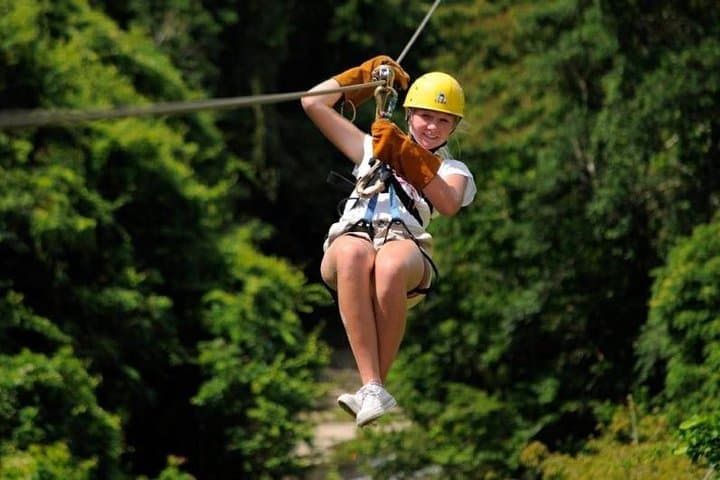
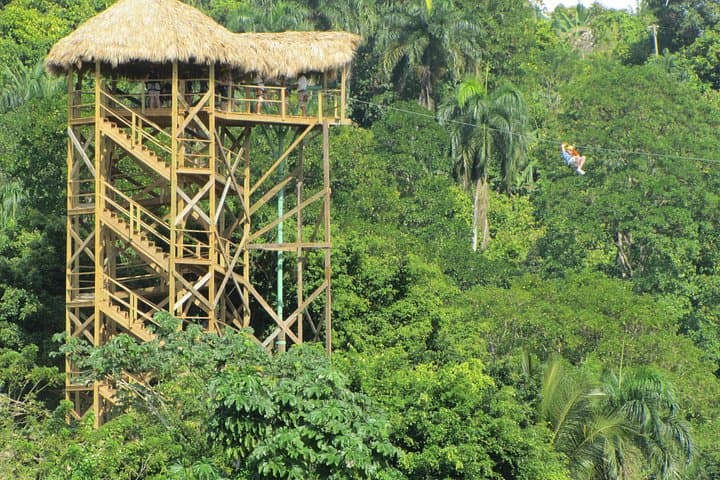
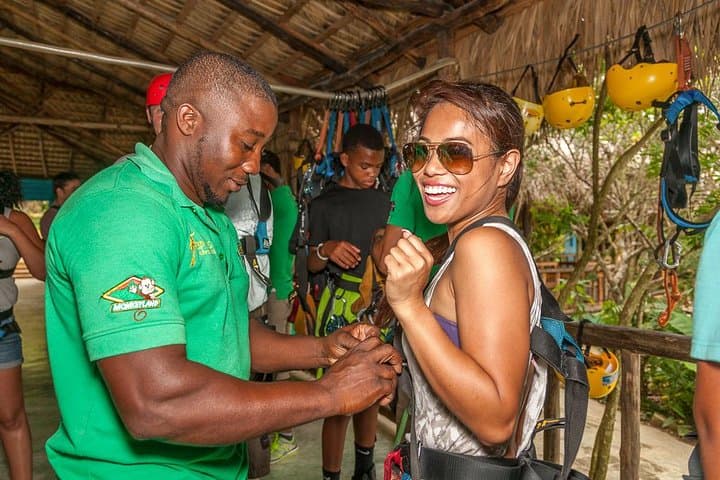
You step off the minibus into heat that smells of cut grass and salt—mango trees on one side, the distant roar of the Caribbean on the other. Guides in helmets move with practiced calm, clipping harnesses and checking double cables that stretch through the palms like polished steel rivers daring you forward. For the next four hours you trade flat roads for platforms perched high in a tropical ridge, launching across 12 side-by-side lines and 18 platforms, including the course’s two longest runs and a single line that stretches roughly 800 meters.
Verified experiences and guided adventures in the surrounding area.
Operated by Runners Adventures · Punta Cana, La Altagracia
You step off the minibus into heat that smells of cut grass and salt—mango trees on one side, the distant roar of the Caribbean on the other. Guides in helmets move with practiced calm, clipping harnesses and checking double cables that stretch through the palms like polished steel rivers daring you forward. For the next four hours you trade flat roads for platforms perched high in a tropical ridge, launching across 12 side-by-side lines and 18 platforms, including the course’s two longest runs and a single line that stretches roughly 800 meters.
This is more than a thrill ride; it’s a short education in the island’s geography. The limestone foundation of eastern Hispaniola pushes up low ridges and karst features, creating the elevation change that makes long ziplines possible. The forest here is secondary tropical dry forest—leafy when it rains, sun-blasted between storms—habitat historically traversed by the Taíno people before Spanish sugar plantations reshaped the coast. Today, local guides who grew up in La Romana and Bayahibe translate that history between harness checks, pointing to native birds and ancient rock outcrops as you cross from platform to platform.
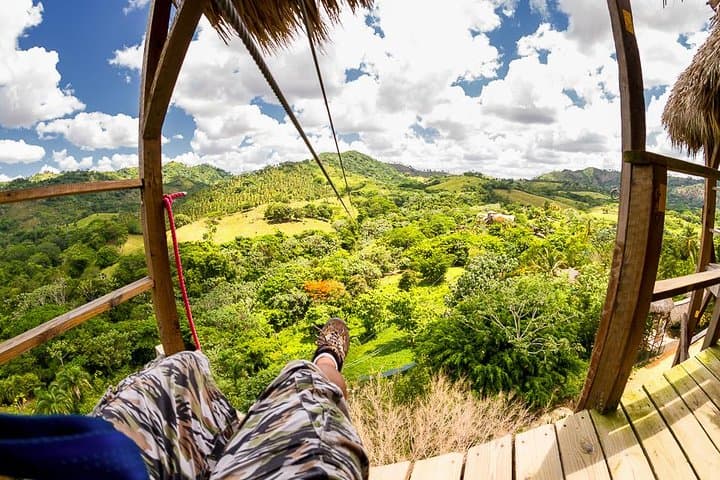
Expect a rhythm: nervous laugh at the first launch, then a quieter focus as speed builds and the canopy opens beneath you. The double cable system used on every line is designed for redundancy; guides clip you to both lines and run brakes at the towers. Still, the experience is kinetic—wind tugs at clothing, the air whistles past your ears, and the view unfolds in strips of green and blue below.
Practicalities matter here. The tour runs about four hours door-to-door with hotel pickup across La Romana and Bayahibe; weight limits are enforced (maximum 285 lbs, waist up to 44 inches). Not recommended for pregnant travelers or those with spinal injuries. Wear closed-toe shoes, bring sunscreen and insect repellent, and hydrate—tropical sun and the adrenaline of repeated launches push your body harder than you’d think. Photos and souvenir services are available on-site but bring small local currency for prints or tips.
If you want less bustle, ask for an early pickup: morning slots cut the heat and often the crowd. For wildlife lovers, keep your camera ready for iguanas sunning on branches and bright parrots calling from canopy depths. Above all, trust the guides and the harness—this course uses industry-standard safety equipment, and briefings are thorough. When you land on the final platform, the island below feels both familiar and new: a hard-earned vantage point over Punta Cana’s coastal plain and a reminder that the fastest way to know a place is sometimes to fly over it.
moderate.
4 hours.
Moderate fitness required: short climbs, standing on platforms, repeated adrenaline bursts; not suitable for those with significant mobility or spinal issues.
The full activity runs about four hours including hotel pickup and return; the zipline portion includes 12 lines across 18 platforms with the longest stretch approximately 800 meters.
Yes—maximum weight 285 lbs and a maximum waist of 44 inches. Staff will measure for safety before you go.
Children may participate but must be accompanied by an adult; the operator enforces age/size requirements for safety—check at booking.
Closed-toe shoes and comfortable activewear; avoid flip-flops and loose skirts. Bring sunglasses and sunscreen; hair should be secured.
No—this tour is not recommended for pregnant travelers or those with spinal injuries due to harness forces and repeated launches.
Yes—souvenir photos and sometimes video are offered on-site for purchase; bring small local currency or card depending on the vendor.
The eastern Dominican landscape carries Taíno place names and later sugar-plantation history; modern tourism hubs like Punta Cana grew rapidly in the 20th century around coastal development.
Operators work within secondary forest corridors—stay on designated platforms, avoid littering, and consider tipping guides who practice low-impact trail access.
Runners Adventures operates guided outdoor trips and adventures with an emphasis on safety, stewardship, and memorable experiences.
You step off the minibus into heat that smells of cut grass and salt—mango trees on one side, the distant roar of the Caribbean on the other. Guides in helmets move with practiced calm, clipping harnesses and checking double cables that stretch through the palms like polished steel rivers daring you forward. For the next four hours you trade flat roads for platforms perched high in a tropical ridge, launching across 12 side-by-side lines and 18 platforms, including the course’s two longest runs and a single line that stretches roughly 800 meters.
You step off the minibus into heat that smells of cut grass and salt—mango trees on one side, the distant roar of the Caribbean on the other. Guides in helmets move with practiced calm, clipping harnesses and checking double cables that stretch through the palms like polished steel rivers daring you forward. For the next four hours you trade flat roads for platforms perched high in a tropical ridge, launching across 12 side-by-side lines and 18 platforms, including the course’s two longest runs and a single line that stretches roughly 800 meters.
This is more than a thrill ride; it’s a short education in the island’s geography. The limestone foundation of eastern Hispaniola pushes up low ridges and karst features, creating the elevation change that makes long ziplines possible. The forest here is secondary tropical dry forest—leafy when it rains, sun-blasted between storms—habitat historically traversed by the Taíno people before Spanish sugar plantations reshaped the coast. Today, local guides who grew up in La Romana and Bayahibe translate that history between harness checks, pointing to native birds and ancient rock outcrops as you cross from platform to platform.
Expect a rhythm: nervous laugh at the first launch, then a quieter focus as speed builds and the canopy opens beneath you. The double cable system used on every line is designed for redundancy; guides clip you to both lines and run brakes at the towers. Still, the experience is kinetic—wind tugs at clothing, the air whistles past your ears, and the view unfolds in strips of green and blue below.
Practicalities matter here. The tour runs about four hours door-to-door with hotel pickup across La Romana and Bayahibe; weight limits are enforced (maximum 285 lbs, waist up to 44 inches). Not recommended for pregnant travelers or those with spinal injuries. Wear closed-toe shoes, bring sunscreen and insect repellent, and hydrate—tropical sun and the adrenaline of repeated launches push your body harder than you’d think. Photos and souvenir services are available on-site but bring small local currency for prints or tips.
If you want less bustle, ask for an early pickup: morning slots cut the heat and often the crowd. For wildlife lovers, keep your camera ready for iguanas sunning on branches and bright parrots calling from canopy depths. Above all, trust the guides and the harness—this course uses industry-standard safety equipment, and briefings are thorough. When you land on the final platform, the island below feels both familiar and new: a hard-earned vantage point over Punta Cana’s coastal plain and a reminder that the fastest way to know a place is sometimes to fly over it.