THE ADVENTURE COLLECTIVE® · Independent discovery and booking for outdoor travel

Descend 180 meters into Colombia’s Salt Cathedral outside Bogotá, where carved chapels, lit crosses, and shimmering salt walls mix geology with devotion. This guided tour pairs a cultural deep-dive with accessible underground walking.
Descend 180 meters into Colombia’s Salt Cathedral outside Bogotá, where carved chapels, lit crosses, and shimmering salt walls mix geology with devotion. This guided tour pairs a cultural deep-dive with accessible underground walking.
A low, cool draft meets travelers as the bus eases into Zipaquirá’s rim: light from the high savanna gives way to the salt mine’s dim corridors, and the Salt Cathedral’s carved cross glows ahead. The first steps are subterranean — descending roughly 180 meters — where salt walls catch the beam of a headlamp and pools reflect carved chapels.
Verified experiences and guided adventures in the surrounding area.
Operated by Panamericana Viajes · Zipaquirá, Cundinamarca
A low, cool draft meets travelers as the bus eases into Zipaquirá’s rim: light from the high savanna gives way to the salt mine’s dim corridors, and the Salt Cathedral’s carved cross glows ahead. The first steps are subterranean — descending roughly 180 meters — where salt walls catch the beam of a headlamp and pools reflect carved chapels.
The space blends geology and faith. The cathedral sits inside a halite (rock salt) deposit formed as an inland sea evaporated millions of years ago. Miners converted the cavern into a place of worship in the 1950s and 1960s; renewed restorations in the 1990s produced the lit cross and domed nave visitors see today. Outside, Zipaquirá retains Chibcha roots and colonial streets where local markets sell salted goods and arepas.
Practical guidance is simple: expect cool, steady temperatures underground (about 14–18°C), staircases and ramps, and paved walkways that are often damp and reflective. The guided visit usually lasts about two hours inside with round-trip transfers from Bogotá included on day tours, making the whole outing roughly four to five hours. Wear grippy shoes, layer for cooler air, and bring a small flashlight or use your phone’s light sparingly to preserve the experience for others. Photography is allowed in most areas but observe signage in sacred spaces. Travelers with mobility concerns should ask about wheelchair assistance in advance; some passages include steps despite ramps in parts. The Salt Cathedral is both a geological curiosity and a functioning spiritual site — a place where miners’ tools and modern lighting shape a quiet, luminous underground journey.
moderate.
4–5 hours.
Moderate fitness recommended: ability to walk stairs and stand for extended periods; not strenuous but involves uneven surfaces.
Zipaquirá is about 45–60 minutes north of Bogotá by car depending on traffic; most tours include round-trip transfers.
There is wheelchair access to parts of the complex, but some sections have steps; advise the operator at booking to arrange assistance.
Photography is generally allowed in the main spaces, but respect signage and avoid flash in designated sacred areas or during services.
Yes—children can join, but strollers may be difficult on steps; infants are typically required to sit on an adult’s lap during transfer.
The cathedral was carved inside an active salt mine with sacred use evolving from miners’ devotion; modern architectural work in the late 20th century created the illuminated nave and cross seen today.
Ongoing preservation balances tourism with structural safety; visitors are asked to avoid littering and follow pathways to limit salt erosion and preserve carvings.
Panamericana Viajes operates guided outdoor trips and adventures with an emphasis on safety, stewardship, and memorable experiences.
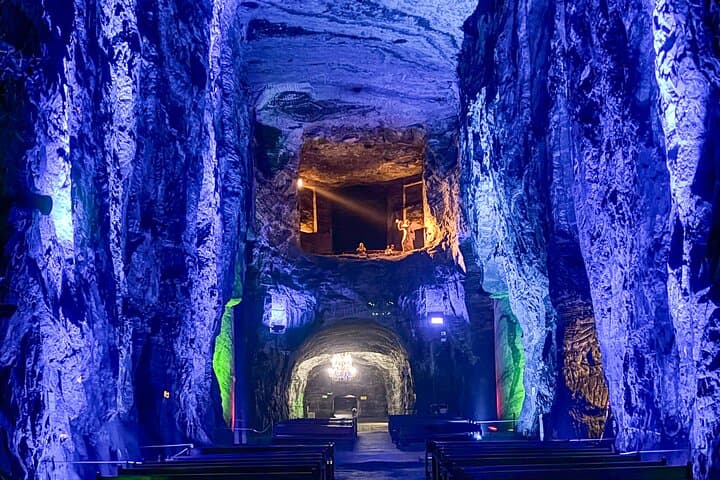
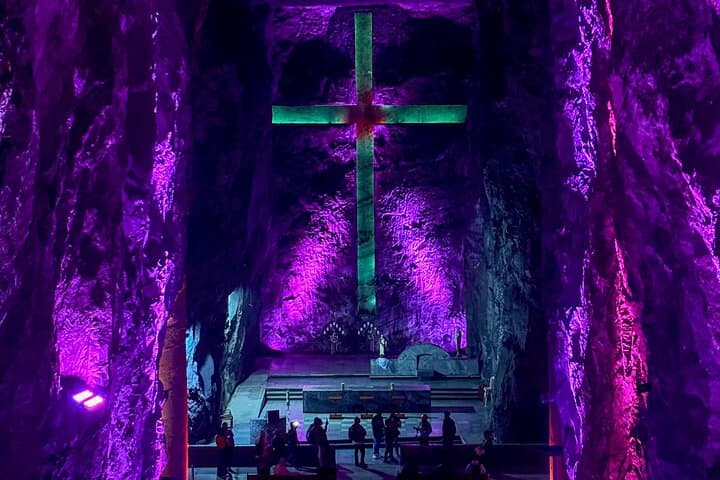
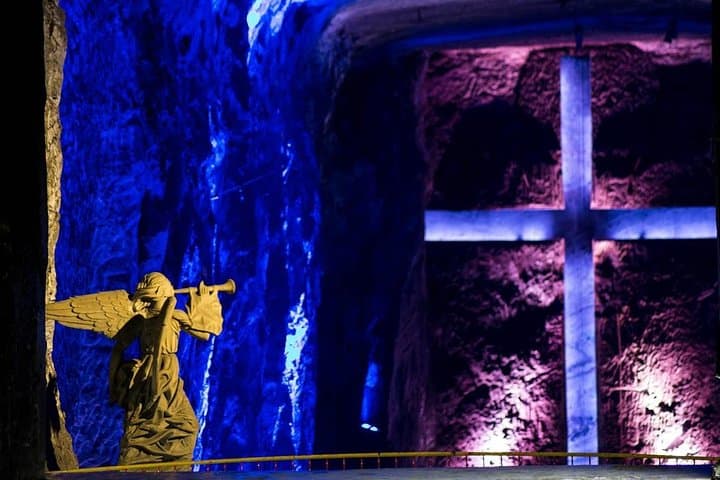
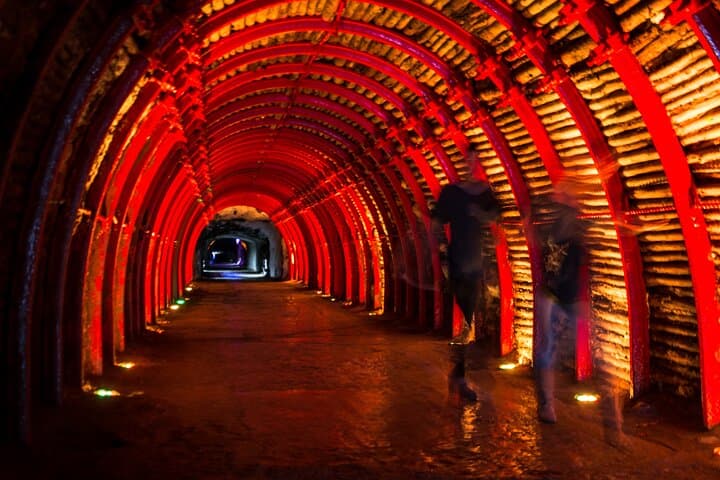
A low, cool draft meets travelers as the bus eases into Zipaquirá’s rim: light from the high savanna gives way to the salt mine’s dim corridors, and the Salt Cathedral’s carved cross glows ahead. The first steps are subterranean — descending roughly 180 meters — where salt walls catch the beam of a headlamp and pools reflect carved chapels.
A low, cool draft meets travelers as the bus eases into Zipaquirá’s rim: light from the high savanna gives way to the salt mine’s dim corridors, and the Salt Cathedral’s carved cross glows ahead. The first steps are subterranean — descending roughly 180 meters — where salt walls catch the beam of a headlamp and pools reflect carved chapels.
The space blends geology and faith. The cathedral sits inside a halite (rock salt) deposit formed as an inland sea evaporated millions of years ago. Miners converted the cavern into a place of worship in the 1950s and 1960s; renewed restorations in the 1990s produced the lit cross and domed nave visitors see today. Outside, Zipaquirá retains Chibcha roots and colonial streets where local markets sell salted goods and arepas.
Practical guidance is simple: expect cool, steady temperatures underground (about 14–18°C), staircases and ramps, and paved walkways that are often damp and reflective. The guided visit usually lasts about two hours inside with round-trip transfers from Bogotá included on day tours, making the whole outing roughly four to five hours. Wear grippy shoes, layer for cooler air, and bring a small flashlight or use your phone’s light sparingly to preserve the experience for others. Photography is allowed in most areas but observe signage in sacred spaces. Travelers with mobility concerns should ask about wheelchair assistance in advance; some passages include steps despite ramps in parts. The Salt Cathedral is both a geological curiosity and a functioning spiritual site — a place where miners’ tools and modern lighting shape a quiet, luminous underground journey.