THE ADVENTURE COLLECTIVE® · Independent discovery and booking for outdoor travel

Skip the lines and descend into Colombia’s Cathedral of Salt on a private tour from Bogotá. This door-to-door experience combines underground architecture, mining history and smooth logistics for a sensory visit to one of the country’s most unusual religious sites.
Skip the lines and descend into Colombia’s Cathedral of Salt on a private tour from Bogotá. This door-to-door experience combines underground architecture, mining history and smooth logistics for a sensory visit to one of the country’s most unusual religious sites.
Descend from the pale light of Bogotá’s morning into a cavern where salt walls hold the echo of pickaxes and prayers. A private transfer delivers you to the entrance carved deep inside a working salt mountain, and a guide leads you through vaulted caverns where colored light pins religious figures against crystalline rock.
Verified experiences and guided adventures in the surrounding area.
Operated by ANVA TOURS · Zipaquirá, Cundinamarca
Descend from the pale light of Bogotá’s morning into a cavern where salt walls hold the echo of pickaxes and prayers. A private transfer delivers you to the entrance carved deep inside a working salt mountain, and a guide leads you through vaulted caverns where colored light pins religious figures against crystalline rock.
Carved roughly 180 meters below the plateau of the Eastern Andes, the Cathedral of Salt occupies galleries hewn from an evaporite deposit formed millions of years ago. Miners shaped the site through the 20th century; the modern pilgrimage complex opened in the 1990s, combining industrial geometry with sacred iconography — the 14‑station Via Crucis, three "ships" of symbolic spaces, and a 16‑meter salt cross in the central nave.
Zipaquirá itself grew around salt extraction and colonial trade; a short stop at Plaza de los Comuneros introduces local snacks and handicrafts before or after the subterranean visit. Inside, expect cool, saline air, reflective pools such as the Water Mirror, and long sightlines that make the carved dome feel both intimate and monumental.
Practical guidance: allow about 5–6 hours from Bogotá door-to-door. The underground temperature sits near 14–16°C (57–61°F); surfaces can be damp but many paths are wheelchair accessible — confirm specifics with the operator. Wear closed-toe shoes with grip, bring a light jacket, and carry your camera (tripods may be restricted). Private transport and priority access minimize lines and let you spend more time in the nave and viewpoints.
easy.
5–6 hours.
Suitable for most fitness levels; involves walking on moderate slopes and some stairs but many areas are accessible
The private transfer covers about 50–60 km and typically takes 1–1.5 hours each way depending on traffic.
Many paths and surfaces have been adapted for accessibility, but some zones have steps; confirm specifics with the operator when booking.
Photography is generally permitted; flash and tripods may be restricted in certain chapels to protect lighting and surfaces.
The tourist cathedral occupies former mining galleries; salt extraction history is part of the interpretive program but the visitor complex is separate from active industrial operations.
Zipaquirá’s identity developed around salt extraction dating back to pre-Columbian times; the modern cathedral integrates 20th-century mining galleries with a late-20th-century religious redesign.
Visitor management and restoration work aim to protect salt sculptures and control humidity; stick to marked paths and avoid touching salt walls to reduce wear.
ANVA TOURS operates guided outdoor trips and adventures with an emphasis on safety, stewardship, and memorable experiences.
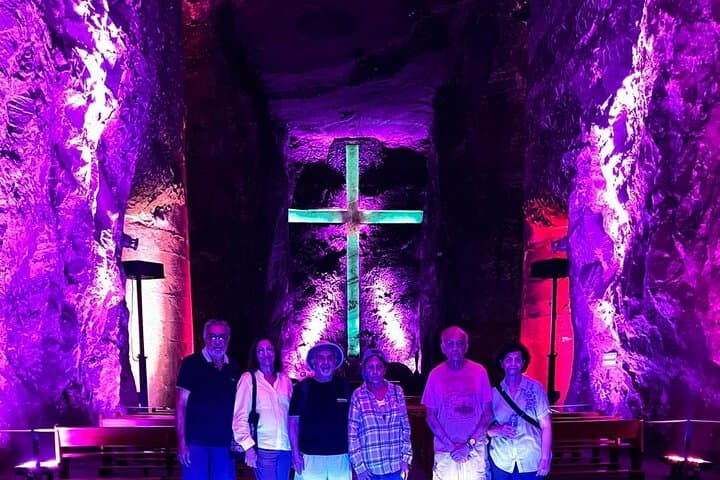
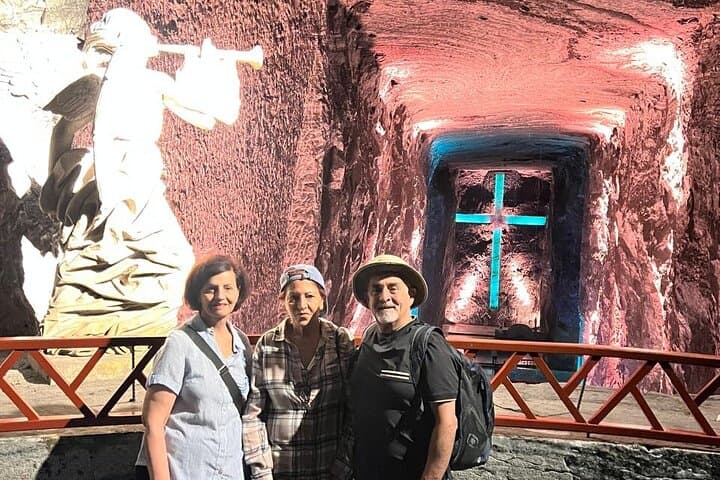
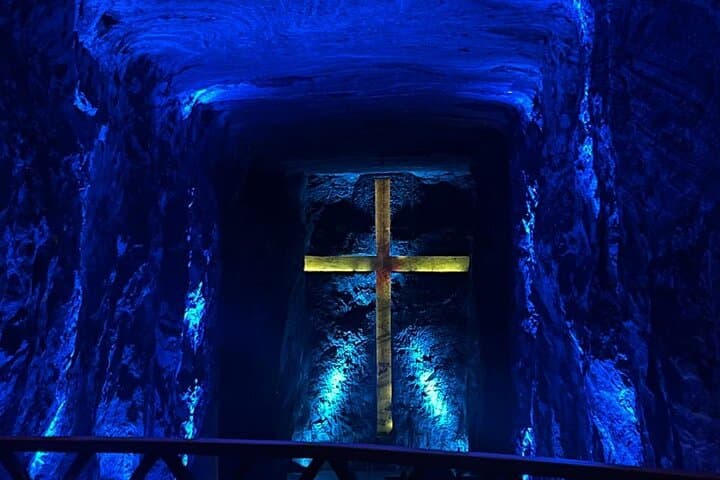
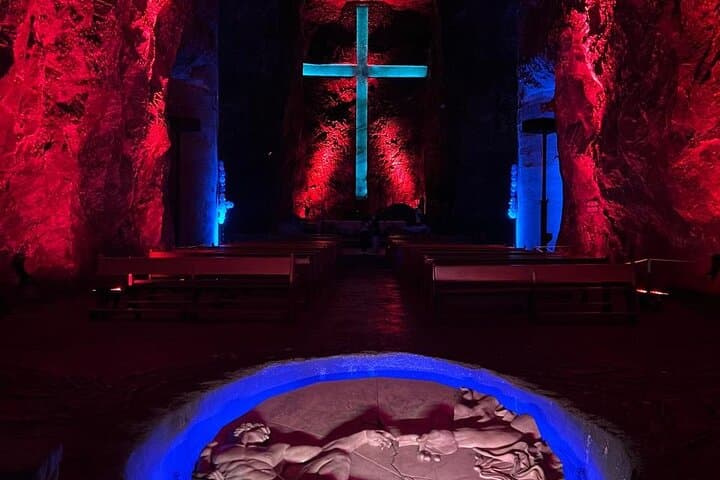
Descend from the pale light of Bogotá’s morning into a cavern where salt walls hold the echo of pickaxes and prayers. A private transfer delivers you to the entrance carved deep inside a working salt mountain, and a guide leads you through vaulted caverns where colored light pins religious figures against crystalline rock.
Descend from the pale light of Bogotá’s morning into a cavern where salt walls hold the echo of pickaxes and prayers. A private transfer delivers you to the entrance carved deep inside a working salt mountain, and a guide leads you through vaulted caverns where colored light pins religious figures against crystalline rock.
Carved roughly 180 meters below the plateau of the Eastern Andes, the Cathedral of Salt occupies galleries hewn from an evaporite deposit formed millions of years ago. Miners shaped the site through the 20th century; the modern pilgrimage complex opened in the 1990s, combining industrial geometry with sacred iconography — the 14‑station Via Crucis, three "ships" of symbolic spaces, and a 16‑meter salt cross in the central nave.
Zipaquirá itself grew around salt extraction and colonial trade; a short stop at Plaza de los Comuneros introduces local snacks and handicrafts before or after the subterranean visit. Inside, expect cool, saline air, reflective pools such as the Water Mirror, and long sightlines that make the carved dome feel both intimate and monumental.
Practical guidance: allow about 5–6 hours from Bogotá door-to-door. The underground temperature sits near 14–16°C (57–61°F); surfaces can be damp but many paths are wheelchair accessible — confirm specifics with the operator. Wear closed-toe shoes with grip, bring a light jacket, and carry your camera (tripods may be restricted). Private transport and priority access minimize lines and let you spend more time in the nave and viewpoints.