THE ADVENTURE COLLECTIVE® · Independent discovery and booking for outdoor travel

Launch across a Sacred Valley ravine and climb bolted iron rungs on a full-day zip line + Via Ferrata combo. This high-altitude adventure pairs technical exposure with sweeping valley views and local cultural context—best for fit travelers who’ve had time to acclimatize.
Launch across a Sacred Valley ravine and climb bolted iron rungs on a full-day zip line + Via Ferrata combo. This high-altitude adventure pairs technical exposure with sweeping valley views and local cultural context—best for fit travelers who’ve had time to acclimatize.
The harness tightens, your gloves rasp against steel, and the valley opens beneath you—terraced slopes, pale river ribbon, roofs of adobe villages like scatterings of ochre. By midmorning the group gathers at a cliff edge where instructors click carabiners into place and the world seems both impossibly close and impossibly far. The first zip line shoots you across a drop where air takes on a shape; the Via Ferrata that follows turns exposed rock into a ladder, each rung an agreement between human hands and granite.
Verified experiences and guided adventures in the surrounding area.
Operated by PERU VIP TRAVEL · Cusco, Cusco
The harness tightens, your gloves rasp against steel, and the valley opens beneath you—terraced slopes, pale river ribbon, roofs of adobe villages like scatterings of ochre. By midmorning the group gathers at a cliff edge where instructors click carabiners into place and the world seems both impossibly close and impossibly far. The first zip line shoots you across a drop where air takes on a shape; the Via Ferrata that follows turns exposed rock into a ladder, each rung an agreement between human hands and granite.
This full-day combo in the Sacred Valley pairs high-altitude zip lines—stretches of cable that cross ravines and farmland—with vertical Via Ferrata routes bolted into volcanic and sedimentary rock. Geologically the valley is a seam where Andean uplift met ancient river terraces; the cliffs you climb are layered with glacial polish and time-worn strata, hosting pre-Inca and Inca agricultural remains along their rims.
Culturally, the activity threads through communities that still farm using Inca-era terraces and irrigation canals. Guides are typically bilingual local climbers who combine modern safety standards with regional knowledge: they’ll point out old fieldstone walls and explain how water was diverted centuries ago to support crops at these altitudes. The Sacred Valley’s mixture of dry puna grassland, irrigated fields, and sheer canyon walls gives the day variety: one moment you’re looking at alpaca grazing, the next you’re above a river daring you to look down.
Practically, expect a 5–6 hour outing (operator time is about 5.5 hours). Elevation sits roughly between 3,200–3,600 m (10,500–11,800 ft), so acclimatize in Cusco for 24–48 hours if you can; the altitude changes the effort math—what feels like a steep scramble at sea level becomes a sustained push here.
The itinerary alternates: a half-dozen zip lines of varying lengths (short bursts and runs approaching a few hundred meters), followed by via ferrata pitches that climb 50–120 meters of vertical rock. Instructors provide complete safety kits—harness, helmet, lanyards—and run briefings on clipping technique before every section. Bring layered clothing, leather or thin climbing gloves for scrambling, and shoes with grippy soles; the route mixes metal rungs, ledges, and dirt trails.
This is a demanding, exhilarating day that rewards focus: move deliberately on the Via Ferrata, breathe steady on the climbs, and let the zip lines do the rest. Finish back in the valley with a boxed lunch and a slower descent to Cusco—the muscles will remember the exposure long after the view does.
challenging.
5–6 hours.
Should be in strong aerobic condition with good balance and comfort with exposure; expect sustained physical effort at altitude.
The operator lists a total duration of about 5.5 hours on site (expect 5–6 hours including transfers).
No technical climbing experience is required, but you must be comfortable with heights and able to follow clipping and belay instructions.
Yes—most activity occurs between ~3,200–3,600 m; acclimatize in Cusco for 24–48 hours to lower risk of AMS.
You’ll get a certified harness, helmet, via ferrata lanyards, and a safety briefing from professional instructors.
Age and weight limits vary by operator; the booking asks for passenger ages—check with the supplier but groups are generally aimed at teens and adults with good fitness.
All sales are final with no refunds for cancellations, so book confidently only when your plans are firm.
The Sacred Valley was an agricultural heartland for the Incas; many terraces and canals you’ll see were engineered to bring mountain water to high fields centuries ago.
Operators often work with local communities to manage access and minimize trail erosion; stick to routes and follow guide instructions to protect fragile highland soils.
PERU VIP TRAVEL operates guided outdoor trips and adventures with an emphasis on safety, stewardship, and memorable experiences.
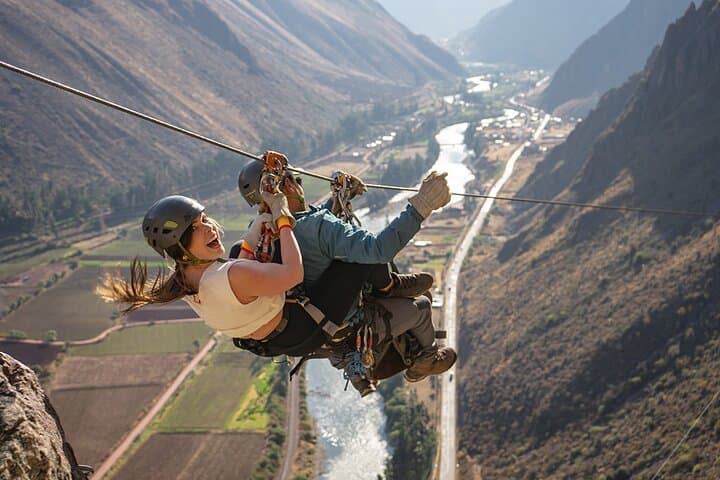
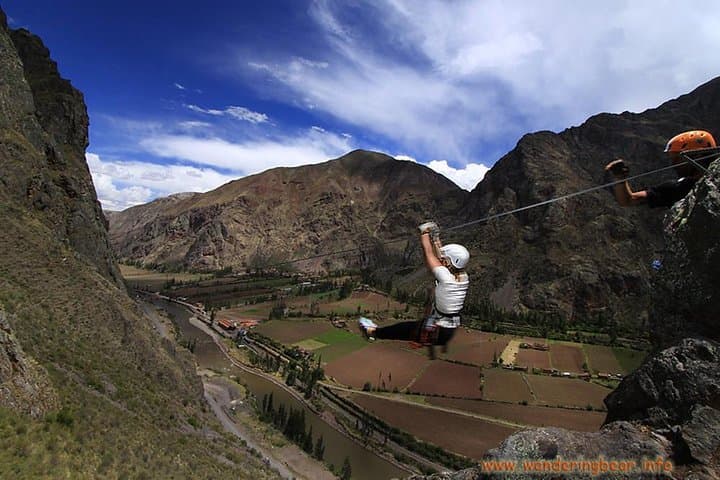
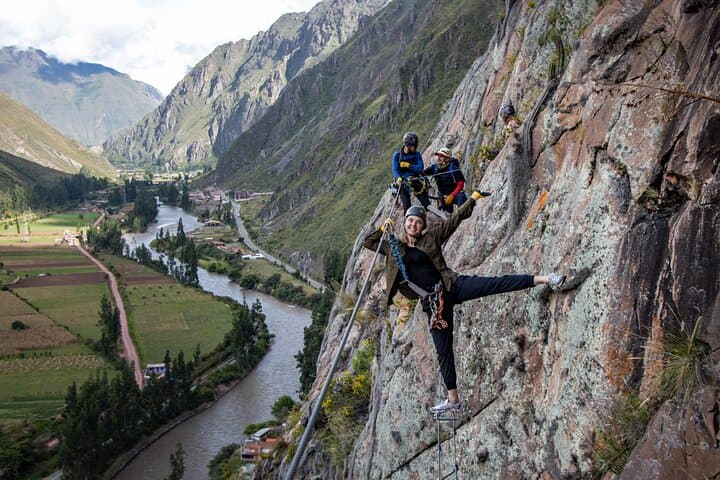
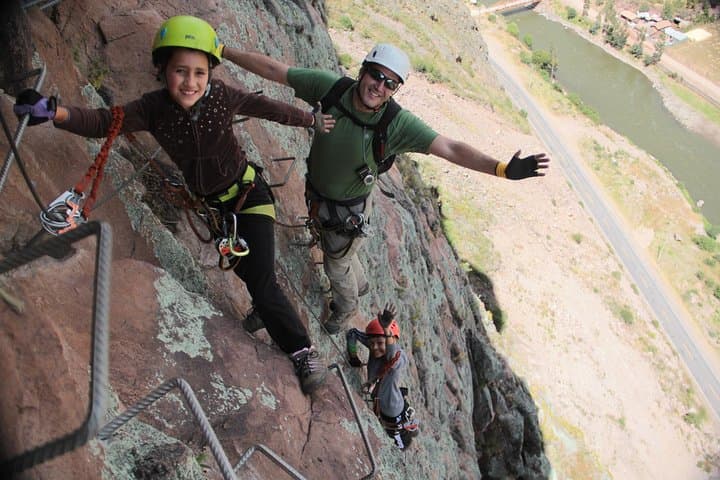
The harness tightens, your gloves rasp against steel, and the valley opens beneath you—terraced slopes, pale river ribbon, roofs of adobe villages like scatterings of ochre. By midmorning the group gathers at a cliff edge where instructors click carabiners into place and the world seems both impossibly close and impossibly far. The first zip line shoots you across a drop where air takes on a shape; the Via Ferrata that follows turns exposed rock into a ladder, each rung an agreement between human hands and granite.
The harness tightens, your gloves rasp against steel, and the valley opens beneath you—terraced slopes, pale river ribbon, roofs of adobe villages like scatterings of ochre. By midmorning the group gathers at a cliff edge where instructors click carabiners into place and the world seems both impossibly close and impossibly far. The first zip line shoots you across a drop where air takes on a shape; the Via Ferrata that follows turns exposed rock into a ladder, each rung an agreement between human hands and granite.
This full-day combo in the Sacred Valley pairs high-altitude zip lines—stretches of cable that cross ravines and farmland—with vertical Via Ferrata routes bolted into volcanic and sedimentary rock. Geologically the valley is a seam where Andean uplift met ancient river terraces; the cliffs you climb are layered with glacial polish and time-worn strata, hosting pre-Inca and Inca agricultural remains along their rims.
Culturally, the activity threads through communities that still farm using Inca-era terraces and irrigation canals. Guides are typically bilingual local climbers who combine modern safety standards with regional knowledge: they’ll point out old fieldstone walls and explain how water was diverted centuries ago to support crops at these altitudes. The Sacred Valley’s mixture of dry puna grassland, irrigated fields, and sheer canyon walls gives the day variety: one moment you’re looking at alpaca grazing, the next you’re above a river daring you to look down.
Practically, expect a 5–6 hour outing (operator time is about 5.5 hours). Elevation sits roughly between 3,200–3,600 m (10,500–11,800 ft), so acclimatize in Cusco for 24–48 hours if you can; the altitude changes the effort math—what feels like a steep scramble at sea level becomes a sustained push here.
The itinerary alternates: a half-dozen zip lines of varying lengths (short bursts and runs approaching a few hundred meters), followed by via ferrata pitches that climb 50–120 meters of vertical rock. Instructors provide complete safety kits—harness, helmet, lanyards—and run briefings on clipping technique before every section. Bring layered clothing, leather or thin climbing gloves for scrambling, and shoes with grippy soles; the route mixes metal rungs, ledges, and dirt trails.
This is a demanding, exhilarating day that rewards focus: move deliberately on the Via Ferrata, breathe steady on the climbs, and let the zip lines do the rest. Finish back in the valley with a boxed lunch and a slower descent to Cusco—the muscles will remember the exposure long after the view does.