THE ADVENTURE COLLECTIVE® · Independent discovery and booking for outdoor travel

Spend four days moving through Zhangjiajie’s vertical wilderness: Tianzi and Yuanjiajie viewpoints, the nerve-testing glass bridge, Golden Whip Stream, Baofeng Lake and a hands-on tea-picking stop. This itinerary mixes cable-car lifts and valley walks to show the park’s geology, culture and cinematic vistas.
Spend four days moving through Zhangjiajie’s vertical wilderness: Tianzi and Yuanjiajie viewpoints, the nerve-testing glass bridge, Golden Whip Stream, Baofeng Lake and a hands-on tea-picking stop. This itinerary mixes cable-car lifts and valley walks to show the park’s geology, culture and cinematic vistas.
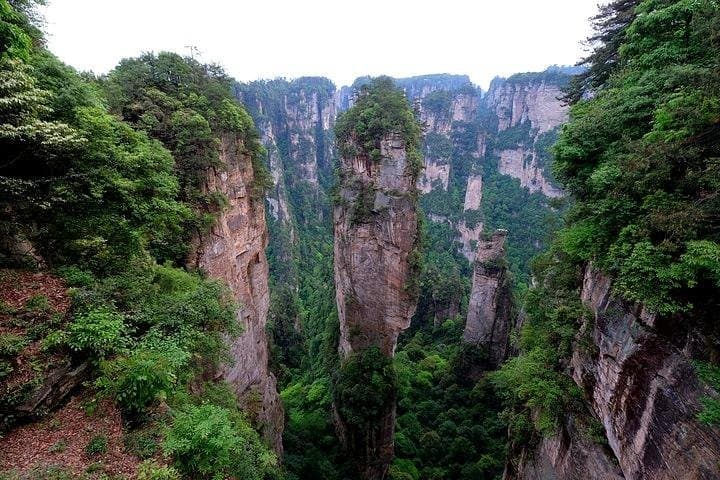
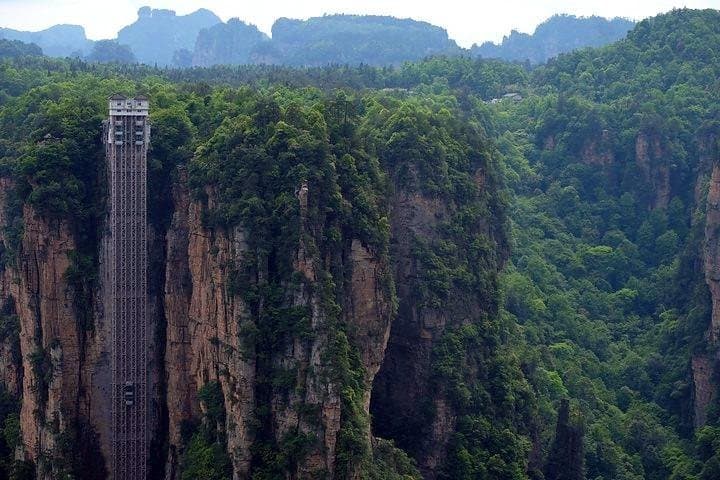
Morning mist lifts off stone pillars and the bus eases into Wulingyuan—Zhangjiajie’s vertical forest of quartz-sandstone towers. On day one the group meets a local guide, then the itinerary unfolds: cable-car ascents, cliffside walkways, a glass bridge that dares your balance, and tea gardens that smell of fresh leaves.
Verified experiences and guided adventures in the surrounding area.
Operated by China Toruk Tour · Zhangjiajie, Hunan
Morning mist lifts off stone pillars and the bus eases into Wulingyuan—Zhangjiajie’s vertical forest of quartz-sandstone towers. On day one the group meets a local guide, then the itinerary unfolds: cable-car ascents, cliffside walkways, a glass bridge that dares your balance, and tea gardens that smell of fresh leaves.
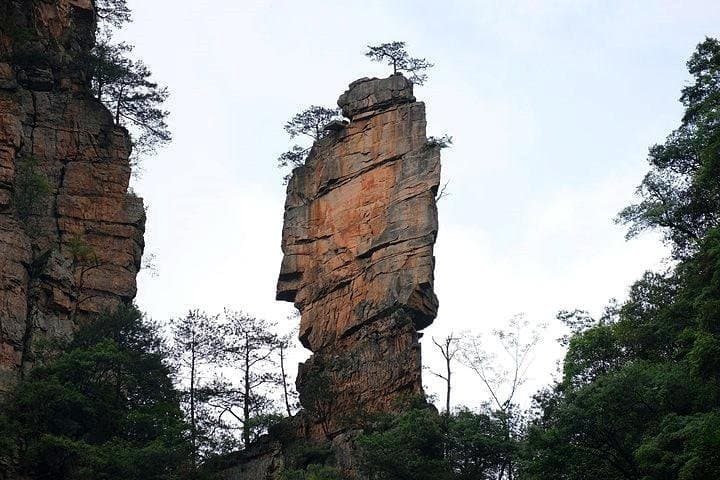
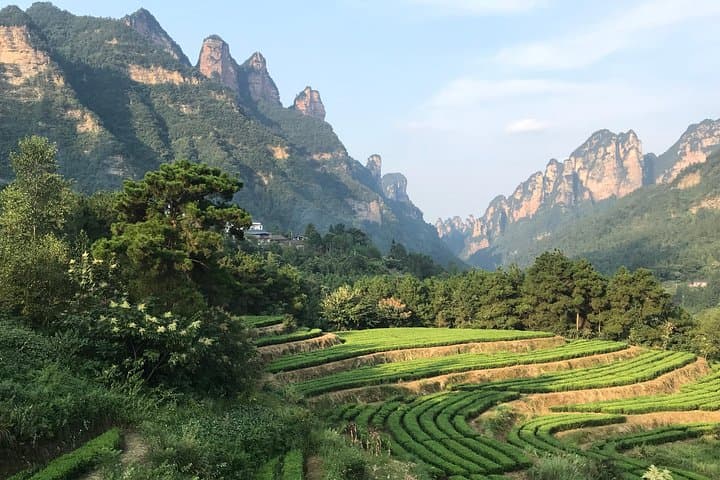
Geology here is blunt and dramatic: millions of years of erosion split a homogenous sandstone plateau into narrow pillars and ravines. The park forms part of the Wulingyuan UNESCO World Heritage area, and local Tujia and Miao cultures have shaped villages and tea terraces in the valleys for centuries. Rivers cut canyons and streams that push forward through the stone—Golden Whip Stream runs about 7–8 km beneath sheer cliffs, offering a low, cool route through the park’s greener understory.
Practically, expect a mix of easy walks and carved stone steps, plus several cable-car or shuttle segments that reduce total hiking mileage but concentrate elevation changes into short bursts. Tianmen Mountain reaches roughly 1,518 m at its summit; Yuanjiajie and Tianzi areas sit around 800–1,200 m. The glass bridge over Zhangjiajie Grand Canyon spans about 430 m and hangs some 300 m above the canyon floor—it’s thrilling but fenced and regulated.
Bring sturdy footwear, layered clothing for temperature swings, and a small daypack. Plan early starts for lower crowds and softer light, and leave space in your schedule for the tea-picking visit and Baofeng Lake cruise—both slow the pace and reveal the human side of this dramatic landscape.
moderate.
4 days.
Moderate fitness: able to walk 4–8 km a day, manage stairs and short steep sections; cable cars reduce continuous climbs.
The bridge is a regulated attraction with limits on the number of visitors and mandatory safety checks; most people can walk it, but those with severe vertigo or mobility issues should avoid it or remain on solid viewpoints.
The trip mixes short hikes and long walks (Golden Whip Stream ~7–8 km) with cable-car rides and shuttles; it’s moderate rather than technical but requires stair and step navigation.
Tipping practices vary—small cash tips are appreciated for attentive local guides and drivers, but not mandatory; follow local custom and your comfort level.
Yes—many segments use cable cars and park shuttles; contact the operator ahead to discuss accessibility and tailor walking portions.
Wulingyuan’s sandstone pillars formed over millions of years of tectonic uplift and erosion; the area was protected as a national park in the 1980s and later recognized by UNESCO.
Visitor limits, shuttle buses and cable cars reduce local road pressure; stick to marked trails, avoid feeding wildlife and use refillable water bottles to minimize waste.
China Toruk Tour operates guided outdoor trips and adventures with an emphasis on safety, stewardship, and memorable experiences.
Morning mist lifts off stone pillars and the bus eases into Wulingyuan—Zhangjiajie’s vertical forest of quartz-sandstone towers. On day one the group meets a local guide, then the itinerary unfolds: cable-car ascents, cliffside walkways, a glass bridge that dares your balance, and tea gardens that smell of fresh leaves.
Morning mist lifts off stone pillars and the bus eases into Wulingyuan—Zhangjiajie’s vertical forest of quartz-sandstone towers. On day one the group meets a local guide, then the itinerary unfolds: cable-car ascents, cliffside walkways, a glass bridge that dares your balance, and tea gardens that smell of fresh leaves.
Geology here is blunt and dramatic: millions of years of erosion split a homogenous sandstone plateau into narrow pillars and ravines. The park forms part of the Wulingyuan UNESCO World Heritage area, and local Tujia and Miao cultures have shaped villages and tea terraces in the valleys for centuries. Rivers cut canyons and streams that push forward through the stone—Golden Whip Stream runs about 7–8 km beneath sheer cliffs, offering a low, cool route through the park’s greener understory.
Practically, expect a mix of easy walks and carved stone steps, plus several cable-car or shuttle segments that reduce total hiking mileage but concentrate elevation changes into short bursts. Tianmen Mountain reaches roughly 1,518 m at its summit; Yuanjiajie and Tianzi areas sit around 800–1,200 m. The glass bridge over Zhangjiajie Grand Canyon spans about 430 m and hangs some 300 m above the canyon floor—it’s thrilling but fenced and regulated.
Bring sturdy footwear, layered clothing for temperature swings, and a small daypack. Plan early starts for lower crowds and softer light, and leave space in your schedule for the tea-picking visit and Baofeng Lake cruise—both slow the pace and reveal the human side of this dramatic landscape.