THE ADVENTURE COLLECTIVE® · Independent discovery and booking for outdoor travel

Walk Zermatt with a local guide and see the Matterhorn from Kirchbrücke, historic Valais houses on Hinterdorfstrasse, and the Mountaineers’ Cemetery. This private two-hour tour blends alpine history, geology, and village life into an accessible outing.
Walk Zermatt with a local guide and see the Matterhorn from Kirchbrücke, historic Valais houses on Hinterdorfstrasse, and the Mountaineers’ Cemetery. This private two-hour tour blends alpine history, geology, and village life into an accessible outing.
You step off the train into Bahnhofplatz and the air immediately feels alpine—crisp, carrying the faint scent of wood smoke and cowbells. The village hums around you: shutters clack, shop windows display mountain gear and fine chocolate, and the Matterhorn looms above like a constant, watchful guest. Your private guide threads you down Bahnhofstrasse, into the quieter alleys where stone and timber houses keep older stories.
Verified experiences and guided adventures in the surrounding area.
Operated by Opatrip Switzerland · Zermatt, Valais
You step off the train into Bahnhofplatz and the air immediately feels alpine—crisp, carrying the faint scent of wood smoke and cowbells. The village hums around you: shutters clack, shop windows display mountain gear and fine chocolate, and the Matterhorn looms above like a constant, watchful guest. Your private guide threads you down Bahnhofstrasse, into the quieter alleys where stone and timber houses keep older stories.
Zermatt’s streets are shaped by geology and glaciation: moraines and meltwater once carved the valley that became this car-free village. Cultural layers stack here too—traditional Valais farms, 19th-century mountaineering hotels like Monte Rosa, and climbing memorials that recall early alpinism. The Mountaineers’ Cemetery is a sober counterpoint to the postcard views: it marks lives spent testing the mountains’ limits.
On the Kirchbrücke the Matterhorn rewards a pause; on Uferweg the river dares you to slow your pace. A good guide will blend history—how tourism transformed Zermatt after the railroad—with practical navigation of the village’s stone steps and riverside paths.
Practical notes: the tour is two hours on mostly paved or compact dirt paths with minimal elevation change—suitable for most fitness levels. Wear sturdy walking shoes, layer for rapidly shifting alpine weather, and bring a charged camera. Expect photo stops, short historical talks, and a relaxed pace tailored to your group. Public transit arrives at Bahnhofplatz, and tours run year-round though winter clothing is essential during colder months.
easy.
2 hours.
Suitable for most adults and children who can walk on paved/packed surfaces for two hours; minimal elevation change.
The meeting point is Bahnhofplatz in central Zermatt; the two-hour route loops through Bahnhofstrasse, Hinterdorfstrasse and ends along Uferweg.
Yes—routes are on paved or compact paths with minimal elevation; the pace is adaptable for families and older adults.
Guides are typically local and often speak English and German; confirm language availability when booking.
Full refund available if you cancel at least 24 hours before the scheduled departure; no refund within 24 hours.
Zermatt transformed from a farming village into an international mountaineering hub after the 19th-century interest in alpine climbing and the arrival of the railway in 1891.
Zermatt is car-free to reduce emissions and protect the valley; visitors are encouraged to stay on paths and use refill stations to limit waste.
Opatrip Switzerland operates guided outdoor trips and adventures with an emphasis on safety, stewardship, and memorable experiences.


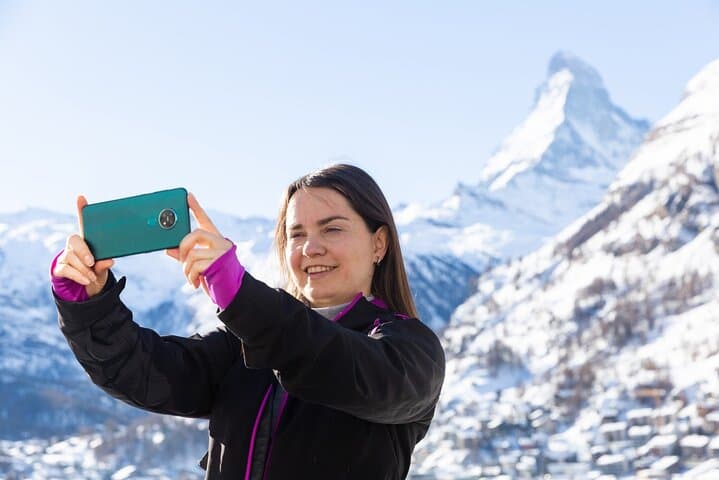
You step off the train into Bahnhofplatz and the air immediately feels alpine—crisp, carrying the faint scent of wood smoke and cowbells. The village hums around you: shutters clack, shop windows display mountain gear and fine chocolate, and the Matterhorn looms above like a constant, watchful guest. Your private guide threads you down Bahnhofstrasse, into the quieter alleys where stone and timber houses keep older stories.
You step off the train into Bahnhofplatz and the air immediately feels alpine—crisp, carrying the faint scent of wood smoke and cowbells. The village hums around you: shutters clack, shop windows display mountain gear and fine chocolate, and the Matterhorn looms above like a constant, watchful guest. Your private guide threads you down Bahnhofstrasse, into the quieter alleys where stone and timber houses keep older stories.
Zermatt’s streets are shaped by geology and glaciation: moraines and meltwater once carved the valley that became this car-free village. Cultural layers stack here too—traditional Valais farms, 19th-century mountaineering hotels like Monte Rosa, and climbing memorials that recall early alpinism. The Mountaineers’ Cemetery is a sober counterpoint to the postcard views: it marks lives spent testing the mountains’ limits.
On the Kirchbrücke the Matterhorn rewards a pause; on Uferweg the river dares you to slow your pace. A good guide will blend history—how tourism transformed Zermatt after the railroad—with practical navigation of the village’s stone steps and riverside paths.
Practical notes: the tour is two hours on mostly paved or compact dirt paths with minimal elevation change—suitable for most fitness levels. Wear sturdy walking shoes, layer for rapidly shifting alpine weather, and bring a charged camera. Expect photo stops, short historical talks, and a relaxed pace tailored to your group. Public transit arrives at Bahnhofplatz, and tours run year-round though winter clothing is essential during colder months.