THE ADVENTURE COLLECTIVE® · Independent discovery and booking for outdoor travel

Dive the Zenobia, a 172‑meter Swedish ferry resting at ~42m off Larnaca. This advanced boat dive combines expansive wreck interiors, abundant marine life, and exacting dive planning—ideal for qualified divers ready for a deep, structured adventure.
Dive the Zenobia, a 172‑meter Swedish ferry resting at ~42m off Larnaca. This advanced boat dive combines expansive wreck interiors, abundant marine life, and exacting dive planning—ideal for qualified divers ready for a deep, structured adventure.
The morning boat cuts a bright path from Larnaca harbor and the Mediterranean opens—deep, cool, and humming beneath a sky that refuses to be still. You kit up on deck, the engine's vibration a steady metronome as the shoreline recedes and the Zenobia's silhouette waits below like an invitation.
Verified experiences and guided adventures in the surrounding area.
Operated by ZENOBIA DIVERS LARNAKA · Larnaca, Larnaca District
The morning boat cuts a bright path from Larnaca harbor and the Mediterranean opens—deep, cool, and humming beneath a sky that refuses to be still. You kit up on deck, the engine's vibration a steady metronome as the shoreline recedes and the Zenobia's silhouette waits below like an invitation.
The Zenobia sank in 1980 and settled at about 42 meters depth; at 172 meters long it quickly became one of the world’s most accessible large wrecks. The wreck's steel ribs and cargo holds form dramatic structure dives, attracting groupers, barracudas and occasionally loggerhead turtles. Geologically, the seabed here shifts from sandy plains to rock outcrops and reef fingers; culturally, diving the Zenobia is part of Cyprus’s maritime identity—an international draw for technical and advanced recreational divers.
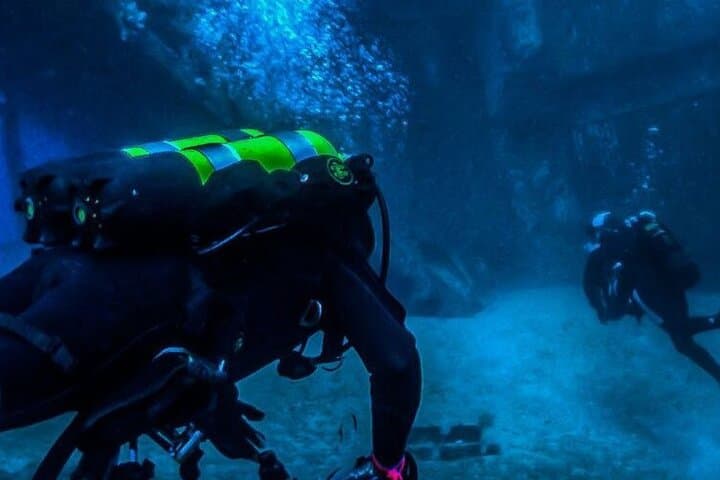
Expect strong visual contrasts: blue open water beyond the hull, shaded corridors inside the wreck, and schools of fish threading through portholes. In practice, these are deep, boat-launched dives—plan your gas and no-decompression limits, brief on-bottom times, and conservative ascent profiles.
Bring a reliable dive computer, redundant air planning, and a SMB for surface signaling. Surface conditions change with season—calm summers and variable spring winds—so check daily briefs and follow the skipper and instructor guidance. If you’re qualified, the Zenobia offers a precise, structured challenge: rich marine life, vast interiors to explore, and the steady pull of a world-class wreck that rewards respect and preparation.
challenging.
2 hours.
Moderate cardiovascular fitness and comfort in boat operations and deep dives; able to carry gear and perform repeated entries/exits.
Yes—this is a deep wreck dive to around 42m; divers should hold Advanced Open Water (or equivalent) and have prior deep/boat dive experience.
Typical sightings include groupers, barracudas, schools of snapper, octopus and occasionally loggerhead turtles around the wreck structures.
Trips are scheduled for about 2 hours total; bottom time is conservative due to depth—decompression stops may be required depending on profile, so plan gas and ascent accordingly.
Operators monitor conditions and may reschedule; cancellations usually follow a 24‑hour policy for refunds—confirm with the provider before booking.
The Zenobia was a Swedish ferry that sank in 1980 and has since become one of the Mediterranean’s most famous wreck dives, drawing international divers to Cyprus.
Divers are encouraged to use moorings rather than anchor, avoid touching the wreck or reef, and follow local guidelines to protect reef habitat and resident species.
ZENOBIA DIVERS LARNAKA operates guided outdoor trips and adventures with an emphasis on safety, stewardship, and memorable experiences.
The morning boat cuts a bright path from Larnaca harbor and the Mediterranean opens—deep, cool, and humming beneath a sky that refuses to be still. You kit up on deck, the engine's vibration a steady metronome as the shoreline recedes and the Zenobia's silhouette waits below like an invitation.
The morning boat cuts a bright path from Larnaca harbor and the Mediterranean opens—deep, cool, and humming beneath a sky that refuses to be still. You kit up on deck, the engine's vibration a steady metronome as the shoreline recedes and the Zenobia's silhouette waits below like an invitation.
The Zenobia sank in 1980 and settled at about 42 meters depth; at 172 meters long it quickly became one of the world’s most accessible large wrecks. The wreck's steel ribs and cargo holds form dramatic structure dives, attracting groupers, barracudas and occasionally loggerhead turtles. Geologically, the seabed here shifts from sandy plains to rock outcrops and reef fingers; culturally, diving the Zenobia is part of Cyprus’s maritime identity—an international draw for technical and advanced recreational divers.
Expect strong visual contrasts: blue open water beyond the hull, shaded corridors inside the wreck, and schools of fish threading through portholes. In practice, these are deep, boat-launched dives—plan your gas and no-decompression limits, brief on-bottom times, and conservative ascent profiles.
Bring a reliable dive computer, redundant air planning, and a SMB for surface signaling. Surface conditions change with season—calm summers and variable spring winds—so check daily briefs and follow the skipper and instructor guidance. If you’re qualified, the Zenobia offers a precise, structured challenge: rich marine life, vast interiors to explore, and the steady pull of a world-class wreck that rewards respect and preparation.