THE ADVENTURE COLLECTIVE® · Independent discovery and booking for outdoor travel

A half-day west coast drive from Doha that pairs dramatic wind-sculpted limestone with Richard Serra’s vast steel panels. Perfect for photographers and curious travelers seeking geology, art, and light off the beaten path.
A half-day west coast drive from Doha that pairs dramatic wind-sculpted limestone with Richard Serra’s vast steel panels. Perfect for photographers and curious travelers seeking geology, art, and light off the beaten path.
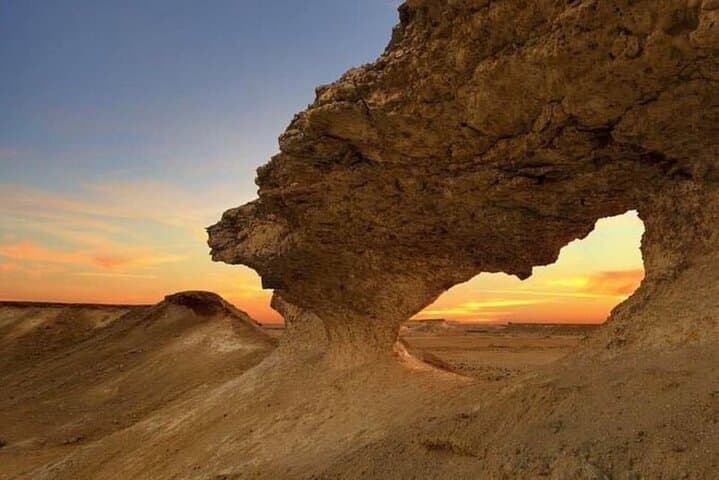
You arrive where asphalt ends and wind begins: a low horizon of sculpted limestone and rusted steel rising like punctuation marks across the flat. The air tastes faintly metallic; gusts push sand across your boots as the 4x4 eases onto the track toward the mushroom-shaped rocks that have been carved by the same relentless wind for millennia.
Verified experiences and guided adventures in the surrounding area.
Operated by Sandway Tourism Services · Dukhan, Al-Shahaniya
You arrive where asphalt ends and wind begins: a low horizon of sculpted limestone and rusted steel rising like punctuation marks across the flat. The air tastes faintly metallic; gusts push sand across your boots as the 4x4 eases onto the track toward the mushroom-shaped rocks that have been carved by the same relentless wind for millennia.
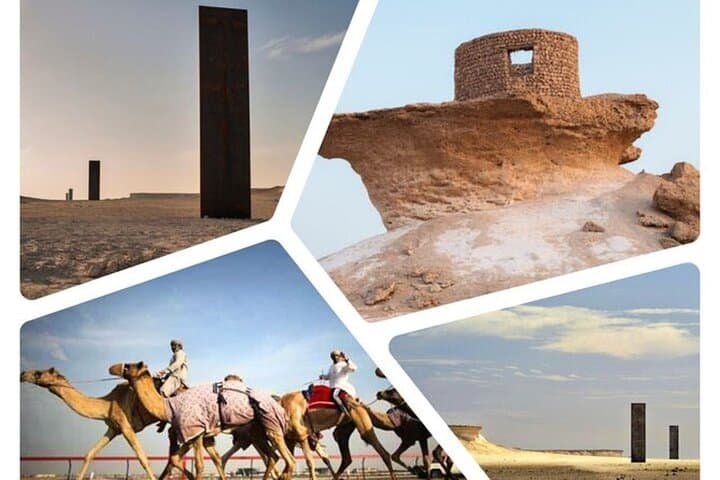
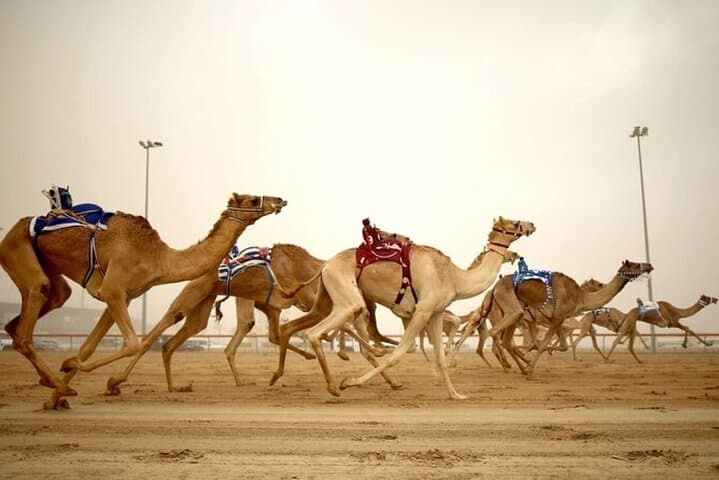
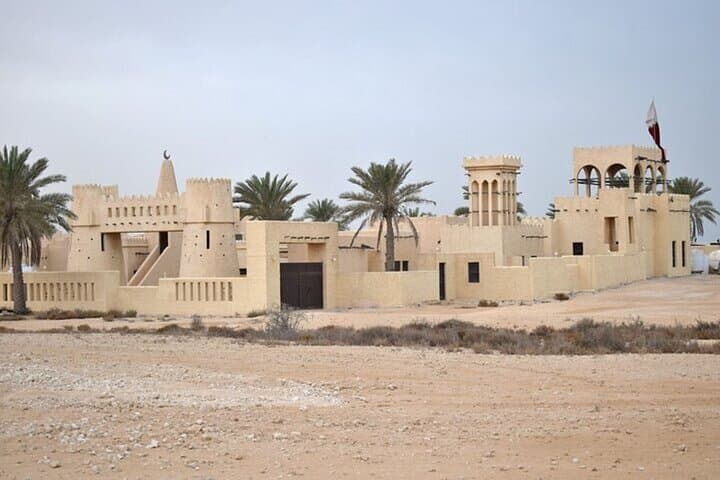
The Zekreet peninsula sits on Qatar’s western shore, a place shaped by shallow seas and calcium-rich deposits that created the fragile, spindly formations visible today. Nearby, Richard Serra’s East–West/West–East—four towering steel plates laid out across a kilometer—answered the desert’s scale with industrial weight, turning isolation into a deliberate frame for reflection. Scattered relics of film sets and a small replica village recall Qatar’s recent cultural experiments, while camel racing grounds nearby point to deeper local traditions.
Expect short, easy hikes between viewpoints, silhouette photography at low sun, and stretches of gravelly off-road driven by experienced guides. The wind has agency here—plan for sand in your camera bag and sun that insists on being accounted for. Hydrate often, carry layered protection against wind chill after sunset, and give wildlife space: Arabian oryx and skittering lizards are native residents.
Practically, tours are half-day affairs from Doha with air‑conditioned transport and bottled water provided. Morning or late-afternoon departures offer best light and cooler temperatures. Footwear with good tread, a brimmed hat, and a small daypack will keep you comfortable. The route is accessible to most travelers but pay attention to guide briefings during off-road sections: the desert looks passive, but it moves under you.
easy.
3–4 hours.
Light fitness; comfortable walking on uneven ground for short stretches is all that’s required
The standard tour is about 3–4 hours, including driving between sites and short stops for walking and photos.
Yes—routes are low-impact and guides adapt pacing; infants should sit on laps per operator policy.
Guides typically stop at a viewpoint near East–West/West–East where visitors can walk between the steel plates following safety guidance.
Facilities are limited on the peninsula; the tour provides bottled water and tea/coffee, so plan for restroom stops before departure.
The area combines natural wind-eroded limestone landforms with recent cultural projects—film sets and public art that reflect Qatar’s modern cultural investments.
This fragile limestone desert and coastal habitat is sensitive to vehicle tracks and litter; stay on designated routes and pack out all waste.
Sandway Tourism Services operates guided outdoor trips and adventures with an emphasis on safety, stewardship, and memorable experiences.
You arrive where asphalt ends and wind begins: a low horizon of sculpted limestone and rusted steel rising like punctuation marks across the flat. The air tastes faintly metallic; gusts push sand across your boots as the 4x4 eases onto the track toward the mushroom-shaped rocks that have been carved by the same relentless wind for millennia.
You arrive where asphalt ends and wind begins: a low horizon of sculpted limestone and rusted steel rising like punctuation marks across the flat. The air tastes faintly metallic; gusts push sand across your boots as the 4x4 eases onto the track toward the mushroom-shaped rocks that have been carved by the same relentless wind for millennia.
The Zekreet peninsula sits on Qatar’s western shore, a place shaped by shallow seas and calcium-rich deposits that created the fragile, spindly formations visible today. Nearby, Richard Serra’s East–West/West–East—four towering steel plates laid out across a kilometer—answered the desert’s scale with industrial weight, turning isolation into a deliberate frame for reflection. Scattered relics of film sets and a small replica village recall Qatar’s recent cultural experiments, while camel racing grounds nearby point to deeper local traditions.
Expect short, easy hikes between viewpoints, silhouette photography at low sun, and stretches of gravelly off-road driven by experienced guides. The wind has agency here—plan for sand in your camera bag and sun that insists on being accounted for. Hydrate often, carry layered protection against wind chill after sunset, and give wildlife space: Arabian oryx and skittering lizards are native residents.
Practically, tours are half-day affairs from Doha with air‑conditioned transport and bottled water provided. Morning or late-afternoon departures offer best light and cooler temperatures. Footwear with good tread, a brimmed hat, and a small daypack will keep you comfortable. The route is accessible to most travelers but pay attention to guide briefings during off-road sections: the desert looks passive, but it moves under you.