THE ADVENTURE COLLECTIVE® · Independent discovery and booking for outdoor travel

Explore Zaragoza’s twin cathedrals, cross the 15th‑century Stone Bridge, and stroll one of Europe’s largest squares on this 90‑minute guided walk. Ideal for first‑time visitors who want focused history, architecture, and a taste of local market life.
Explore Zaragoza’s twin cathedrals, cross the 15th‑century Stone Bridge, and stroll one of Europe’s largest squares on this 90‑minute guided walk. Ideal for first‑time visitors who want focused history, architecture, and a taste of local market life.
You step into Plaza del Pilar and the square opens: the Basílica de Nuestra Señora del Pilar fills the sky with domes and tiled roofs while the Ebro below nudges the city toward the Stone Bridge. Streets hum with market vendors, and the guide’s voice threads historical facts between the cathedral façades and narrow alleys.
Verified experiences and guided adventures in the surrounding area.
Operated by BlackBuck Travels · Zaragoza, Aragón
You step into Plaza del Pilar and the square opens: the Basílica de Nuestra Señora del Pilar fills the sky with domes and tiled roofs while the Ebro below nudges the city toward the Stone Bridge. Streets hum with market vendors, and the guide’s voice threads historical facts between the cathedral façades and narrow alleys.
Zaragoza wears layers of history—Roman foundations, Taifa-era walls, and Gothic and Baroque churches. The Basílica (17th century baroque) and La Seo (Cathedral of the Saviour) sit within a medieval grid shaped by the Ebro’s course; the Puente de Piedra, rebuilt across centuries, still bears ashlar stone that remembers 15th‑century masons. The La Longa gallery occupies a 16th‑century building reworked for contemporary exhibits, while Mercado Central (1895) reveals late‑19th‑century ironwork and daily Aragonese foodways.
The tour is urban geology and architecture: stone, brick, and tile responding to floodplain soils and river hydraulics, creating viewpoints where the Ebro dares you to cross and look back at the city’s layered skyline.
Practical guidance: the route is flat cobblestone and asphalt, about 1.5 hours of easy walking—bring sturdy shoes and a water bottle. Mornings are cooler and less crowded; midday in summer gets hot and bright. Respect church etiquette (quiet, modest dress) and allow time for photos at the Puente de Piedra and the Mercado Central. Public transport and short taxi rides link the meeting point outside Hotel Catalonia El Pilar to most central accommodations. This tour blends concise local history with accessible urban exploration—ideal for first-time visitors wanting a focused introduction to Zaragoza.
easy.
1.5 hours.
Suitable for most fitness levels; involves continuous walking on flat to gently uneven urban surfaces.
The tour runs approximately 90 minutes and covers a concentrated route through Plaza del Pilar, Puente de Piedra, La Longa and Mercado Central.
Yes—it's rated easy with flat streets, though cobblestones may require slower pacing for those with mobility concerns.
No—this tour visits external viewpoints and offers commentary; any paid interior visits would be arranged separately.
In front of Hotel Catalonia El Pilar; the guide will be holding a signboard as described in the booking instructions.
Zaragoza reflects Roman, Islamic (Taifa), and Christian reconquest phases; its principal churches and bridge were shaped across medieval and early modern centuries.
Historic stonework and active religious sites require low‑impact behavior—stay on paths, avoid littering, and support local markets rather than single‑use plastics.
BlackBuck Travels operates guided outdoor trips and adventures with an emphasis on safety, stewardship, and memorable experiences.
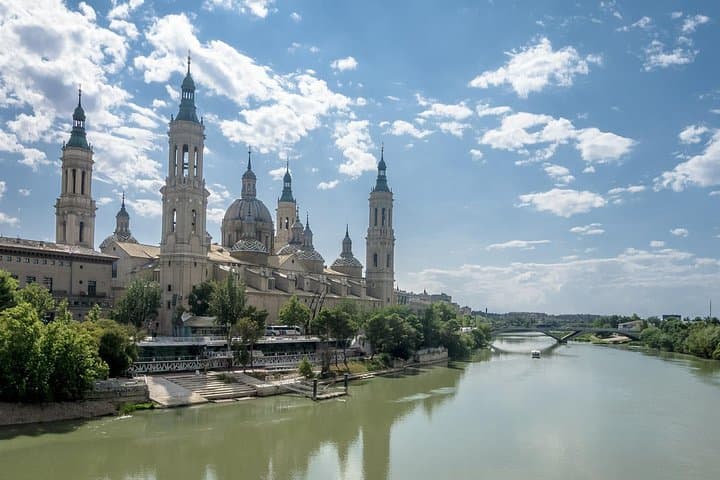
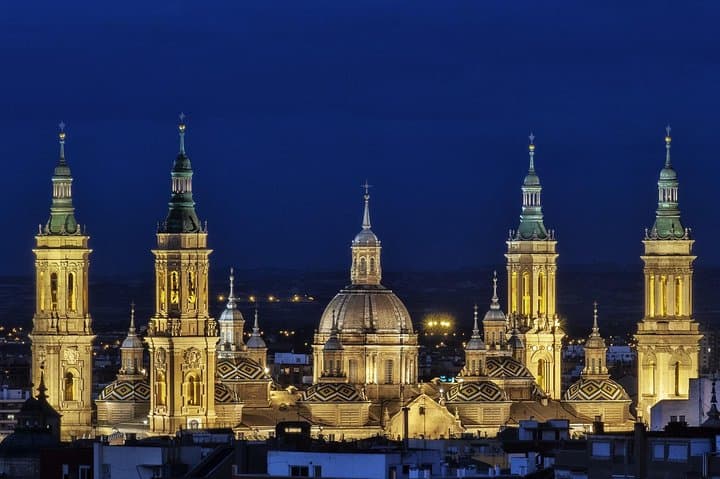
You step into Plaza del Pilar and the square opens: the Basílica de Nuestra Señora del Pilar fills the sky with domes and tiled roofs while the Ebro below nudges the city toward the Stone Bridge. Streets hum with market vendors, and the guide’s voice threads historical facts between the cathedral façades and narrow alleys.
You step into Plaza del Pilar and the square opens: the Basílica de Nuestra Señora del Pilar fills the sky with domes and tiled roofs while the Ebro below nudges the city toward the Stone Bridge. Streets hum with market vendors, and the guide’s voice threads historical facts between the cathedral façades and narrow alleys.
Zaragoza wears layers of history—Roman foundations, Taifa-era walls, and Gothic and Baroque churches. The Basílica (17th century baroque) and La Seo (Cathedral of the Saviour) sit within a medieval grid shaped by the Ebro’s course; the Puente de Piedra, rebuilt across centuries, still bears ashlar stone that remembers 15th‑century masons. The La Longa gallery occupies a 16th‑century building reworked for contemporary exhibits, while Mercado Central (1895) reveals late‑19th‑century ironwork and daily Aragonese foodways.
The tour is urban geology and architecture: stone, brick, and tile responding to floodplain soils and river hydraulics, creating viewpoints where the Ebro dares you to cross and look back at the city’s layered skyline.
Practical guidance: the route is flat cobblestone and asphalt, about 1.5 hours of easy walking—bring sturdy shoes and a water bottle. Mornings are cooler and less crowded; midday in summer gets hot and bright. Respect church etiquette (quiet, modest dress) and allow time for photos at the Puente de Piedra and the Mercado Central. Public transport and short taxi rides link the meeting point outside Hotel Catalonia El Pilar to most central accommodations. This tour blends concise local history with accessible urban exploration—ideal for first-time visitors wanting a focused introduction to Zaragoza.