THE ADVENTURE COLLECTIVE® · Independent discovery and booking for outdoor travel

Spend a full day moving from spice-scented plantations to the maze-like streets of Stone Town. This combined spice-farm cooking class and cultural walking tour blends hands-on food experiences with historical context and practical local insights.
Spend a full day moving from spice-scented plantations to the maze-like streets of Stone Town. This combined spice-farm cooking class and cultural walking tour blends hands-on food experiences with historical context and practical local insights.
The day opens with the humid scent of cinnamon and clove pressing close as a minivan eases off the coastal road and into the green, humid folds of Zanzibar’s spice farms. Leaves glisten; a guide plucks a lime and the air sharpens — you’ll feel the island’s flavors before you taste them.
Verified experiences and guided adventures in the surrounding area.
Operated by Africa & Beyond Tours & Travel Ltd · Stone Town, Zanzibar
The day opens with the humid scent of cinnamon and clove pressing close as a minivan eases off the coastal road and into the green, humid folds of Zanzibar’s spice farms. Leaves glisten; a guide plucks a lime and the air sharpens — you’ll feel the island’s flavors before you taste them.
The tour pairs hands-on time at a working spice plantation with a walking tour through the wooden lanes of Stone Town. At the farm, rows of cardamom, nutmeg and clove reveal agricultural techniques that sustained the archipelago’s economy for centuries; on Stone Town’s narrow streets you’ll see Omani-era doors, colonial stone buildings and markets that trace the island’s role as a crossroads between Africa, Arabia and India.
Geologically, Zanzibar is a coral island—its soils and mangrove-lined coasts shape both cuisine and settlement patterns. Culturally, food here is a living archive: Swahili dishes reflect centuries of trade and migration. Guides often point out small details—an old dispensary façade, a market stall specialty—that bring history into sharp, usable context.
Practical guidance: expect roughly 6–7 hours including transport, light walking on packed earth and cobbles, and a sit-down cooking lunch. Bring sun protection, a refillable water bottle and insect repellent; wear closed-toe shoes for the farm’s uneven paths. If you have dietary restrictions, notify the operator ahead of time. The tour is paced for a broad range of fitness levels and works well as a single-day cultural primer for first-time visitors to Zanzibar.
easy.
6–7 hours.
Light activity; suitable for most people who can walk 1–3 miles on uneven ground.
Yes—this private tour typically includes hotel pickup and drop-off by air-conditioned minivan; confirm pickup point when booking.
Yes—most common requests (vegetarian, halal, nut allergies) can be accommodated if notified in advance through the booking questions.
The operator notes wheelchair accessibility for transportation and many surfaces, but farm paths and narrow Stone Town lanes may present obstacles—check specifics before booking.
Expect light walking at the farm over uneven ground and a moderate stroll through Stone Town’s alleys—total walking is generally under 3 miles.
Zanzibar’s economy and culture were shaped by centuries of Indian Ocean trade—cloves and spices drove colonial interest and Stone Town’s architecture reflects Arab, Persian and European influences.
Many spice farms now practice small-scale sustainable agriculture; visitors should avoid single-use plastics, support local guides, and respect plantation hygiene to minimize impact.
Africa & Beyond Tours & Travel Ltd operates guided outdoor trips and adventures with an emphasis on safety, stewardship, and memorable experiences.



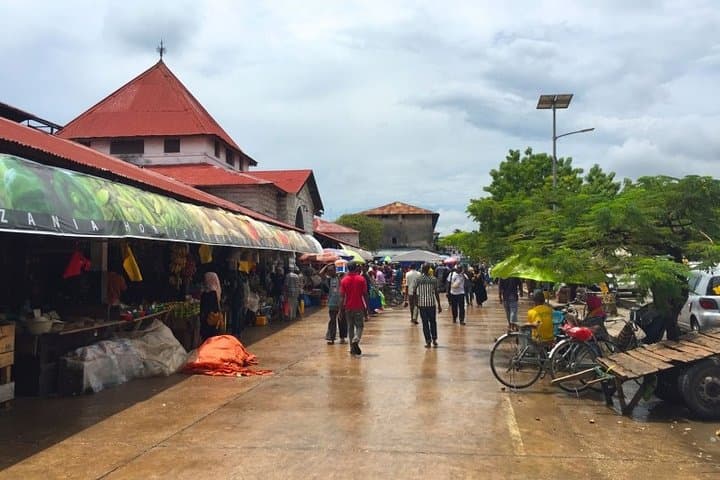
The day opens with the humid scent of cinnamon and clove pressing close as a minivan eases off the coastal road and into the green, humid folds of Zanzibar’s spice farms. Leaves glisten; a guide plucks a lime and the air sharpens — you’ll feel the island’s flavors before you taste them.
The day opens with the humid scent of cinnamon and clove pressing close as a minivan eases off the coastal road and into the green, humid folds of Zanzibar’s spice farms. Leaves glisten; a guide plucks a lime and the air sharpens — you’ll feel the island’s flavors before you taste them.
The tour pairs hands-on time at a working spice plantation with a walking tour through the wooden lanes of Stone Town. At the farm, rows of cardamom, nutmeg and clove reveal agricultural techniques that sustained the archipelago’s economy for centuries; on Stone Town’s narrow streets you’ll see Omani-era doors, colonial stone buildings and markets that trace the island’s role as a crossroads between Africa, Arabia and India.
Geologically, Zanzibar is a coral island—its soils and mangrove-lined coasts shape both cuisine and settlement patterns. Culturally, food here is a living archive: Swahili dishes reflect centuries of trade and migration. Guides often point out small details—an old dispensary façade, a market stall specialty—that bring history into sharp, usable context.
Practical guidance: expect roughly 6–7 hours including transport, light walking on packed earth and cobbles, and a sit-down cooking lunch. Bring sun protection, a refillable water bottle and insect repellent; wear closed-toe shoes for the farm’s uneven paths. If you have dietary restrictions, notify the operator ahead of time. The tour is paced for a broad range of fitness levels and works well as a single-day cultural primer for first-time visitors to Zanzibar.