THE ADVENTURE COLLECTIVE® · Independent discovery and booking for outdoor travel

Two days of classroom, confined-water skills and two open-water dives off Zanzibar that earn you a PADI Scuba Diver certificate to 12m. All equipment, light lunches and water are provided.
Two days of classroom, confined-water skills and two open-water dives off Zanzibar that earn you a PADI Scuba Diver certificate to 12m. All equipment, light lunches and water are provided.
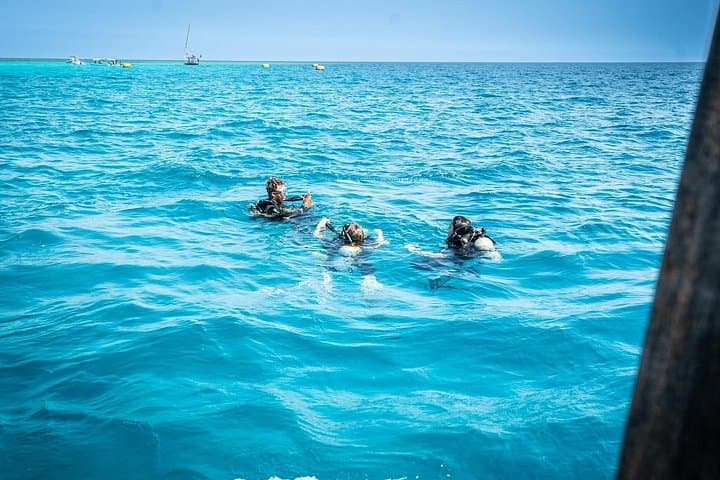
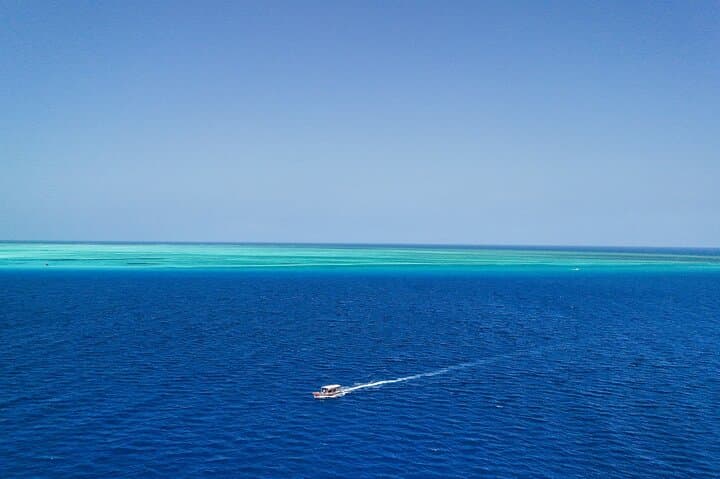
The boat slips off Stone Town at dawn and the Indian Ocean opens like a cool, breathing chamber—salt and light rearranging the world beneath the surface. Over two days, students move from classroom and confined-water skill drills to two ocean dives on offshore reefs, trading textbook diagrams for the slow choreography of reef life.
Verified experiences and guided adventures in the surrounding area.
Operated by Beach & Safari · Stone Town, Zanzibar
The boat slips off Stone Town at dawn and the Indian Ocean opens like a cool, breathing chamber—salt and light rearranging the world beneath the surface. Over two days, students move from classroom and confined-water skill drills to two ocean dives on offshore reefs, trading textbook diagrams for the slow choreography of reef life.
Zanzibar’s reefs sit on coral platforms built over millennia, shaped by currents that once carried Arab dhows, Omani clove merchants, and the Swahili trading culture that defined the archipelago. Today dive sites show both volcanic and coral limestone features: bommies, sand channels, and shallow pinnacles that attract turtles, reef fish, and passing pelagics.
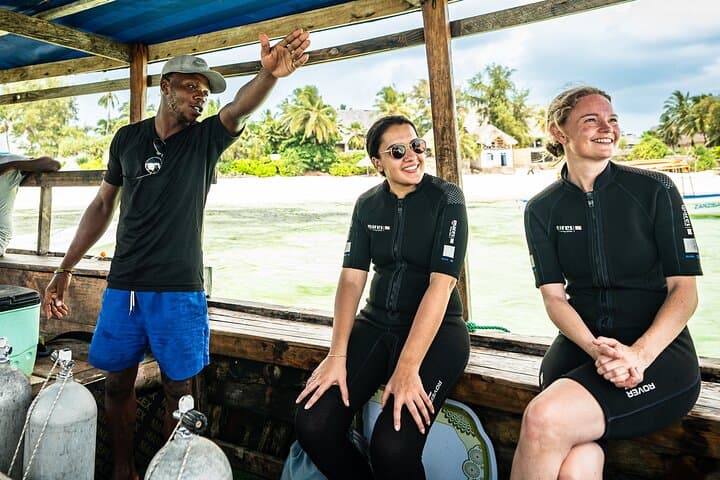
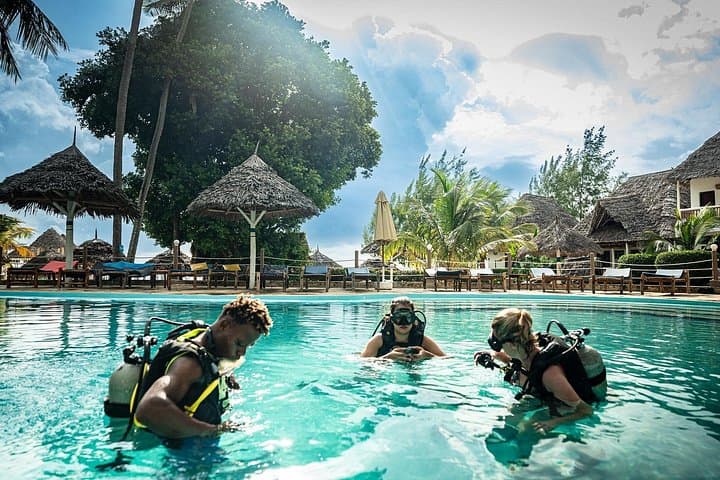
The course follows PADI Scuba Diver standards—day one covers theory and confined-water training; day two completes two open-water dives and issues a certificate permitting dives to 12 meters. The operator supplies all SCUBA equipment and light lunches with fruit and water aboard the boat.
Practical pointers: expect sturdy but short boat transfers, moderate currents on some sites, and surface intervals in hot sun. Bring a shorty or thermal if you get cold, a logbook or shredded-paper substitute for your certificate entry, and reef-safe sunscreen. Medical screening is required—this program isn’t recommended for pregnant travelers or people with serious cardiac, spinal, or severe respiratory conditions.
For first-time divers the course is an efficient, hands-on path to underwater independence—compact, safety-focused, and rooted in the rhythms of the Indian Ocean.
moderate.
2 days.
Moderate fitness—comfortable swimming ability, basic breath control and mobility required
No—this course is for beginners and follows PADI Scuba Diver standards, teaching theory, confined-water skills, and two open-water dives.
Successful completion grants a PADI Scuba Diver certificate permitting dives to a maximum depth of 12 meters (40 feet).
Pregnancy, recent cardiac or spinal conditions, uncontrolled asthma, or other serious health issues typically prevent participation—disclose health details during booking and seek medical clearance if unsure.
All SCUBA equipment is provided; the operator supplies a light lunch, fresh fruit and drinking water on both days (note: in March some lunches are replaced by fresh fruit).
Zanzibar’s reefs fringe an island long shaped by Swahili trade, Omani influence and spice routes; local maritime culture still runs on sailing traditions and dhow traffic.
Coral reefs here are sensitive—avoid touching coral, use reef-safe sunscreen, and choose operators that follow no-touch and mooring best practices.
Beach & Safari operates guided outdoor trips and adventures with an emphasis on safety, stewardship, and memorable experiences.
The boat slips off Stone Town at dawn and the Indian Ocean opens like a cool, breathing chamber—salt and light rearranging the world beneath the surface. Over two days, students move from classroom and confined-water skill drills to two ocean dives on offshore reefs, trading textbook diagrams for the slow choreography of reef life.
The boat slips off Stone Town at dawn and the Indian Ocean opens like a cool, breathing chamber—salt and light rearranging the world beneath the surface. Over two days, students move from classroom and confined-water skill drills to two ocean dives on offshore reefs, trading textbook diagrams for the slow choreography of reef life.
Zanzibar’s reefs sit on coral platforms built over millennia, shaped by currents that once carried Arab dhows, Omani clove merchants, and the Swahili trading culture that defined the archipelago. Today dive sites show both volcanic and coral limestone features: bommies, sand channels, and shallow pinnacles that attract turtles, reef fish, and passing pelagics.
The course follows PADI Scuba Diver standards—day one covers theory and confined-water training; day two completes two open-water dives and issues a certificate permitting dives to 12 meters. The operator supplies all SCUBA equipment and light lunches with fruit and water aboard the boat.
Practical pointers: expect sturdy but short boat transfers, moderate currents on some sites, and surface intervals in hot sun. Bring a shorty or thermal if you get cold, a logbook or shredded-paper substitute for your certificate entry, and reef-safe sunscreen. Medical screening is required—this program isn’t recommended for pregnant travelers or people with serious cardiac, spinal, or severe respiratory conditions.
For first-time divers the course is an efficient, hands-on path to underwater independence—compact, safety-focused, and rooted in the rhythms of the Indian Ocean.