THE ADVENTURE COLLECTIVE® · Independent discovery and booking for outdoor travel

Board an open 4x4 for a half-day game drive along the Zambezi’s river margins, where hippos wallow, sable and giraffe graze, and birdlife crowds the waterberry trees. Best taken at dawn or dusk, this accessible safari pairs dramatic river scenery with concentrated wildlife viewing close to Victoria Falls.
Board an open 4x4 for a half-day game drive along the Zambezi’s river margins, where hippos wallow, sable and giraffe graze, and birdlife crowds the waterberry trees. Best taken at dawn or dusk, this accessible safari pairs dramatic river scenery with concentrated wildlife viewing close to Victoria Falls.
Early light glows off the Zambezi and the river dares the bush awake—hippos blinking in the shallows while a lone fish eagle cuts the sky. In an open 4x4 you move slowly along river margins and open savanna, the guide reading spoor like a second language as giraffe silhouette and sable antelope punctuate the horizon.
Verified experiences and guided adventures in the surrounding area.
Operated by To do Africa · Victoria Falls, Matabeleland North
Early light glows off the Zambezi and the river dares the bush awake—hippos blinking in the shallows while a lone fish eagle cuts the sky. In an open 4x4 you move slowly along river margins and open savanna, the guide reading spoor like a second language as giraffe silhouette and sable antelope punctuate the horizon.
The Zambezi National Park stretches roughly 50 kilometres upstream from Victoria Falls, protecting riparian forest, floodplain and mopane woodland. Geologically it sits on ancient basalt flows carved by the Zambezi; the river’s edge supports waterberry and fig trees that harbor kingfishers and herons, while higher ground gives way to grassland where kudu and eland graze. The area’s conservation history ties to efforts to safeguard the Zambezi corridor and the wildlife that uses it seasonally.
Culturally the landscape is braided with local communities whose livelihoods have long depended on the river—fishing, river transport and tourism. Guides often point out tracking signs and explain how the river’s pulse shapes animal movement.
Practical guidance: drives run morning or late afternoon (about 3–3.5 hours) when animals are most active and light is best for photos. Expect dust, some bumps, and open-sided viewing—bring binoculars, a long lens and layers for cooler starts. Wildlife sightings are frequent but never guaranteed; maintain distance from hippo and crocodile, follow your guide’s directions, and leave no trace. Pickup from Victoria Falls lodges is typically included, making it an accessible half-day escape into true riverside wilderness.
easy.
3–4 hours.
Suitable for most fitness levels; activity is vehicle-based with minimal walking.
No—sightings are frequent given the park’s density of wildlife, but they cannot be guaranteed; guides increase chances by choosing optimal times and areas.
Yes; most operators include pickup and drop-off from Victoria Falls hotels and lodges as part of the tour.
Generally you remain in the vehicle for safety and to avoid disturbing animals—follow your guide’s direction if a short, controlled stop is permitted.
Infants may ride but are typically required to sit on an adult’s lap; check age policies with the operator before booking.
The park protects a stretch of the Zambezi riparian corridor upstream of Victoria Falls; its protection has focused on conserving riverine habitat and seasonal wildlife movements.
Pressure from tourism and local land use makes staying on designated tracks and avoiding litter critical; operators coordinate with Zimbabwe Parks to minimize disturbance.
To do Africa operates guided outdoor trips and adventures with an emphasis on safety, stewardship, and memorable experiences.
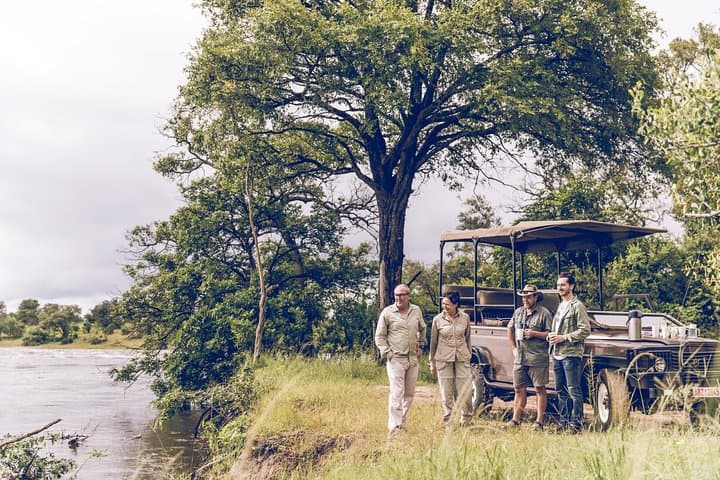
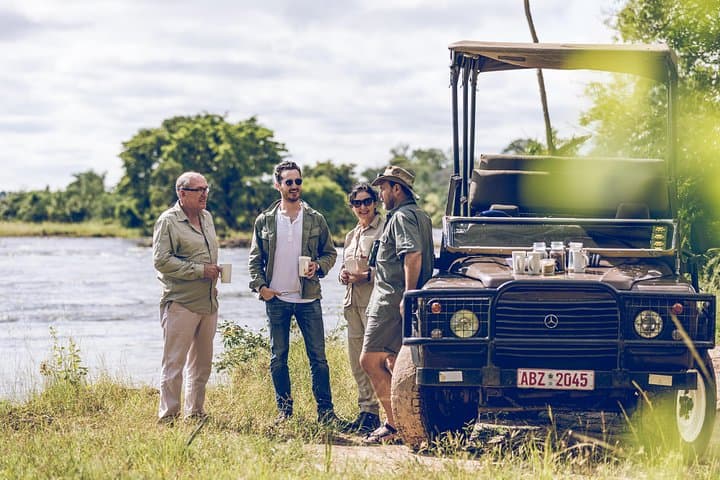
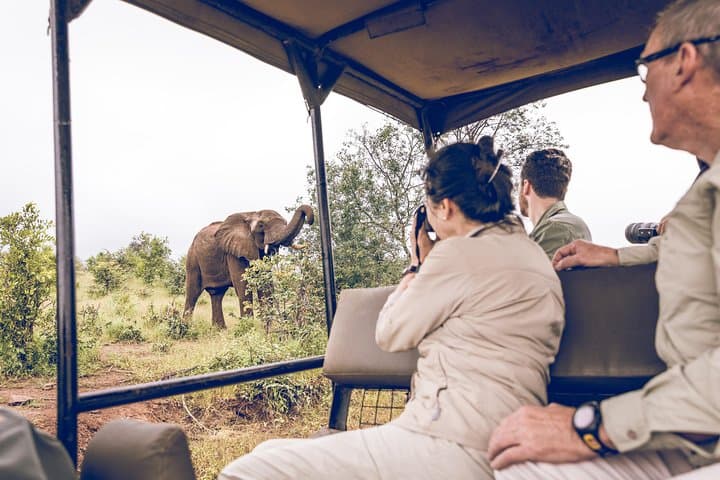
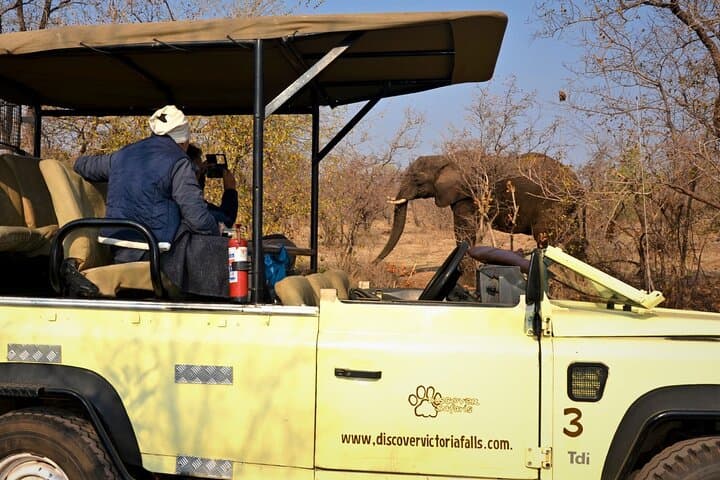
Early light glows off the Zambezi and the river dares the bush awake—hippos blinking in the shallows while a lone fish eagle cuts the sky. In an open 4x4 you move slowly along river margins and open savanna, the guide reading spoor like a second language as giraffe silhouette and sable antelope punctuate the horizon.
Early light glows off the Zambezi and the river dares the bush awake—hippos blinking in the shallows while a lone fish eagle cuts the sky. In an open 4x4 you move slowly along river margins and open savanna, the guide reading spoor like a second language as giraffe silhouette and sable antelope punctuate the horizon.
The Zambezi National Park stretches roughly 50 kilometres upstream from Victoria Falls, protecting riparian forest, floodplain and mopane woodland. Geologically it sits on ancient basalt flows carved by the Zambezi; the river’s edge supports waterberry and fig trees that harbor kingfishers and herons, while higher ground gives way to grassland where kudu and eland graze. The area’s conservation history ties to efforts to safeguard the Zambezi corridor and the wildlife that uses it seasonally.
Culturally the landscape is braided with local communities whose livelihoods have long depended on the river—fishing, river transport and tourism. Guides often point out tracking signs and explain how the river’s pulse shapes animal movement.
Practical guidance: drives run morning or late afternoon (about 3–3.5 hours) when animals are most active and light is best for photos. Expect dust, some bumps, and open-sided viewing—bring binoculars, a long lens and layers for cooler starts. Wildlife sightings are frequent but never guaranteed; maintain distance from hippo and crocodile, follow your guide’s directions, and leave no trace. Pickup from Victoria Falls lodges is typically included, making it an accessible half-day escape into true riverside wilderness.