THE ADVENTURE COLLECTIVE® · Independent discovery and booking for outdoor travel

A compact two-day desert escape from Marrakech to the Tinfou dunes and Zagora, combining a High Atlas crossing, UNESCO-listed Aït Ben Haddou, a camel trek and a night in a tented desert camp.
A compact two-day desert escape from Marrakech to the Tinfou dunes and Zagora, combining a High Atlas crossing, UNESCO-listed Aït Ben Haddou, a camel trek and a night in a tented desert camp.
You arrive to the dunes as the light thins, camel silhouettes cutting slow arcs across orange sand; wind pushes loose grains into new patterns and the campfire scent of tea and wood drifts up from the tents.
Verified experiences and guided adventures in the surrounding area.
Operated by Discover Morocco Tours · Zagora, Drâa-Tafilalet
You arrive to the dunes as the light thins, camel silhouettes cutting slow arcs across orange sand; wind pushes loose grains into new patterns and the campfire scent of tea and wood drifts up from the tents.
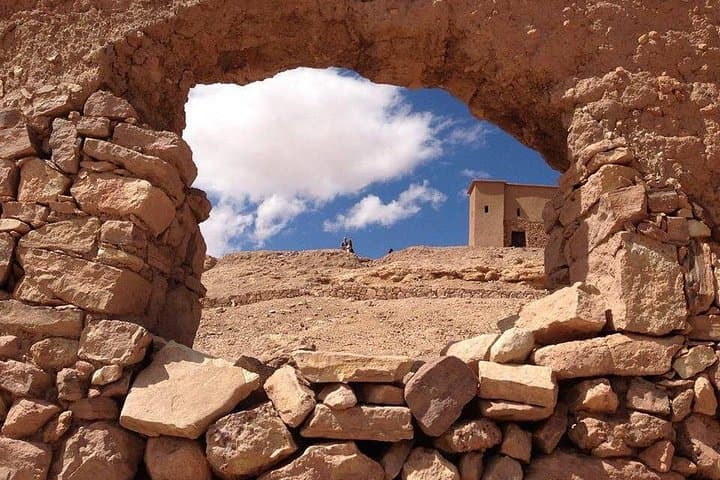
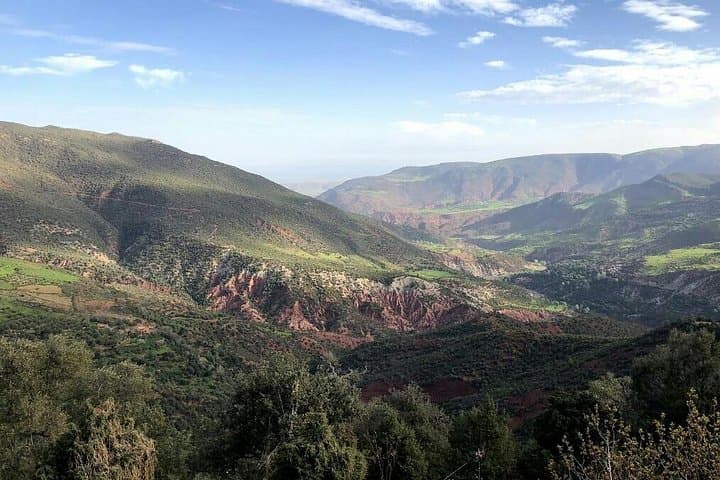
This two-day loop runs from Marrakech over the High Atlas via the Tizi n’Tichka pass (≈2,260 m), down through kasbah country to the Draa Valley and the small Erg of Tinfou near Zagora. Aït Ben Haddou—an 11th–17th century ksar and UNESCO site—anchors the route with film-history and mud-brick architecture, while the Draa’s palmeraies hint at long-lived caravan and irrigation traditions.
Geologically, the Tinfou dunes are wind-built ridges of Saharan sand deposited at the edge of the stone plateaus; the region shifts seasonally with wind patterns, so no two visits feel the same. Cultural moments—Berber music around the fire, mint tea rituals, and a short camel trek to camp—are woven into practical logistics: expect a 7:00 am Marrakech pickup, roughly 6–8 hours of driving the first day with short stops, a 90-minute camel ride at dusk, and an early sunrise watch the next morning before returning to Marrakech.
Plan for long vehicle transfers, strong sun, and cold desert nights. Bring layered clothing for wide temperature swings, at least 2 L of water, sturdy shoes for gravel and dunes, and small bills for local purchases. Sunrise and sunset are the high points; timing your camel trek to arrive ~30 minutes before sunset gives the best light and cooler walking for the camels.
moderate.
2 days.
Suitable for travelers with basic fitness — most walking is short; camel riding and climbing small dunes needs stable footing.
Yes — the itinerary includes a roughly 90-minute camel trek from Tinfou village to the tented camp, one camel per person.
Expect approximately 6–8 hours of driving with photo and rest stops the first day via the Tizi n’Tichka pass and Aït Ben Haddou.
The overnight is in a private tent per booking with basic bedding; the camp provides dinner, breakfast, mint tea and shared wash facilities typical of desert camps.
The tour notes suitability for most fitness levels, but camel mounting and sand terrain can be challenging; inquire about assistance and mobility accessibility before booking.
This corridor links historic caravan routes across the High Atlas; kasbahs and palmeraies mark centuries of trade and irrigation in a hostile landscape.
The dunes and palmeraies are fragile—stick to established paths, avoid driving on vegetation, and pack out waste to minimize impact.
Discover Morocco Tours operates guided outdoor trips and adventures with an emphasis on safety, stewardship, and memorable experiences.
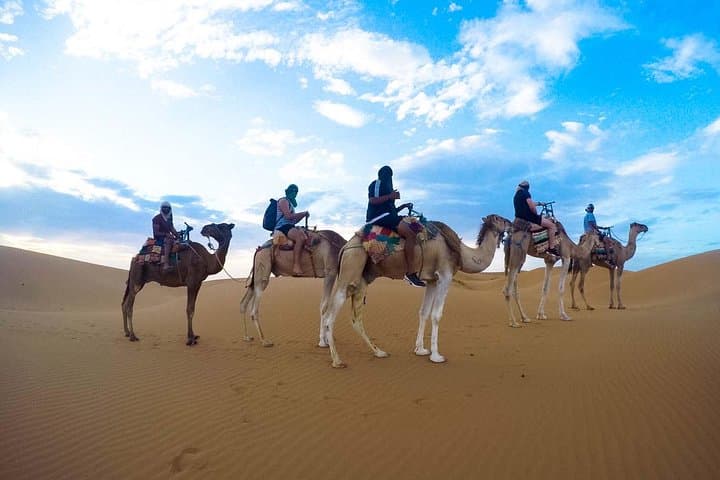
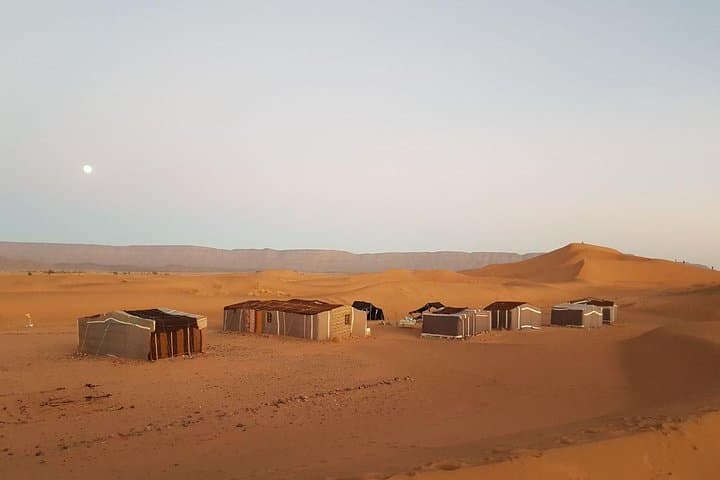
You arrive to the dunes as the light thins, camel silhouettes cutting slow arcs across orange sand; wind pushes loose grains into new patterns and the campfire scent of tea and wood drifts up from the tents.
You arrive to the dunes as the light thins, camel silhouettes cutting slow arcs across orange sand; wind pushes loose grains into new patterns and the campfire scent of tea and wood drifts up from the tents.
This two-day loop runs from Marrakech over the High Atlas via the Tizi n’Tichka pass (≈2,260 m), down through kasbah country to the Draa Valley and the small Erg of Tinfou near Zagora. Aït Ben Haddou—an 11th–17th century ksar and UNESCO site—anchors the route with film-history and mud-brick architecture, while the Draa’s palmeraies hint at long-lived caravan and irrigation traditions.
Geologically, the Tinfou dunes are wind-built ridges of Saharan sand deposited at the edge of the stone plateaus; the region shifts seasonally with wind patterns, so no two visits feel the same. Cultural moments—Berber music around the fire, mint tea rituals, and a short camel trek to camp—are woven into practical logistics: expect a 7:00 am Marrakech pickup, roughly 6–8 hours of driving the first day with short stops, a 90-minute camel ride at dusk, and an early sunrise watch the next morning before returning to Marrakech.
Plan for long vehicle transfers, strong sun, and cold desert nights. Bring layered clothing for wide temperature swings, at least 2 L of water, sturdy shoes for gravel and dunes, and small bills for local purchases. Sunrise and sunset are the high points; timing your camel trek to arrive ~30 minutes before sunset gives the best light and cooler walking for the camels.