THE ADVENTURE COLLECTIVE® · Independent discovery and booking for outdoor travel

Leave Marrakech for a two-day private crossing of the High Atlas to Zagora, with visits to Aït Benhaddou and the Draa Valley, an overnight in a desert camp and a camel trek at sunset. Practical, cultural, and scenic highlights packed into 48 hours.
Leave Marrakech for a two-day private crossing of the High Atlas to Zagora, with visits to Aït Benhaddou and the Draa Valley, an overnight in a desert camp and a camel trek at sunset. Practical, cultural, and scenic highlights packed into 48 hours.
Dust rises on the asphalt as your 4x4 leaves Marrakech behind, climbing toward the Tizi-n-Tichka pass. The road slices through the High Atlas—rock faces and terraced villages slide past—until the landscape softens into palms and ochre kasbahs. By late afternoon the dunes of Zagora throw long shadows; camels kneel and the camp waits with a low lantern glow under a vast sky.
Verified experiences and guided adventures in the surrounding area.
Operated by Mhidi Travel · Zagora, Drâa-Tafilalet
Dust rises on the asphalt as your 4x4 leaves Marrakech behind, climbing toward the Tizi-n-Tichka pass. The road slices through the High Atlas—rock faces and terraced villages slide past—until the landscape softens into palms and ochre kasbahs. By late afternoon the dunes of Zagora throw long shadows; camels kneel and the camp waits with a low lantern glow under a vast sky.
This route threads geography and history: the Tizi-n-Tichka at 2,265m is a high-mountain corridor carved by human passage for centuries, and Aït Benhaddou—a UNESCO kasbah—tells the story of trans-Saharan trade and Moroccan film-making. The Draa Valley folds a ribbon of date palms and irrigation channels, a green artery in an otherwise arid region.
Culturally, expect Berber hospitality: guesthouse meals, simple tents, and guides who balance local knowledge with practical safety. Geologically, the Sahara here is wind-sculpted sand over older alluvial deposits; dunes shift seasonally and hold little shade.
Practical side: the tour is two packed days of driving, short hikes and camel treks. Pack layers—the desert swings hot by day and chilly at night—carry water and sun protection, and be ready for uneven sand when mounting camels. Timing your visit for shoulder seasons reduces extreme heat and keeps dust manageable.
For photographers, sunrise on the dunes is primary; for travelers, the overnight in camp is the central experience: listening to wind and distant camel bells, sleeping under a sky so dark the Milky Way feels close enough to touch.
moderate.
2 days.
Moderate — comfortable sitting for long transfers, able to mount a camel and walk short stretches on sand and uneven terrain.
Expect roughly 6–8 hours of driving depending on stops, road conditions and time spent at Aït Benhaddou and viewpoints.
The tour includes an overnight in a desert tent; setups vary but generally offer individual or shared tents with foam bedding and basic facilities.
Yes—camel rides are gentle and short, though mounting can be unsteady; inform the operator of mobility issues so guides can assist.
Guides are typically multilingual (Arabic, Berber, French and often English) but confirm if you need a specific language before booking.
This corridor connected Saharan trade routes; Aït Benhaddou grew wealthy on caravans and later served as a film location for international productions.
Water is scarce—pack out waste when possible and follow camp rules for fuel and campfire use; support local guides to benefit the community.
Mhidi Travel operates guided outdoor trips and adventures with an emphasis on safety, stewardship, and memorable experiences.
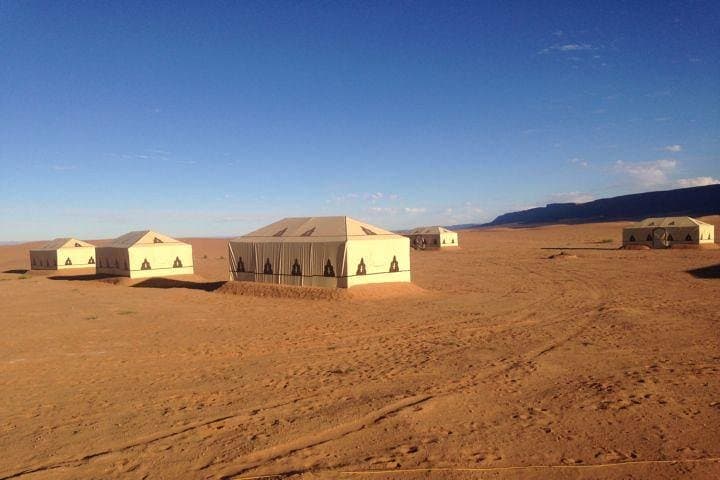
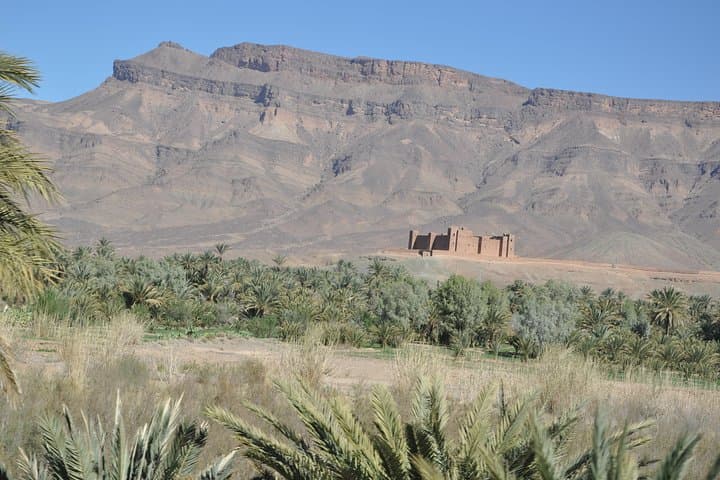
Dust rises on the asphalt as your 4x4 leaves Marrakech behind, climbing toward the Tizi-n-Tichka pass. The road slices through the High Atlas—rock faces and terraced villages slide past—until the landscape softens into palms and ochre kasbahs. By late afternoon the dunes of Zagora throw long shadows; camels kneel and the camp waits with a low lantern glow under a vast sky.
Dust rises on the asphalt as your 4x4 leaves Marrakech behind, climbing toward the Tizi-n-Tichka pass. The road slices through the High Atlas—rock faces and terraced villages slide past—until the landscape softens into palms and ochre kasbahs. By late afternoon the dunes of Zagora throw long shadows; camels kneel and the camp waits with a low lantern glow under a vast sky.
This route threads geography and history: the Tizi-n-Tichka at 2,265m is a high-mountain corridor carved by human passage for centuries, and Aït Benhaddou—a UNESCO kasbah—tells the story of trans-Saharan trade and Moroccan film-making. The Draa Valley folds a ribbon of date palms and irrigation channels, a green artery in an otherwise arid region.
Culturally, expect Berber hospitality: guesthouse meals, simple tents, and guides who balance local knowledge with practical safety. Geologically, the Sahara here is wind-sculpted sand over older alluvial deposits; dunes shift seasonally and hold little shade.
Practical side: the tour is two packed days of driving, short hikes and camel treks. Pack layers—the desert swings hot by day and chilly at night—carry water and sun protection, and be ready for uneven sand when mounting camels. Timing your visit for shoulder seasons reduces extreme heat and keeps dust manageable.
For photographers, sunrise on the dunes is primary; for travelers, the overnight in camp is the central experience: listening to wind and distant camel bells, sleeping under a sky so dark the Milky Way feels close enough to touch.