THE ADVENTURE COLLECTIVE® · Independent discovery and booking for outdoor travel

Rise before dawn, ride a dromedary into an immense desert and sleep in a Berber camp beneath stars. This two-day Zagora trek from Marrakech pairs dramatic mountain passes and kasbahs with a slow, sensory crossing of the Sahara edge.
Rise before dawn, ride a dromedary into an immense desert and sleep in a Berber camp beneath stars. This two-day Zagora trek from Marrakech pairs dramatic mountain passes and kasbahs with a slow, sensory crossing of the Sahara edge.
Before dawn the dunes breathe—cool air sliding off stone and sand as you mount a dromedary and watch the sky bleed into color. The two-day Zagora trek moves in slow, deliberate measures: a sunrise camel ride to a Berber camp, a night under canvas and stars, then a reverse route through palm-lined oases and kasbahs back toward Marrakech.
Verified experiences and guided adventures in the surrounding area.
Operated by Day Out Marrakech · Zagora, Drâa-Tafilalet
Before dawn the dunes breathe—cool air sliding off stone and sand as you mount a dromedary and watch the sky bleed into color. The two-day Zagora trek moves in slow, deliberate measures: a sunrise camel ride to a Berber camp, a night under canvas and stars, then a reverse route through palm-lined oases and kasbahs back toward Marrakech.
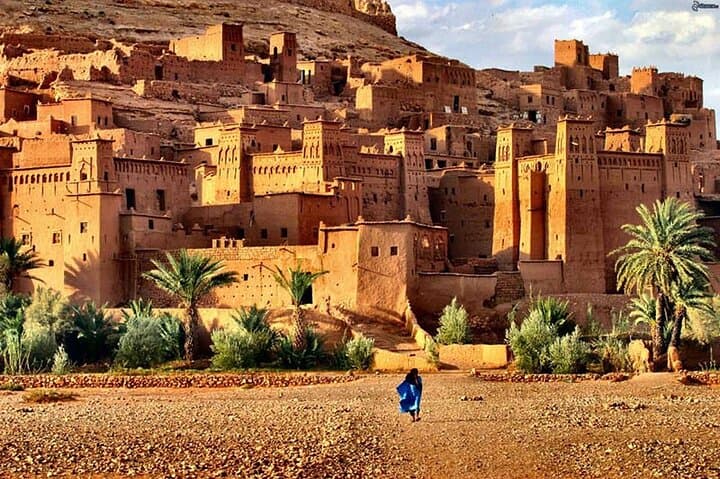
The route threads the High Atlas via the Tizi n'Tichka pass (about 2,260 m), drops into the cinematic adobe of Aït Ben Haddou, and follows the Draa Valley’s palm groves toward Zagora. Geologically, you travel from rugged, folded granites and schists of the Atlas to wind-sculpted dunes and alluvial plains—an abrupt, readable change in terrain. Culturally, the area sits on old trans-Saharan trade corridors; kasbahs and fortified granaries reflect centuries of caravan traffic. Nearby Ouarzazate’s film studios underscore the landscape’s cinematic appeal.
Expect practical comforts and desert realities: drives of roughly 350–400 km total depending on route, long stretches on paved and rough roads, and an overnight in a communal Berber tent with basic sleeping pads and meals included. Temperatures swing widely—hot afternoons, cold nights—so pack layering, sun protection, and a refillable water bottle. Rise early for the best light, respect local customs at villages, and keep waste out of the dunes. The trek is straightforward but remote enough that a guide, local knowledge, and conservative pacing make the experience both safe and memorable.
moderate.
2 days (approx 48 hours).
Suitable for travelers in average physical condition who can manage several hours of sitting and short camel rides; not strenuous but requires mobility for mounting camels and uneven tent ground.
Expect roughly 350–400 km of driving depending on route; with stops the transfer can take 6–8 hours to Aït Ben Haddou and longer to Zagora overall.
Camps use shared tents with basic mattresses or sleeping pads and blankets; facilities are simple and meals are communal, giving an authentic desert experience.
No special skill is needed; camels are docile and guides assist mounting and dismounting, though those with mobility issues should notify the operator beforehand.
Basic restroom facilities are available at larger stops and camps, but expect limited plumbing—bring hand sanitizer and biodegradable toilet paper.
This corridor was part of trans-Saharan trade routes; kasbahs and adobe forts grew up to protect caravans and store grain, while Ouarzazate later became a center for film production.
The Sahara edge is fragile—stay on established routes, minimize water use, pack out waste, and support local guides who practice sustainable camp protocols.
Day Out Marrakech operates guided outdoor trips and adventures with an emphasis on safety, stewardship, and memorable experiences.
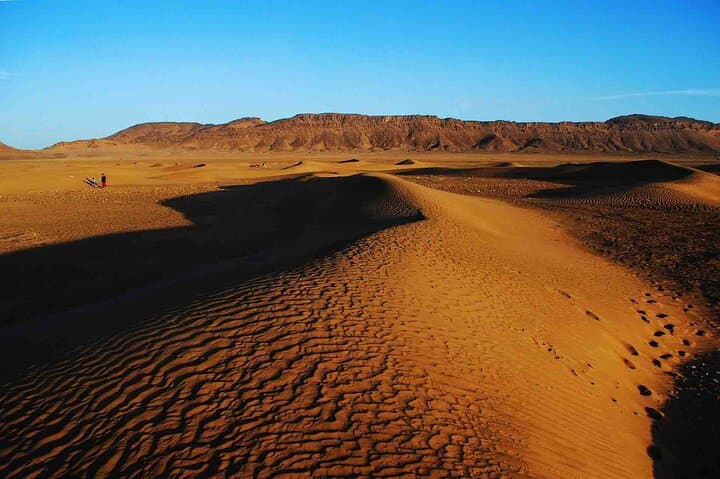
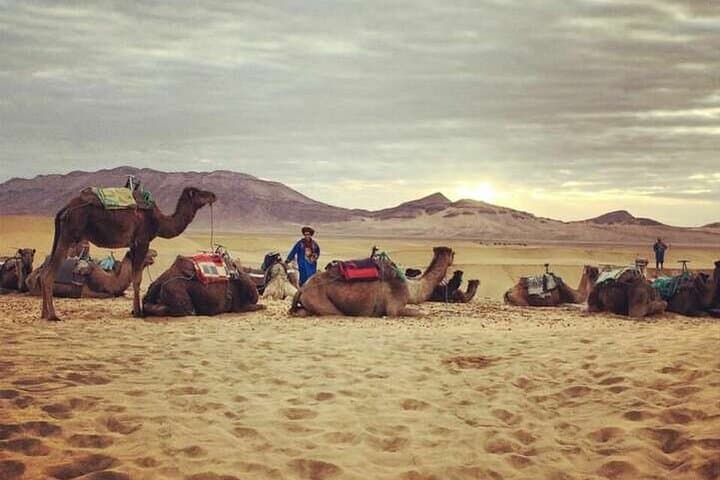
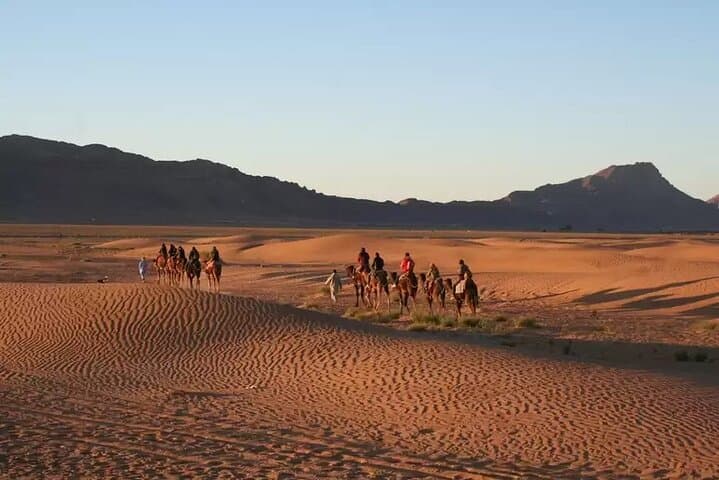
Before dawn the dunes breathe—cool air sliding off stone and sand as you mount a dromedary and watch the sky bleed into color. The two-day Zagora trek moves in slow, deliberate measures: a sunrise camel ride to a Berber camp, a night under canvas and stars, then a reverse route through palm-lined oases and kasbahs back toward Marrakech.
Before dawn the dunes breathe—cool air sliding off stone and sand as you mount a dromedary and watch the sky bleed into color. The two-day Zagora trek moves in slow, deliberate measures: a sunrise camel ride to a Berber camp, a night under canvas and stars, then a reverse route through palm-lined oases and kasbahs back toward Marrakech.
The route threads the High Atlas via the Tizi n'Tichka pass (about 2,260 m), drops into the cinematic adobe of Aït Ben Haddou, and follows the Draa Valley’s palm groves toward Zagora. Geologically, you travel from rugged, folded granites and schists of the Atlas to wind-sculpted dunes and alluvial plains—an abrupt, readable change in terrain. Culturally, the area sits on old trans-Saharan trade corridors; kasbahs and fortified granaries reflect centuries of caravan traffic. Nearby Ouarzazate’s film studios underscore the landscape’s cinematic appeal.
Expect practical comforts and desert realities: drives of roughly 350–400 km total depending on route, long stretches on paved and rough roads, and an overnight in a communal Berber tent with basic sleeping pads and meals included. Temperatures swing widely—hot afternoons, cold nights—so pack layering, sun protection, and a refillable water bottle. Rise early for the best light, respect local customs at villages, and keep waste out of the dunes. The trek is straightforward but remote enough that a guide, local knowledge, and conservative pacing make the experience both safe and memorable.