THE ADVENTURE COLLECTIVE® · Independent discovery and booking for outdoor travel

Travel from Marrakech over the Tichka Pass into the Draa Valley for a two-day desert overnight with a sunset camel trek and a night in a Berber tent. Visit Ait Ben Haddou and Atlas Film Studios while experiencing local music and traditional meals under wide desert skies.
Travel from Marrakech over the Tichka Pass into the Draa Valley for a two-day desert overnight with a sunset camel trek and a night in a Berber tent. Visit Ait Ben Haddou and Atlas Film Studios while experiencing local music and traditional meals under wide desert skies.
The sun tips a rim of orange over the dunes as you swing your leg over a camel’s broad back; the caravan rocks forward, the desert air pushing against your face with the clarity of something ancient. Leaving Marrakech, the road climbs the Tichka Pass and peels through terraced walnut and almond orchards, then spills into the ochre sweep of the Draa Valley where kasbahs press against the palm groves.
Verified experiences and guided adventures in the surrounding area.
Operated by Truly Morocco · Zagora, Drâa-Tafilalet
The sun tips a rim of orange over the dunes as you swing your leg over a camel’s broad back; the caravan rocks forward, the desert air pushing against your face with the clarity of something ancient. Leaving Marrakech, the road climbs the Tichka Pass and peels through terraced walnut and almond orchards, then spills into the ochre sweep of the Draa Valley where kasbahs press against the palm groves.
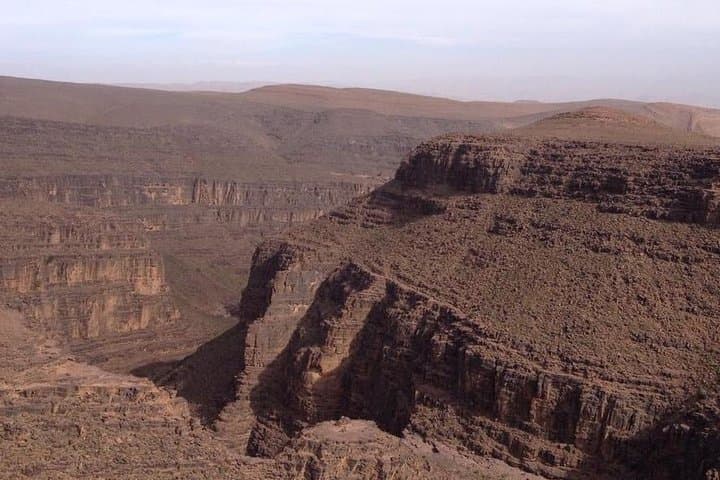
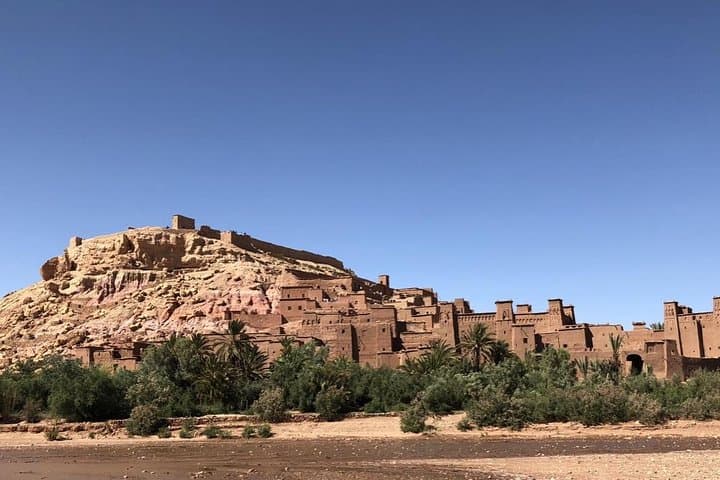
This is a route shaped by trade and film. Ait Ben Haddou, a UNESCO ksar, stands as a fortress of sun-baked brick along ancient caravan roads; later, the region’s light and landscapes drew filmmakers to Atlas Studios and Ouarzazate. Geologically, the High Atlas drops from snow-capped passes into arid lowlands; wind and sparse rains sculpt the dunes that cradle the desert camps. Culturally, Berber hospitality is the through-line: night songs, tagine dinners, and tented sleeping arrangements that follow nomadic patterns.
Practicalities are direct: this small-group itinerary covers roughly 10–12 hours of driving spread over two days with short walks and a one-night camp. Expect a gentle camel trek at sunset and sunrise—camel pace is slow but steady—then an evening of communal food and music in private Berber tents. Bring layered clothing for temperature swings, sunscreen, and a refillable water bottle. Plan for basic camp facilities and limited phone service; mobility needs are low but uneven sand and stone underfoot favor sturdy shoes. If you want photos of the Milky Way, wake before dawn when the camp is quiet and the sky is at its sharpest.
easy.
2 days.
Suitable for travelers in average physical condition; requires short walks and mounting a camel once or twice.
The camel trek is gentle and paced for beginners; participants should be able to mount and dismount with minimal assistance.
Most departures pick up from central Marrakech hotels and riads and return to Marrakech on day two in the evening.
Overnight accommodation is in private Berber tents but facilities like dining and show areas are communal; showers and running water may be basic.
Tipping is customary; budget a small amount per traveler for the camel handler and camp crew to acknowledge service.
The route follows old trans-Saharan caravan corridors; kasbahs like Ait Ben Haddou once controlled trade and later featured in films, reflecting layered local history.
Water is scarce—minimize consumption and avoid single-use plastics; support local guides and camps that follow low-impact practices.
Truly Morocco operates guided outdoor trips and adventures with an emphasis on safety, stewardship, and memorable experiences.
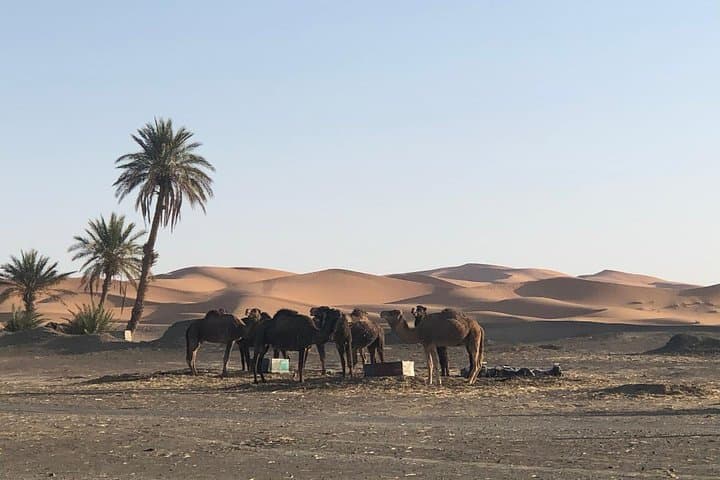
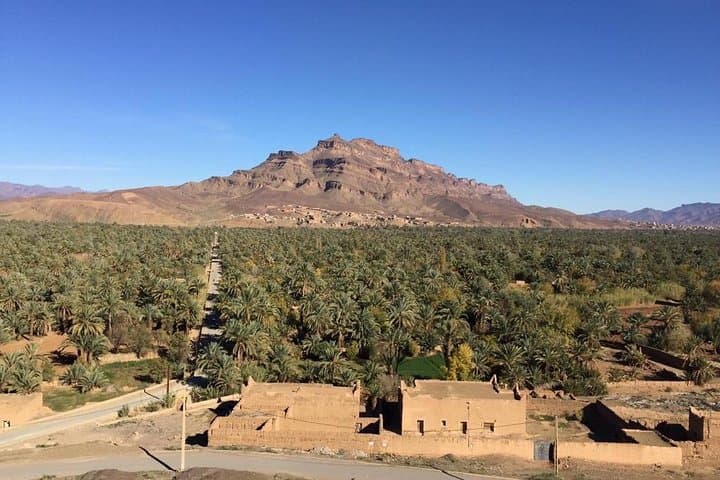
The sun tips a rim of orange over the dunes as you swing your leg over a camel’s broad back; the caravan rocks forward, the desert air pushing against your face with the clarity of something ancient. Leaving Marrakech, the road climbs the Tichka Pass and peels through terraced walnut and almond orchards, then spills into the ochre sweep of the Draa Valley where kasbahs press against the palm groves.
The sun tips a rim of orange over the dunes as you swing your leg over a camel’s broad back; the caravan rocks forward, the desert air pushing against your face with the clarity of something ancient. Leaving Marrakech, the road climbs the Tichka Pass and peels through terraced walnut and almond orchards, then spills into the ochre sweep of the Draa Valley where kasbahs press against the palm groves.
This is a route shaped by trade and film. Ait Ben Haddou, a UNESCO ksar, stands as a fortress of sun-baked brick along ancient caravan roads; later, the region’s light and landscapes drew filmmakers to Atlas Studios and Ouarzazate. Geologically, the High Atlas drops from snow-capped passes into arid lowlands; wind and sparse rains sculpt the dunes that cradle the desert camps. Culturally, Berber hospitality is the through-line: night songs, tagine dinners, and tented sleeping arrangements that follow nomadic patterns.
Practicalities are direct: this small-group itinerary covers roughly 10–12 hours of driving spread over two days with short walks and a one-night camp. Expect a gentle camel trek at sunset and sunrise—camel pace is slow but steady—then an evening of communal food and music in private Berber tents. Bring layered clothing for temperature swings, sunscreen, and a refillable water bottle. Plan for basic camp facilities and limited phone service; mobility needs are low but uneven sand and stone underfoot favor sturdy shoes. If you want photos of the Milky Way, wake before dawn when the camp is quiet and the sky is at its sharpest.