THE ADVENTURE COLLECTIVE® · Independent discovery and booking for outdoor travel

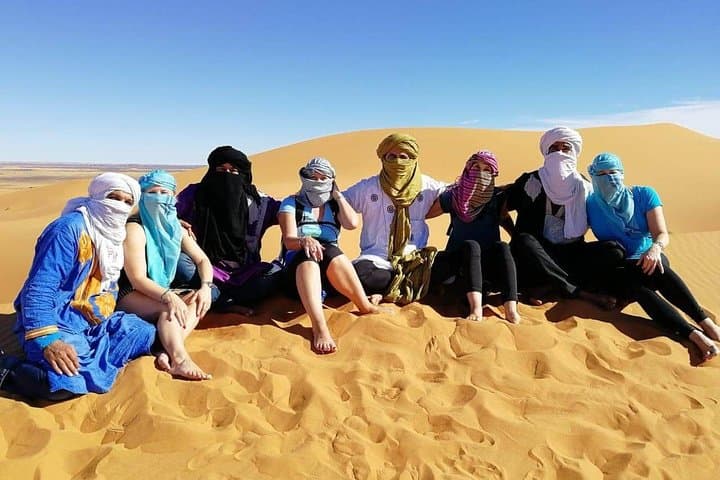
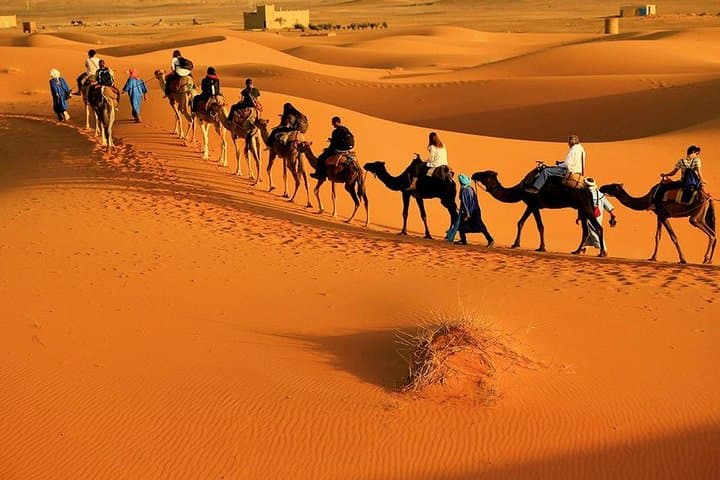
Leave Marrakech before sunrise to cross the High Atlas and sleep beneath Zagora's dunes on a two-day small-group tour. Visit Ait Ben Haddou and Ouarzazate, ride camels at sunset, and wake to Sahara light—compact, accessible, and culturally rich.
Leave Marrakech before sunrise to cross the High Atlas and sleep beneath Zagora's dunes on a two-day small-group tour. Visit Ait Ben Haddou and Ouarzazate, ride camels at sunset, and wake to Sahara light—compact, accessible, and culturally rich.
The bus peels away from Marrakech at dawn and the High Atlas swells like a wall ahead, edges chalked with sunlight as travelers press their faces to the window. By midday stone kasbahs and the terraced spine of Tizi-n-Tichka pass give way to lunar plains; by evening the dunes of Zagora rise, slow and patient, daring you to trace their crests by camel at sunset.
Verified experiences and guided adventures in the surrounding area.
Operated by Marrakech tour services · Marrakech, Marrakesh-Safi
The bus peels away from Marrakech at dawn and the High Atlas swells like a wall ahead, edges chalked with sunlight as travelers press their faces to the window. By midday stone kasbahs and the terraced spine of Tizi-n-Tichka pass give way to lunar plains; by evening the dunes of Zagora rise, slow and patient, daring you to trace their crests by camel at sunset.
This two-day loop threads cultural landmarks and geological contrasts: Ait Ben Haddou, a fortified ksar carved from mudbrick, sits above the valley as an architectural echo of pre-Saharan trade routes. Ouarzazate, with its film studios and kasbahs, marks the transition from Atlas rock to the red sands of Draa, where date-palm oases outline ancient caravan paths. Local Berber communities still practice irrigation and oasis agriculture learned across centuries of desert life.
Practical guidance is straightforward. Expect long stretches of driving—roughly 7–9 hours total each way split across scenic stops—and short camel treks at dusk and dawn that require basic balance and mobility. Nights are spent in desert tents with simple bedding and two meals provided; temperatures swing quickly, so layers are essential. Bring a small daypack, plenty of water, sun protection, and modest clothing for village visits. Watch footing on sandy slopes and follow guide instructions during camel transfers and camp setup.
For first-time visitors this trip compresses Morocco's high mountains, kasbah culture, and Sahara silence into a compact, accessible experience—an introduction built for those who want to feel the desert move underfoot without deep backcountry commitment.
easy.
2 days (approx 54 hours).
Suitable for most fitness levels; you should be able to mount a camel and walk short sandy slopes.
Expect roughly 7–9 hours of driving each travel day split by stops at Ait Ben Haddou and Ouarzazate; time includes scenic viewpoints and lunch breaks.
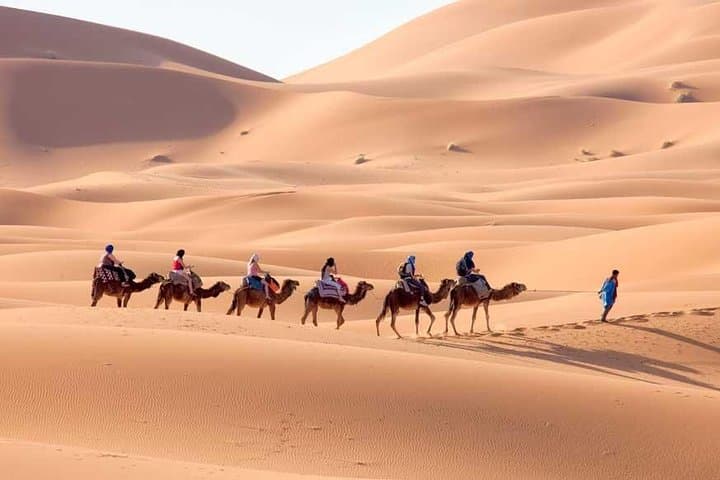
Camel rides are short and low-speed; basic balance is needed but guides assist mounting and dismounting.
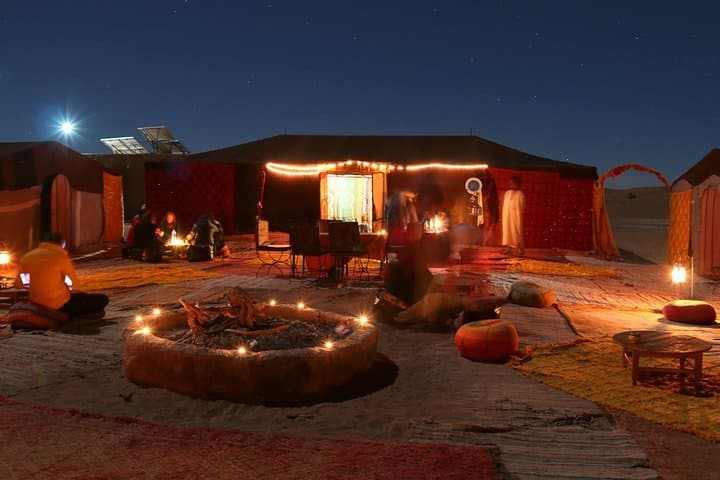
Overnight is in a desert bivouac with shared tents, simple sleeping mats or beds, and communal dining; bedding is provided but bring a light liner if you prefer.
Children can join but infants must sit on a lap for transport; check specific age policies with the operator before booking.
The route follows historic caravan corridors linking the Atlas and Sahara; Ait Ben Haddou served as a defensive and trading node between mountain and desert communities.
Stay on established paths, avoid disturbing palm oases, and use refillable water bottles to reduce plastic; local camps rely on limited water and firewood resources.
Marrakech tour services operates guided outdoor trips and adventures with an emphasis on safety, stewardship, and memorable experiences.
The bus peels away from Marrakech at dawn and the High Atlas swells like a wall ahead, edges chalked with sunlight as travelers press their faces to the window. By midday stone kasbahs and the terraced spine of Tizi-n-Tichka pass give way to lunar plains; by evening the dunes of Zagora rise, slow and patient, daring you to trace their crests by camel at sunset.
The bus peels away from Marrakech at dawn and the High Atlas swells like a wall ahead, edges chalked with sunlight as travelers press their faces to the window. By midday stone kasbahs and the terraced spine of Tizi-n-Tichka pass give way to lunar plains; by evening the dunes of Zagora rise, slow and patient, daring you to trace their crests by camel at sunset.
This two-day loop threads cultural landmarks and geological contrasts: Ait Ben Haddou, a fortified ksar carved from mudbrick, sits above the valley as an architectural echo of pre-Saharan trade routes. Ouarzazate, with its film studios and kasbahs, marks the transition from Atlas rock to the red sands of Draa, where date-palm oases outline ancient caravan paths. Local Berber communities still practice irrigation and oasis agriculture learned across centuries of desert life.
Practical guidance is straightforward. Expect long stretches of driving—roughly 7–9 hours total each way split across scenic stops—and short camel treks at dusk and dawn that require basic balance and mobility. Nights are spent in desert tents with simple bedding and two meals provided; temperatures swing quickly, so layers are essential. Bring a small daypack, plenty of water, sun protection, and modest clothing for village visits. Watch footing on sandy slopes and follow guide instructions during camel transfers and camp setup.
For first-time visitors this trip compresses Morocco's high mountains, kasbah culture, and Sahara silence into a compact, accessible experience—an introduction built for those who want to feel the desert move underfoot without deep backcountry commitment.