THE ADVENTURE COLLECTIVE® · Independent discovery and booking for outdoor travel

A compact two-day loop from Marrakech that combines the High Atlas pass, UNESCO-listed Aït Benhaddou, and a sunset camel trek to an overnight desert bivouac in Zagora. Expect long drives, dramatic light, and simple camp comforts beneath clear night skies.
A compact two-day loop from Marrakech that combines the High Atlas pass, UNESCO-listed Aït Benhaddou, and a sunset camel trek to an overnight desert bivouac in Zagora. Expect long drives, dramatic light, and simple camp comforts beneath clear night skies.
The minivan peels out of Marrakech before dawn; light creeps across the High Atlas, and the road climbs the Tizi-n-Tichka pass where ochre slopes and terraced Berber farms push at the horizon.
Verified experiences and guided adventures in the surrounding area.
Operated by Shared Desert Tours · Zagora, Drâa-Tafilalet
The minivan peels out of Marrakech before dawn; light creeps across the High Atlas, and the road climbs the Tizi-n-Tichka pass where ochre slopes and terraced Berber farms push at the horizon.
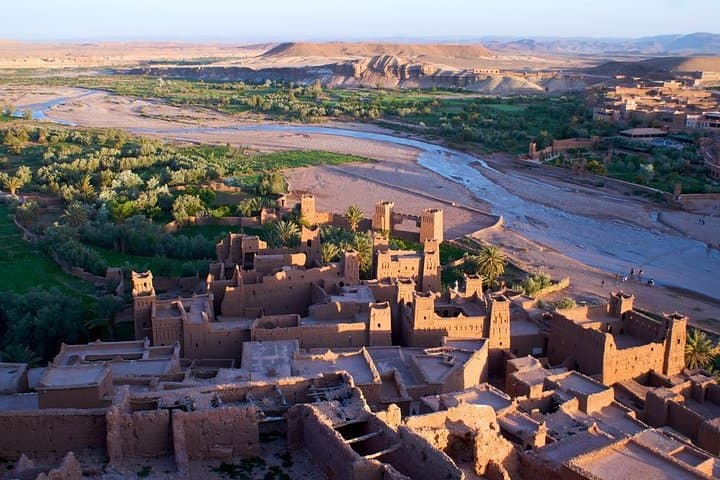
By midday the compact earthen walls of Aït Benhaddou rise, an ancient caravan stop that still wears the marks of trade routes and film crews. The route slides through Ouarzazate and the Anti-Atlas, then eases into the cool green of the Draa valley—a long ribbon of palms that signals the approaching desert.
Geology here is clear: folded mountain rock gives way to alluvial plains and wind-sculpted sand. Culture is equally visible—Berber villages on hill shoulders, farmers tending date palms, and the living ksar where families keep the old mud houses in a UNESCO-listed site.
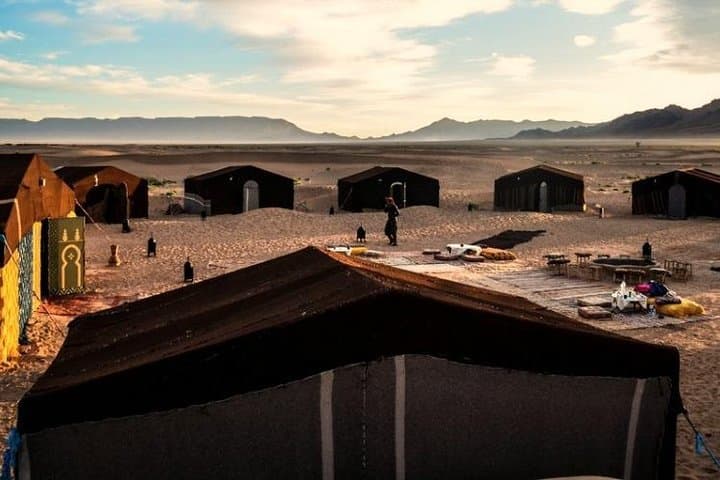
Practical expectations: this is a driving-forward, active-relaxation trip rather than a technical trek. Day one includes several roadside stops and a late-afternoon 30–40 minute camel ride into the dunes to a private bivouac, with dinner and tents that have shared shower facilities. Day two starts early—return by camel to meet the vehicle, then stops at Aït Benhaddou and Ouarzazate before descending the pass back to Marrakech.
Plan for long vehicle stretches, wide temperature swings, and sandy terrain. Bring sun protection, refillable water, sturdy shoes for short walks at kasbahs, and a warm layer for desert nights. Respect local customs at camps and keep waste secure—water and fuel are limited in this landscape. With basic preparation the Zagora overnight gives a compact, vivid taste of Morocco’s desert and mountain margins.
moderate.
2 days (approx. 48 hours; 8–12 hours travel/day).
Suitable for travelers who can tolerate long vehicle transfers and short walks on uneven ground; minimal endurance required
The camel trek is roughly 30–40 minutes each way—long enough to reach the private bivouac and watch sunset, but not an extended expedition.
Guests stay in private Berber-style tents with basic mattresses; showers and toilets are shared and located outside the tents.
The itinerary notes accessibility for strollers and some wheelchair access, but camel mounting and sandy surfaces can be challenging; contact the operator about specific mobility needs.
Dinner at the desert camp and breakfast the next morning are included; lunches and refreshments during travel are typically at your own expense.
The route follows historic caravan corridors; Aït Benhaddou was a trading halt on routes moving salt, silver and goods between the Sahara and Marrakech.
Water is scarce—use refillable bottles and minimize single-use plastics; respect private camps and avoid disturbing vegetation and archaeological sites.
Shared Desert Tours operates guided outdoor trips and adventures with an emphasis on safety, stewardship, and memorable experiences.

The minivan peels out of Marrakech before dawn; light creeps across the High Atlas, and the road climbs the Tizi-n-Tichka pass where ochre slopes and terraced Berber farms push at the horizon.
The minivan peels out of Marrakech before dawn; light creeps across the High Atlas, and the road climbs the Tizi-n-Tichka pass where ochre slopes and terraced Berber farms push at the horizon.
By midday the compact earthen walls of Aït Benhaddou rise, an ancient caravan stop that still wears the marks of trade routes and film crews. The route slides through Ouarzazate and the Anti-Atlas, then eases into the cool green of the Draa valley—a long ribbon of palms that signals the approaching desert.
Geology here is clear: folded mountain rock gives way to alluvial plains and wind-sculpted sand. Culture is equally visible—Berber villages on hill shoulders, farmers tending date palms, and the living ksar where families keep the old mud houses in a UNESCO-listed site.
Practical expectations: this is a driving-forward, active-relaxation trip rather than a technical trek. Day one includes several roadside stops and a late-afternoon 30–40 minute camel ride into the dunes to a private bivouac, with dinner and tents that have shared shower facilities. Day two starts early—return by camel to meet the vehicle, then stops at Aït Benhaddou and Ouarzazate before descending the pass back to Marrakech.
Plan for long vehicle stretches, wide temperature swings, and sandy terrain. Bring sun protection, refillable water, sturdy shoes for short walks at kasbahs, and a warm layer for desert nights. Respect local customs at camps and keep waste secure—water and fuel are limited in this landscape. With basic preparation the Zagora overnight gives a compact, vivid taste of Morocco’s desert and mountain margins.