THE ADVENTURE COLLECTIVE® · Independent discovery and booking for outdoor travel

A compact 2-day route from Marrakech to the Zagora dunes, this tour pairs Atlas passes and palm‑lined valleys with a sunset camel ride and overnight Berber bivouac. Read on for what to expect on the road, in camp, and how to pack right.
A compact 2-day route from Marrakech to the Zagora dunes, this tour pairs Atlas passes and palm‑lined valleys with a sunset camel ride and overnight Berber bivouac. Read on for what to expect on the road, in camp, and how to pack right.
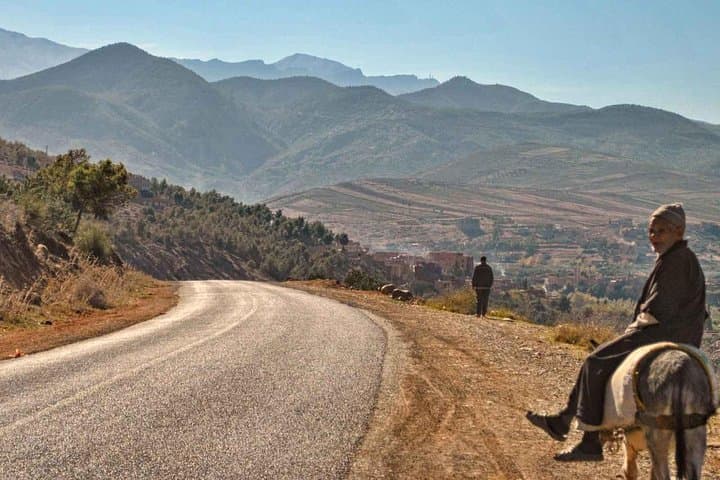
You leave Marrakech before dawn, the city shrinking behind ochre walls as the Atlas pushes into view. The road climbs to Tizi n'Tichka, where the pass can still wear snow in winter, then unspools through terraced Berber villages and sudden palm groves. By late afternoon the Draa valley opens — a long river of green that hints at life in an otherwise arid sweep — and the camels wait at the end of the road to carry you into dunes that sharpen under sunset.
Verified experiences and guided adventures in the surrounding area.
Operated by Morocco Authentic journey · Zagora, Drâa-Tafilalet
You leave Marrakech before dawn, the city shrinking behind ochre walls as the Atlas pushes into view. The road climbs to Tizi n'Tichka, where the pass can still wear snow in winter, then unspools through terraced Berber villages and sudden palm groves. By late afternoon the Draa valley opens — a long river of green that hints at life in an otherwise arid sweep — and the camels wait at the end of the road to carry you into dunes that sharpen under sunset.
This route follows ancient caravan corridors; Ait Benhaddou’s fortified ksar nearby is a UNESCO site and a reminder of merchant routes and cinematic history alike. Geologically the area shifts quickly from folded Atlas limestone to alluvial plains and wind-sculpted sand, so color and texture change with every bend. Culturally, you’ll pass villages where adobe kasbahs and palm groves still mark local agriculture and hospitality — expect mint tea rituals and evening songs at the bivouac.
Practical guidance: the tour runs over two days with an overnight in a Berber tent; camel transfers to and from camp are about 40 minutes. Bring layered clothing (desert nights get cold), sun protection, and at least 2–3 liters of water per person. Footwear should be sturdy and sand-resistant; trekking poles are optional but helpful for balance on loose sand. Pickup and drop-off from Marrakech are usually included, so plan for a long day in the vehicle on both legs. Time your visit for spring or autumn for milder temperatures, and leave no trace: the desert recovers slowly if disturbed.
moderate.
2 days (approx. 10–12 hours driving total plus on-foot/camel time).
Moderate fitness recommended—able to mount camels and walk on uneven sand and kasbah paths
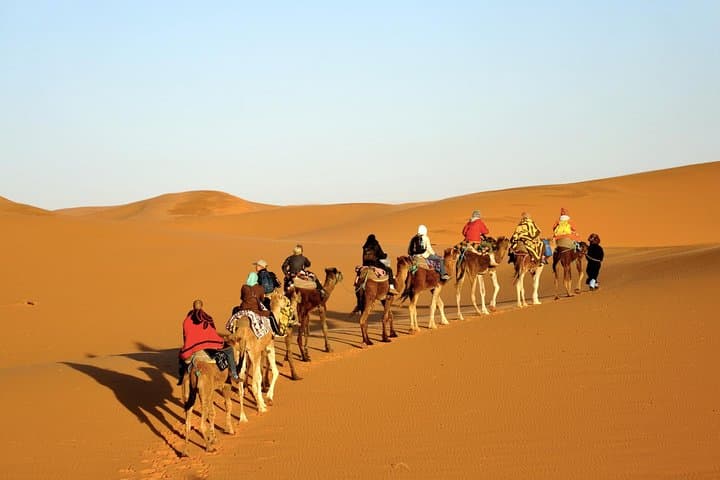
Typical camel transfer to the camp is about 30–45 minutes—enough time for sunset photos and a slow approach to the dunes.
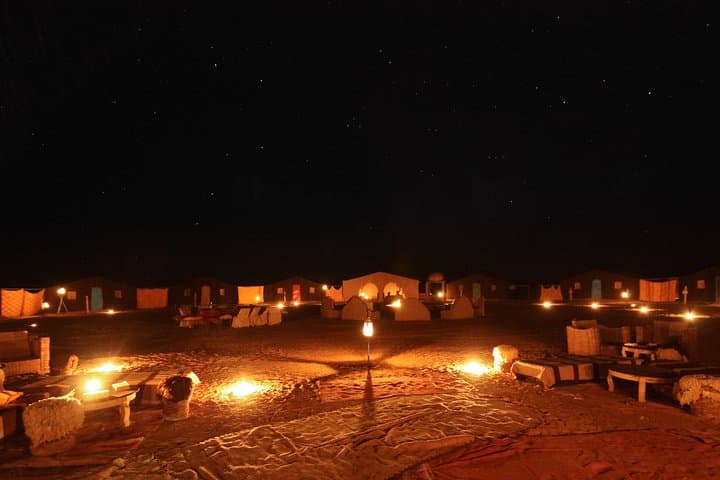
Sleeping is in furnished Berber tents with mattresses and blankets; comfort is rustic but sheltered—bring a base layer if you run cold.
Children can join but must sit on laps for transfers in some vehicles; camel mounts and sandy terrain make it less suitable for those with serious mobility limitations despite vehicle accessibility for parts of the route.
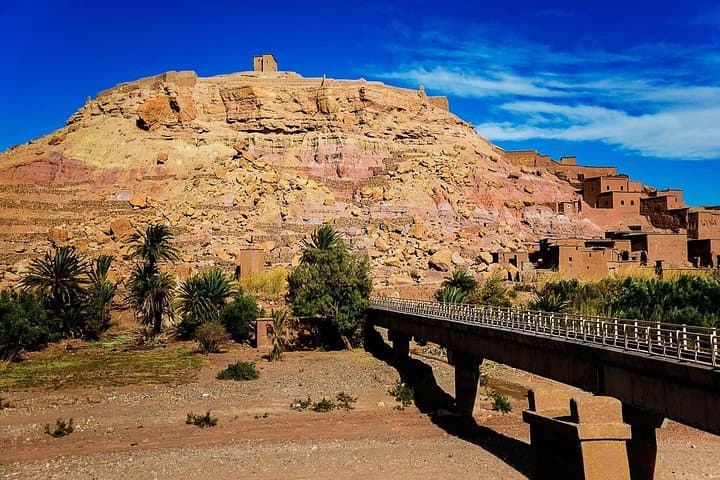
The itinerary commonly includes Tamnougalt kasbah, Agdez palm‑grove viewpoints, and the fortified Ait Benhaddou—famous for its architecture and film sets.
The road follows historical caravan passages linking sub‑Saharan trade routes to Moroccan towns; Ait Benhaddou served as a prominent fortified trading post and later a film location.
Water in the Draa valley is scarce and managed locally—minimize water waste and follow Leave No Trace at camps; support locally run bivouacs to benefit the community.
Morocco Authentic journey operates guided outdoor trips and adventures with an emphasis on safety, stewardship, and memorable experiences.
You leave Marrakech before dawn, the city shrinking behind ochre walls as the Atlas pushes into view. The road climbs to Tizi n'Tichka, where the pass can still wear snow in winter, then unspools through terraced Berber villages and sudden palm groves. By late afternoon the Draa valley opens — a long river of green that hints at life in an otherwise arid sweep — and the camels wait at the end of the road to carry you into dunes that sharpen under sunset.
You leave Marrakech before dawn, the city shrinking behind ochre walls as the Atlas pushes into view. The road climbs to Tizi n'Tichka, where the pass can still wear snow in winter, then unspools through terraced Berber villages and sudden palm groves. By late afternoon the Draa valley opens — a long river of green that hints at life in an otherwise arid sweep — and the camels wait at the end of the road to carry you into dunes that sharpen under sunset.
This route follows ancient caravan corridors; Ait Benhaddou’s fortified ksar nearby is a UNESCO site and a reminder of merchant routes and cinematic history alike. Geologically the area shifts quickly from folded Atlas limestone to alluvial plains and wind-sculpted sand, so color and texture change with every bend. Culturally, you’ll pass villages where adobe kasbahs and palm groves still mark local agriculture and hospitality — expect mint tea rituals and evening songs at the bivouac.
Practical guidance: the tour runs over two days with an overnight in a Berber tent; camel transfers to and from camp are about 40 minutes. Bring layered clothing (desert nights get cold), sun protection, and at least 2–3 liters of water per person. Footwear should be sturdy and sand-resistant; trekking poles are optional but helpful for balance on loose sand. Pickup and drop-off from Marrakech are usually included, so plan for a long day in the vehicle on both legs. Time your visit for spring or autumn for milder temperatures, and leave no trace: the desert recovers slowly if disturbed.