THE ADVENTURE COLLECTIVE® · Independent discovery and booking for outdoor travel

A compact two-day circuit from Marrakech that pairs film-set kasbahs and the Draa Valley with a sunset camel ride and an overnight bivouac in the Zagora dunes. Practical, culturally rich, and ideal for travelers who want a real Sahara night without a long eastward drive.
A compact two-day circuit from Marrakech that pairs film-set kasbahs and the Draa Valley with a sunset camel ride and an overnight bivouac in the Zagora dunes. Practical, culturally rich, and ideal for travelers who want a real Sahara night without a long eastward drive.
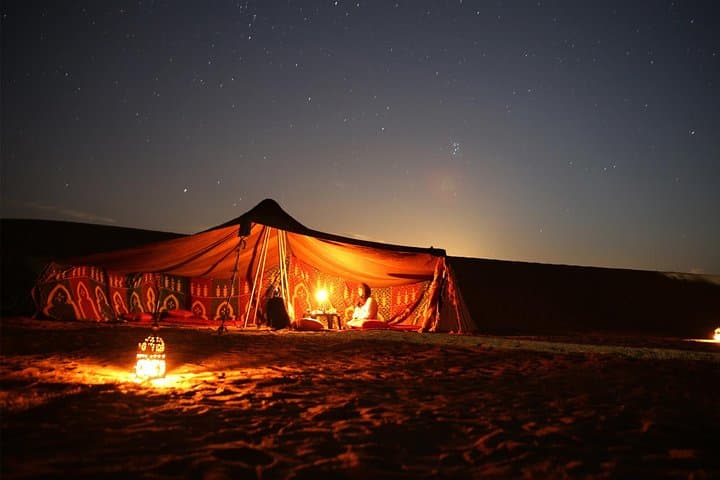
The road out of Marrakech loosens the city’s heat into long, sun-baked plains and a horizon that keeps changing—red earth, ochre kasbahs, sudden palms. By late afternoon the convoy winds down into the Draa Valley; the river’s reach threads date palms and mudbrick villages, and then the dunes of Zagora appear, rising like a living wall. The tour moves at a steady pace: Aït Benhaddou’s fortified alleys and film sets in Ouarzazate, a slow camel walk at sunset, a night in a desert bivouac with Sahrawi rhythms under a wide sky.
Verified experiences and guided adventures in the surrounding area.
Operated by CLICK EXCURSIONS · Zagora, Drâa-Tafilalet
The road out of Marrakech loosens the city’s heat into long, sun-baked plains and a horizon that keeps changing—red earth, ochre kasbahs, sudden palms. By late afternoon the convoy winds down into the Draa Valley; the river’s reach threads date palms and mudbrick villages, and then the dunes of Zagora appear, rising like a living wall. The tour moves at a steady pace: Aït Benhaddou’s fortified alleys and film sets in Ouarzazate, a slow camel walk at sunset, a night in a desert bivouac with Sahrawi rhythms under a wide sky.
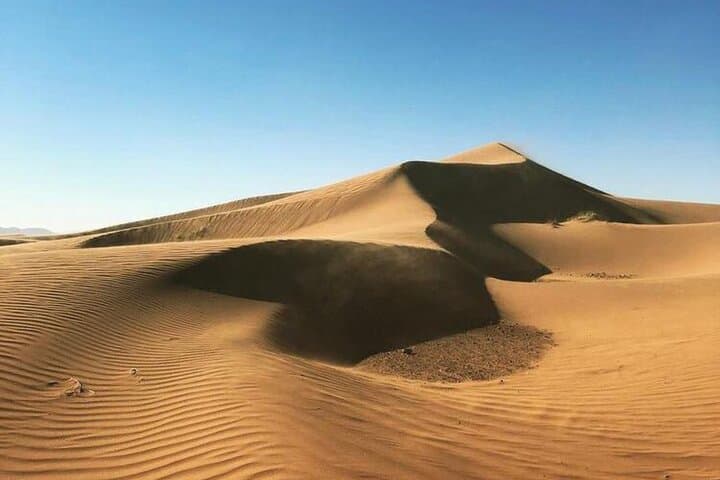
This route crosses parts of the High Atlas foothills and the Drâa River basin. Kasbah architecture—compact, fired-earth towers—reflects centuries of Amazigh (Berber) settlement and caravan trade between Sahara and High Atlas. The dunes near Zagora are wind-shaped sand ridges rather than the tall Erg Chebbi walls further east; the Draa is an intermittent lifeline that supports palm groves and small-scale agriculture.
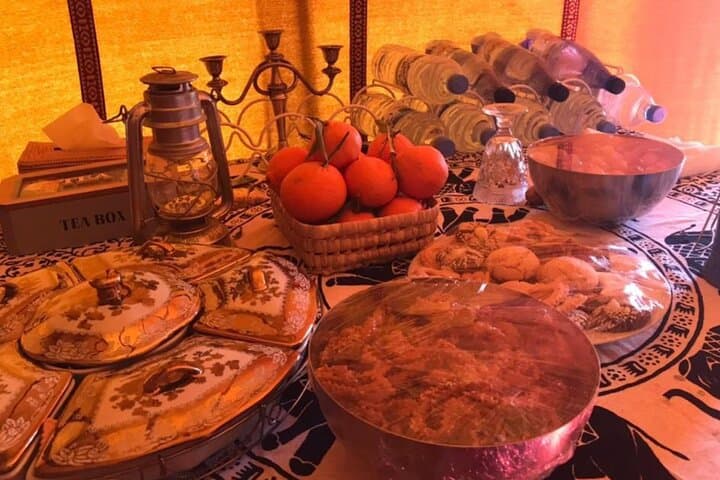
Expect both cultural exchange and simple desert living: shared meals of tagine, music around a brazier, and sleeping on mattresses in a canvas bivouac. Practical notes: pack layers for hot days and cold nights, bring sun protection and at least 2–3 liters of water for daytime stretches, and choose closed-toe shoes for sand and kasbah gravel. Camera batteries drain fast in cold desert nights—bring a headlamp and spare power.
Timings are long: most of the day is travel and short stops; the camel ride is gentle but uneven. For first-timers this tour balances comfortable transport with authentic desert time—enough travel to see landscapes and enough quiet to feel them.
moderate.
2 days.
Suitable for travelers with basic fitness—able to sit on a camel for 1–2 hours and manage short walks on uneven sand and kasbah stones.
Yes—this itinerary is family-friendly but children should be able to ride a camel and sleep in a shared bivouac; infants must be accompanied by an adult.
The tour includes one night in a desert bivouac with dinner and breakfast (half board) and typically one lunch on the road as described in the itinerary.
Camel rides around Zagora are usually 60–120 minutes spread between sunset and sunrise; the pace is steady and not technically strenuous, but the seating can be uncomfortable for some.
Travel insurance is recommended for medical coverage and cancellations; routine vaccinations are generally sufficient—check with your healthcare provider for current advice.
The route follows historic caravan corridors linking Saharan oases to High Atlas passes; Aït Benhaddou served as a fortified trading node and film location reflecting regional architecture.
The Draa Valley’s palm groves rely on fragile groundwater; favor local guides who support sustainable water use and respect private oases.
CLICK EXCURSIONS operates guided outdoor trips and adventures with an emphasis on safety, stewardship, and memorable experiences.
The road out of Marrakech loosens the city’s heat into long, sun-baked plains and a horizon that keeps changing—red earth, ochre kasbahs, sudden palms. By late afternoon the convoy winds down into the Draa Valley; the river’s reach threads date palms and mudbrick villages, and then the dunes of Zagora appear, rising like a living wall. The tour moves at a steady pace: Aït Benhaddou’s fortified alleys and film sets in Ouarzazate, a slow camel walk at sunset, a night in a desert bivouac with Sahrawi rhythms under a wide sky.
The road out of Marrakech loosens the city’s heat into long, sun-baked plains and a horizon that keeps changing—red earth, ochre kasbahs, sudden palms. By late afternoon the convoy winds down into the Draa Valley; the river’s reach threads date palms and mudbrick villages, and then the dunes of Zagora appear, rising like a living wall. The tour moves at a steady pace: Aït Benhaddou’s fortified alleys and film sets in Ouarzazate, a slow camel walk at sunset, a night in a desert bivouac with Sahrawi rhythms under a wide sky.
This route crosses parts of the High Atlas foothills and the Drâa River basin. Kasbah architecture—compact, fired-earth towers—reflects centuries of Amazigh (Berber) settlement and caravan trade between Sahara and High Atlas. The dunes near Zagora are wind-shaped sand ridges rather than the tall Erg Chebbi walls further east; the Draa is an intermittent lifeline that supports palm groves and small-scale agriculture.
Expect both cultural exchange and simple desert living: shared meals of tagine, music around a brazier, and sleeping on mattresses in a canvas bivouac. Practical notes: pack layers for hot days and cold nights, bring sun protection and at least 2–3 liters of water for daytime stretches, and choose closed-toe shoes for sand and kasbah gravel. Camera batteries drain fast in cold desert nights—bring a headlamp and spare power.
Timings are long: most of the day is travel and short stops; the camel ride is gentle but uneven. For first-timers this tour balances comfortable transport with authentic desert time—enough travel to see landscapes and enough quiet to feel them.