THE ADVENTURE COLLECTIVE® · Independent discovery and booking for outdoor travel

Travel from Marrakech across the High Atlas to the golden dunes of Zagora for a 2-day Saharan escape: sunset camel ride, overnight in a Berber tent, and visits to Ait Ben Haddou and Ouarzazate. Practical, culture-rich, and accessible for most travelers.
Travel from Marrakech across the High Atlas to the golden dunes of Zagora for a 2-day Saharan escape: sunset camel ride, overnight in a Berber tent, and visits to Ait Ben Haddou and Ouarzazate. Practical, culture-rich, and accessible for most travelers.
The day begins as Marrakech blurs behind you and the road climbs toward the High Atlas, the mountains exhaling cool air before the landscape opens into the ochre sweep of the Draa Valley and, finally, the Zagora dunes.
Verified experiences and guided adventures in the surrounding area.
Operated by Marrakech Safari · Zagora, Drâa-Tafilalet
The day begins as Marrakech blurs behind you and the road climbs toward the High Atlas, the mountains exhaling cool air before the landscape opens into the ochre sweep of the Draa Valley and, finally, the Zagora dunes.
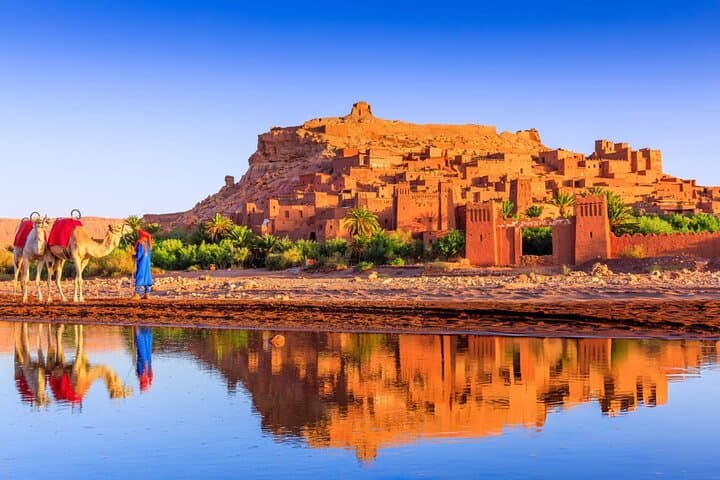
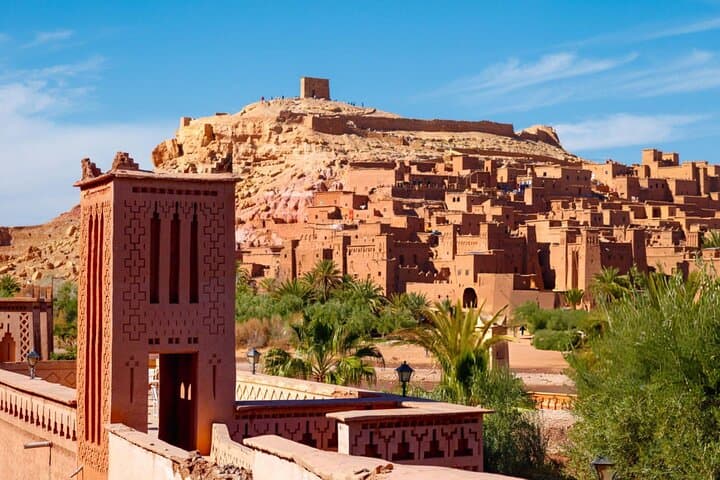
You cross Tizi n’Tichka, pause for a coffee with a view of wind-sculpted peaks, then wind down into the red-brown architecture of Ait Ben Haddou—a fortified village that reads like layered history in clay. Further south, Ouarzazate’s kasbahs and film studios hint at the region’s cinematic side before palm groves give way to sand.
Geology here is honest: folded Atlas ranges, alluvial valley bottoms, and wind-driven dunes formed from millennia of eroded rock and river deposits. Culturally, the route follows old caravan corridors where Berber kasbahs guarded water and trade; today local guides keep those stories alive around campfires.
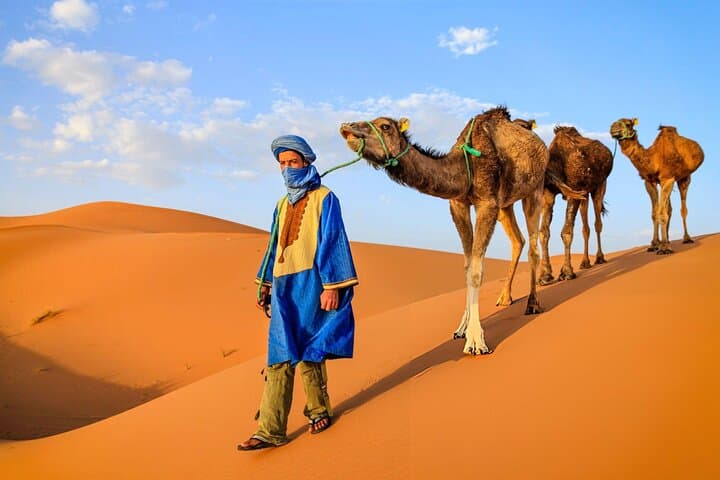
Expect a 30–40 minute camel trek at sunset, a night in a traditional Berber tent, mint tea on arrival, and a sunrise over rippling sand. The camp’s simplicity is the point—no frills, clear skies, and the low, constant breathing of the desert.
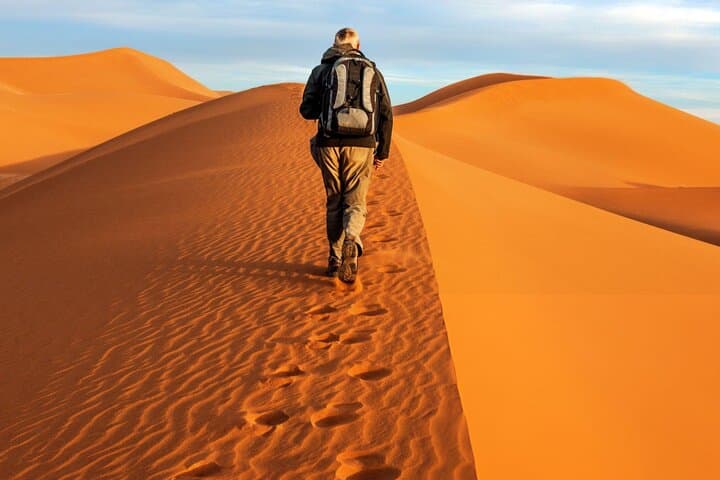
Practical notes: pack layers (desert nights get cold), sun protection, and a small daypack for camera, water, and snacks. Hydrate before you go; carry cash for small purchases and tips. Ride camels slowly; follow your guide’s instructions for mounts and dismounts. If you want sharper photos, get to the dune crest at least 20 minutes before sunset.
This tour balances culture, accessible adventure, and raw desert time—ideal for travelers who want an immersive Sahara experience without technical demands.
easy.
2 days.
Suitable for travelers in average fitness; involves short camel rides and light walking on sand and uneven surfaces.
Pickup and drop-off are provided in Marrakech—your exact pickup location will be confirmed when you book.
Yes—camels are managed by experienced handlers and riders receive instructions; the ride is short (30–40 minutes) and paced for comfort.
You’ll stay one night in a traditional Berber tent with basic bedding; facilities are simple and focused on the outdoor experience.
Dinner and breakfast at the camp are included; bring cash for extra snacks, drinks, or purchases in villages en route.
This route follows ancient trans-Saharan corridors; Ait Ben Haddou is a UNESCO site that illustrates earthen architecture used to control trade and water resources.
Water is scarce—carry reusable containers and avoid single-use plastics; follow guides to minimize campsite impact and respect local grazing areas.
Marrakech Safari operates guided outdoor trips and adventures with an emphasis on safety, stewardship, and memorable experiences.
The day begins as Marrakech blurs behind you and the road climbs toward the High Atlas, the mountains exhaling cool air before the landscape opens into the ochre sweep of the Draa Valley and, finally, the Zagora dunes.
The day begins as Marrakech blurs behind you and the road climbs toward the High Atlas, the mountains exhaling cool air before the landscape opens into the ochre sweep of the Draa Valley and, finally, the Zagora dunes.
You cross Tizi n’Tichka, pause for a coffee with a view of wind-sculpted peaks, then wind down into the red-brown architecture of Ait Ben Haddou—a fortified village that reads like layered history in clay. Further south, Ouarzazate’s kasbahs and film studios hint at the region’s cinematic side before palm groves give way to sand.
Geology here is honest: folded Atlas ranges, alluvial valley bottoms, and wind-driven dunes formed from millennia of eroded rock and river deposits. Culturally, the route follows old caravan corridors where Berber kasbahs guarded water and trade; today local guides keep those stories alive around campfires.
Expect a 30–40 minute camel trek at sunset, a night in a traditional Berber tent, mint tea on arrival, and a sunrise over rippling sand. The camp’s simplicity is the point—no frills, clear skies, and the low, constant breathing of the desert.
Practical notes: pack layers (desert nights get cold), sun protection, and a small daypack for camera, water, and snacks. Hydrate before you go; carry cash for small purchases and tips. Ride camels slowly; follow your guide’s instructions for mounts and dismounts. If you want sharper photos, get to the dune crest at least 20 minutes before sunset.
This tour balances culture, accessible adventure, and raw desert time—ideal for travelers who want an immersive Sahara experience without technical demands.