THE ADVENTURE COLLECTIVE® · Independent discovery and booking for outdoor travel

Leave Marrakech for two days of Atlas passes, a UNESCO kasbah, and an overnight desert bivouac reached by camel. This private tour mixes scenic drives, short cultural walks, and a starry camp experience.
Leave Marrakech for two days of Atlas passes, a UNESCO kasbah, and an overnight desert bivouac reached by camel. This private tour mixes scenic drives, short cultural walks, and a starry camp experience.
The minivan pulls away from Marrakech before dawn and the High Atlas rises like a wall ahead, its ridgelines throwing a cleaner light across switchbacks. By midmorning you cross Tizi-n-Tichka, where stony slopes and terraced villages give way to sun-baked plateaus and the first palms of the Draa Valley appear like a promise.
Verified experiences and guided adventures in the surrounding area.
Operated by Arwa-Travel · Zagora, Drâa-Tafilalet
The minivan pulls away from Marrakech before dawn and the High Atlas rises like a wall ahead, its ridgelines throwing a cleaner light across switchbacks. By midmorning you cross Tizi-n-Tichka, where stony slopes and terraced villages give way to sun-baked plateaus and the first palms of the Draa Valley appear like a promise.
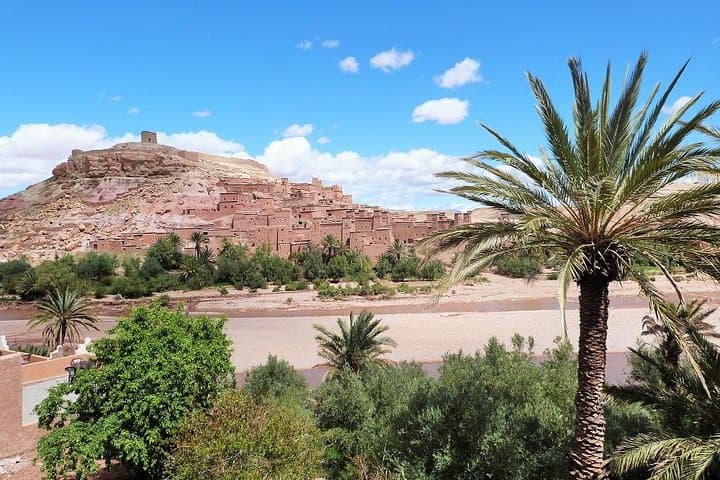
History and geology are visible at every turn: the red earth around Ait Benhaddou is a clay-and-stone record of caravan trade, and the kasbah’s compact towers recall centuries of trans-Saharan exchange. The Atlas Mountains are folded sediments and ancient volcanic intrusions—sharp passes, brittle scree, and sudden oasis pockets where human settlements gathered water. Culture here is Berber and outward-facing: riads in Marrakech, film sets in Ouarzazate, and nomadic hospitality in the desert camps.
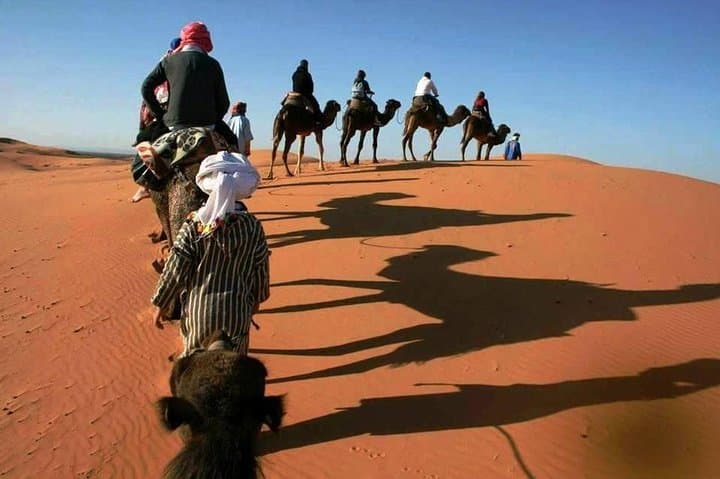
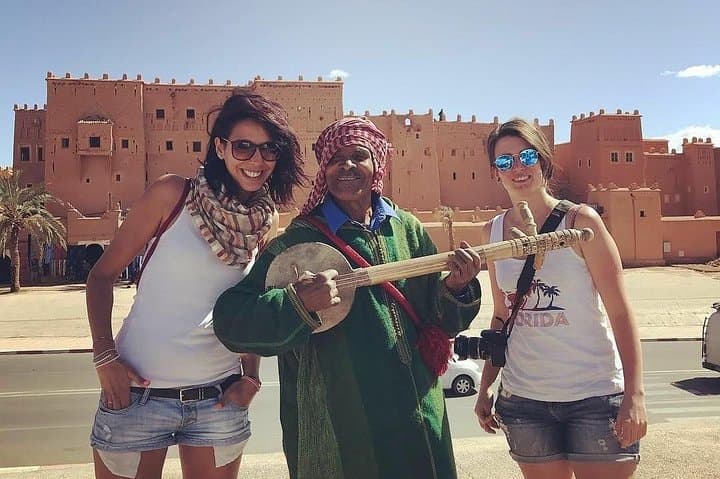
Expect a mix of long driving stretches and short walks—a guided walk through Ait Benhaddou, a stop at Atlas Studios, then the desert shimmy as camels carry you toward a remote bivouac. Night brings cold desert air and clear skies; local musicians and shared food make the camp social and rooted in place.
Practical guidance: pack layers for hot days and chilly nights, sun protection, and a small daypack for camera, water, and snacks. Bring cash for tips and small purchases; phone signal fades outside towns. If you have limited mobility, check transfers and camel-ride options in advance. With basic preparation, the route is accessible and memorable—an archetypal Moroccan desert passage that balances scenic drives with hands-on desert time.
easy.
2 days.
Light to moderate fitness; able to handle short walks, brief climbs in kasbahs, and mounting a camel for short rides.
Camel rides typically last 45–60 minutes and are gentle; guides can arrange shorter or assisted transfers if needed.
Bivouacs are traditional-style tents with sleeping pads and blankets; camps usually provide dinner, tea, and basic sanitary facilities—expect rustic comfort rather than hotel standards.
Mobile coverage is intermittent outside towns; many camps have limited or no electricity—bring portable chargers and plan offline if necessary.
Yes—infant seats are available for the vehicle but infants must sit on an adult’s lap; confirm any special needs at booking.
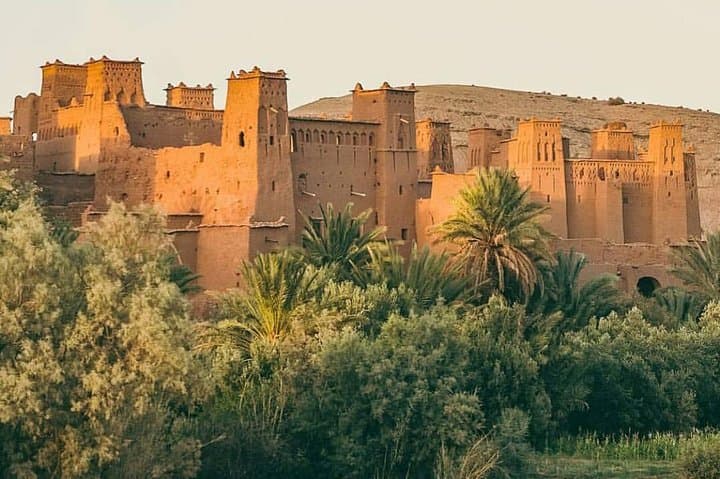
Ait Benhaddou is a fortified ksar on a former caravan route and a UNESCO World Heritage site; Ouarzazate later became Morocco’s film hub due to similar desert landscapes.
Water is scarce—minimize water use, pack out waste, and support local guides and camps that follow low-impact practices.
Arwa-Travel operates guided outdoor trips and adventures with an emphasis on safety, stewardship, and memorable experiences.
The minivan pulls away from Marrakech before dawn and the High Atlas rises like a wall ahead, its ridgelines throwing a cleaner light across switchbacks. By midmorning you cross Tizi-n-Tichka, where stony slopes and terraced villages give way to sun-baked plateaus and the first palms of the Draa Valley appear like a promise.
The minivan pulls away from Marrakech before dawn and the High Atlas rises like a wall ahead, its ridgelines throwing a cleaner light across switchbacks. By midmorning you cross Tizi-n-Tichka, where stony slopes and terraced villages give way to sun-baked plateaus and the first palms of the Draa Valley appear like a promise.
History and geology are visible at every turn: the red earth around Ait Benhaddou is a clay-and-stone record of caravan trade, and the kasbah’s compact towers recall centuries of trans-Saharan exchange. The Atlas Mountains are folded sediments and ancient volcanic intrusions—sharp passes, brittle scree, and sudden oasis pockets where human settlements gathered water. Culture here is Berber and outward-facing: riads in Marrakech, film sets in Ouarzazate, and nomadic hospitality in the desert camps.
Expect a mix of long driving stretches and short walks—a guided walk through Ait Benhaddou, a stop at Atlas Studios, then the desert shimmy as camels carry you toward a remote bivouac. Night brings cold desert air and clear skies; local musicians and shared food make the camp social and rooted in place.
Practical guidance: pack layers for hot days and chilly nights, sun protection, and a small daypack for camera, water, and snacks. Bring cash for tips and small purchases; phone signal fades outside towns. If you have limited mobility, check transfers and camel-ride options in advance. With basic preparation, the route is accessible and memorable—an archetypal Moroccan desert passage that balances scenic drives with hands-on desert time.