THE ADVENTURE COLLECTIVE® · Independent discovery and booking for outdoor travel

Leave Marrakech at dawn and cross the High Atlas into the Draa Valley, visit the UNESCO kasbah of Aït Ben Haddou, then ride camels into Zagora’s dunes to sleep in a luxury khaïma under desert stars. This concise two-day route pairs cinematic history with Saharan landscape and practical logistics.
Leave Marrakech at dawn and cross the High Atlas into the Draa Valley, visit the UNESCO kasbah of Aït Ben Haddou, then ride camels into Zagora’s dunes to sleep in a luxury khaïma under desert stars. This concise two-day route pairs cinematic history with Saharan landscape and practical logistics.
A road of ochre ribbon unfurls south from Marrakech, climbing through the High Atlas before dropping into the Draa Valley where palm groves crowd the riverbanks and towns hunker behind mud-brick kasbahs. On this two-day loop the landscape tightens into dunes — wind-sculpted ridges that invite a slow, deliberate walk — and evenings are spent beneath a canvas roof with stars sharp as flint.
Verified experiences and guided adventures in the surrounding area.
Operated by Majestic Spring Tours · Zagora, Drâa-Tafilalet
A road of ochre ribbon unfurls south from Marrakech, climbing through the High Atlas before dropping into the Draa Valley where palm groves crowd the riverbanks and towns hunker behind mud-brick kasbahs. On this two-day loop the landscape tightens into dunes — wind-sculpted ridges that invite a slow, deliberate walk — and evenings are spent beneath a canvas roof with stars sharp as flint.
Historically this route was a caravan corridor linking Marrakech to sub-Saharan trade; Aït Ben Haddou, the clay kasbah paused on the hillside, still carries stacked clay towers and narrow alleys that once sheltered merchants and film crews alike. Geologically the region is the edge of the Sahara proper: alluvial plains give way to wind-blown sand, and the Draa River, when it flows, insists life into finger-like oases.
Culturally the trip moves through Berber villages and film-set towns — Ouarzazate’s studios recall cinematic epics — while local hosts serve tagines and mint tea in a khaïma (Saharan tent) after a short camel trek across the dunes.
Practical guidance: expect long vehicle transfers (air-conditioned minivan provided), bring layered clothing for warm days and cool nights, and plan early departures to use daylight efficiently. Footwear should handle sand and stony tracks; sun protection and ample water are non-negotiable. If you want quieter dunes, ask for a camp farther from Zagora town.
This is an accessible, sensory introduction to Morocco’s southern edge: part road trip, part cultural immersion, part desert night under a wide sky.
moderate.
2 days.
Suitable for travelers in average fitness — includes short camel rides and moderate walking on sand; long vehicle transfers require endurance for sitting.
Camel rides are short and slow; most people find them manageable, though mounting can be awkward — inform guides if you have mobility issues.
Typical packages include at least one dinner and breakfast in the camp; confirm specifics with the operator for dietary needs.
Yes — family-friendly options exist, but check vehicle seating and camel-safety for very young children; infant seats may be available.
Expect roughly 7–9 hours round-trip driving across the High Atlas with scenic stops; the itinerary breaks the journey into manageable segments over two days.
The route follows ancient caravan paths; Aït Ben Haddou was a fortified trading post and is now a UNESCO World Heritage site and frequent film location.
Water is scarce — favor operators who use refillable containers, respect local wells, and minimize campfire impact; support local guides and communities to spread tourism benefits.
Majestic Spring Tours operates guided outdoor trips and adventures with an emphasis on safety, stewardship, and memorable experiences.
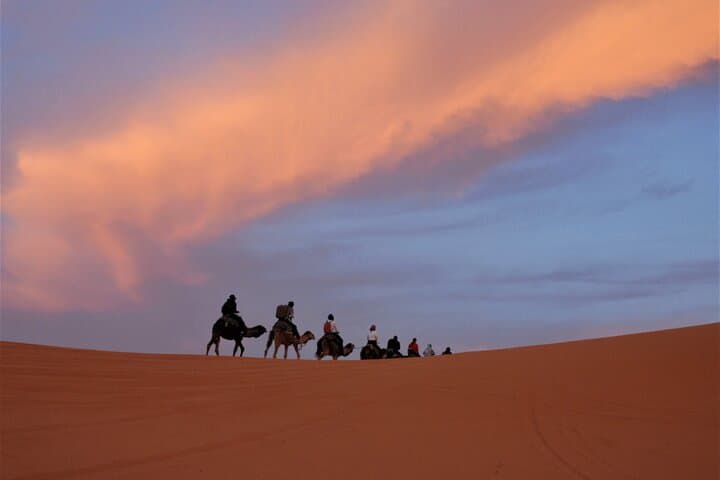
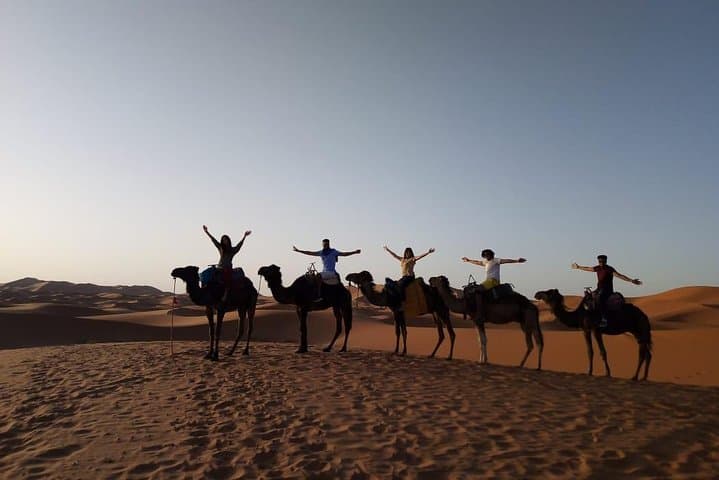
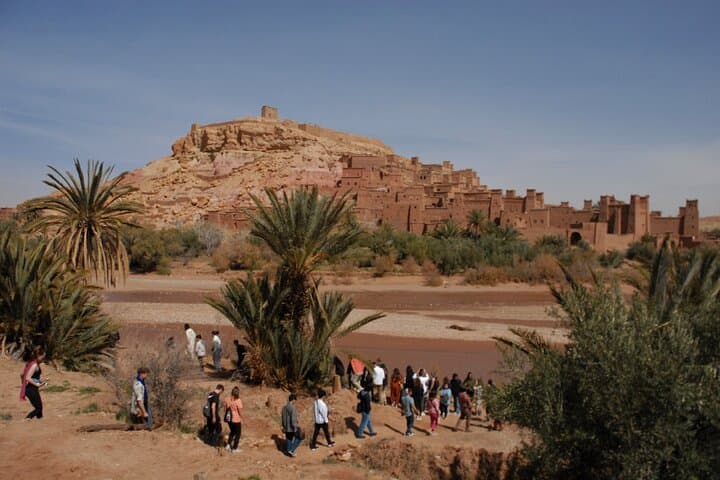
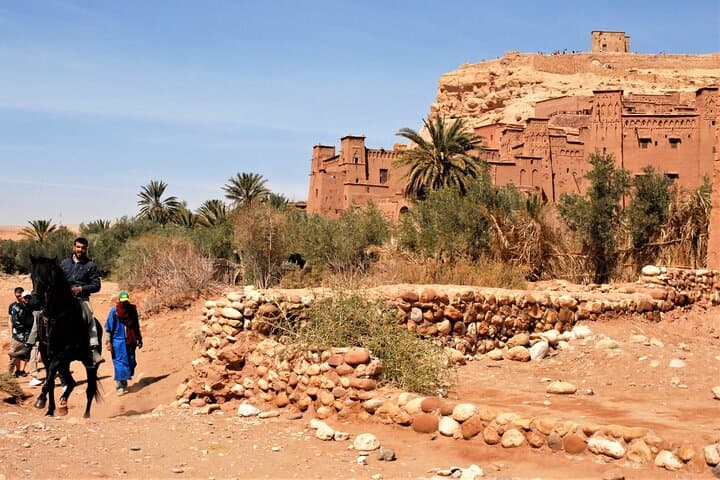
A road of ochre ribbon unfurls south from Marrakech, climbing through the High Atlas before dropping into the Draa Valley where palm groves crowd the riverbanks and towns hunker behind mud-brick kasbahs. On this two-day loop the landscape tightens into dunes — wind-sculpted ridges that invite a slow, deliberate walk — and evenings are spent beneath a canvas roof with stars sharp as flint.
A road of ochre ribbon unfurls south from Marrakech, climbing through the High Atlas before dropping into the Draa Valley where palm groves crowd the riverbanks and towns hunker behind mud-brick kasbahs. On this two-day loop the landscape tightens into dunes — wind-sculpted ridges that invite a slow, deliberate walk — and evenings are spent beneath a canvas roof with stars sharp as flint.
Historically this route was a caravan corridor linking Marrakech to sub-Saharan trade; Aït Ben Haddou, the clay kasbah paused on the hillside, still carries stacked clay towers and narrow alleys that once sheltered merchants and film crews alike. Geologically the region is the edge of the Sahara proper: alluvial plains give way to wind-blown sand, and the Draa River, when it flows, insists life into finger-like oases.
Culturally the trip moves through Berber villages and film-set towns — Ouarzazate’s studios recall cinematic epics — while local hosts serve tagines and mint tea in a khaïma (Saharan tent) after a short camel trek across the dunes.
Practical guidance: expect long vehicle transfers (air-conditioned minivan provided), bring layered clothing for warm days and cool nights, and plan early departures to use daylight efficiently. Footwear should handle sand and stony tracks; sun protection and ample water are non-negotiable. If you want quieter dunes, ask for a camp farther from Zagora town.
This is an accessible, sensory introduction to Morocco’s southern edge: part road trip, part cultural immersion, part desert night under a wide sky.