THE ADVENTURE COLLECTIVE® · Independent discovery and booking for outdoor travel

Drive the High Atlas, ride a camel into Zagora's dunes and sleep under desert stars on this two-day trip from Marrakech. Visit the Draa valley and the UNESCO ksar of Aït Benhaddou while experiencing nomad-influenced bivouac life.
Drive the High Atlas, ride a camel into Zagora's dunes and sleep under desert stars on this two-day trip from Marrakech. Visit the Draa valley and the UNESCO ksar of Aït Benhaddou while experiencing nomad-influenced bivouac life.
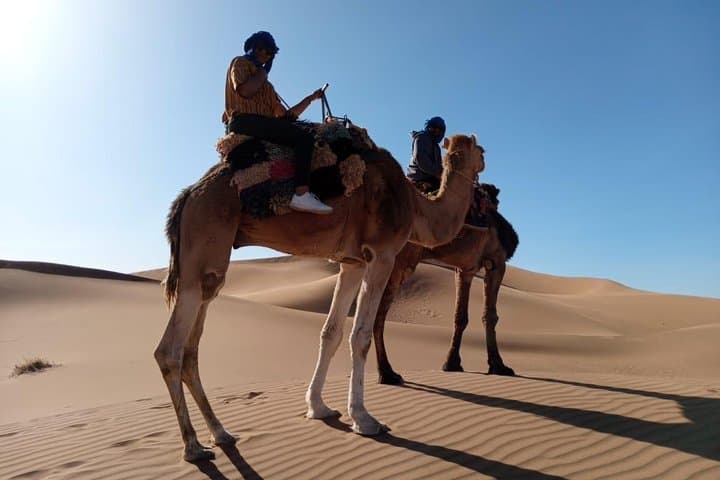
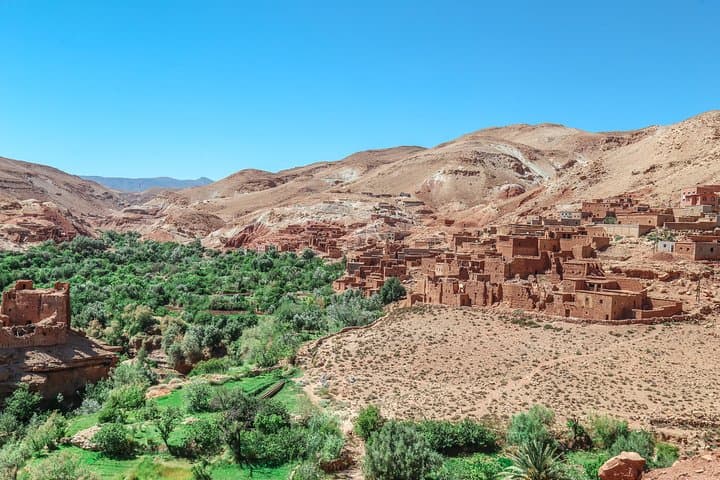
Dawn finds the road out of Marrakech wet with the last of the city’s traffic lights, and within hours the High Atlas has taken the wheel. You climb to the Tizi n'Tichka pass at 2,260 m, where wind and stone shape the road and the landscape opens toward the dry Draa valley. By late afternoon the land goes soft—palm groves give way to ochre dunes and the caravan of camels becomes the day's steady measure.
Verified experiences and guided adventures in the surrounding area.
Operated by Easy Sahara · Zagora, Drâa-Tafilalet
Dawn finds the road out of Marrakech wet with the last of the city’s traffic lights, and within hours the High Atlas has taken the wheel. You climb to the Tizi n'Tichka pass at 2,260 m, where wind and stone shape the road and the landscape opens toward the dry Draa valley. By late afternoon the land goes soft—palm groves give way to ochre dunes and the caravan of camels becomes the day's steady measure.
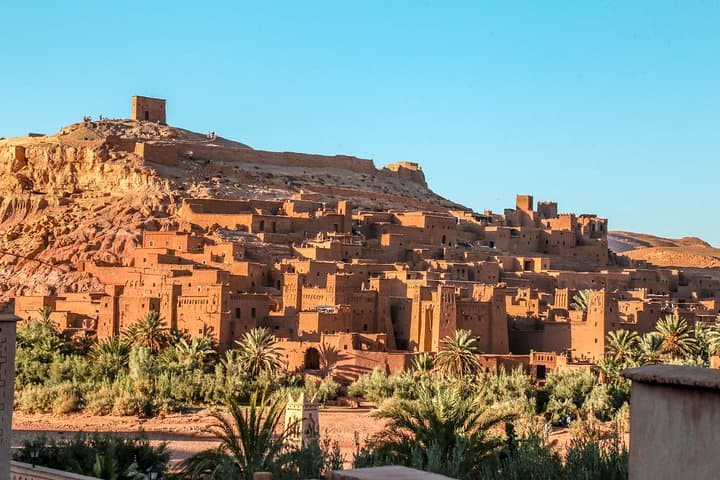
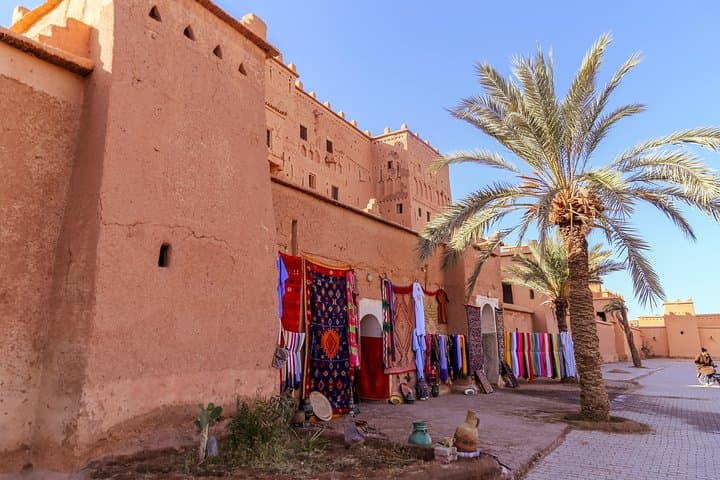
This two-day route threads history and geology: the High Atlas is young uplifted rock slicing the climate zones, while the Draa has long been the artery for caravans connecting Saharan trade to Moroccan towns. Aït Benhaddou—UNESCO-listed ksar—stands as fortified clay architecture reflecting centuries of Berber and trans-Saharan exchange. Evenings in the bivouac are local culture made practical: bread, tagine, and stories around a small fire under a Sahara sky.
Expect long vehicle transfers (Marrakech to Zagora ~8–10 hours including stops), short camel caravans from the road to your desert camp, and minimal hiking on sand and compact paths. Temperatures swing: hot in the day, cold at night. Bring layered clothing, sun protection, and a solid water plan. Photography windows are sunrise and sunset; plan to be mobile for both.
Practical tips: confirm pickup timing in Marrakech the night before, carry a small daypack for the camel ride, and give your guide a heads-up about any mobility or medical concerns. Respect local customs—ask before photographing people—and minimize plastic waste to protect fragile desert systems. This tour pairs accessible adventure with deep landscape contrasts: mountains that demand respect and dunes that invite quiet endurance.
easy.
2 days.
Suitable for travelers in general good health who can handle long car transfers, a short camel ride and walking on sand; minimal endurance required.
Plan for about 8–10 hours of driving including stops; the route crosses the Tizi n'Tichka pass and includes scenic photo breaks.
Basic desert tents or communal sleeping under blankets, shared facilities depending on operator, dinner cooked locally, and open skies for star viewing.
Camel caravans to the camp are usually gentle and short—roughly 60–90 minutes—suitable for first-time riders; inform guides about mobility issues.
The trip involves long vehicle transfers and a camel transfer to the camp; talk to the operator about alternative arrangements—some portions may be accessible by vehicle instead of camel.
The route follows centuries-old caravan and pilgrimage channels; Aït Benhaddou is a fortified clay ksar that became a film location and UNESCO site, reflecting southern Moroccan life and trade history.
The Sahara's ecosystems are fragile—stick to established routes, pack out waste, minimize single-use plastics and support local guides to reduce impact.
Easy Sahara operates guided outdoor trips and adventures with an emphasis on safety, stewardship, and memorable experiences.
Dawn finds the road out of Marrakech wet with the last of the city’s traffic lights, and within hours the High Atlas has taken the wheel. You climb to the Tizi n'Tichka pass at 2,260 m, where wind and stone shape the road and the landscape opens toward the dry Draa valley. By late afternoon the land goes soft—palm groves give way to ochre dunes and the caravan of camels becomes the day's steady measure.
Dawn finds the road out of Marrakech wet with the last of the city’s traffic lights, and within hours the High Atlas has taken the wheel. You climb to the Tizi n'Tichka pass at 2,260 m, where wind and stone shape the road and the landscape opens toward the dry Draa valley. By late afternoon the land goes soft—palm groves give way to ochre dunes and the caravan of camels becomes the day's steady measure.
This two-day route threads history and geology: the High Atlas is young uplifted rock slicing the climate zones, while the Draa has long been the artery for caravans connecting Saharan trade to Moroccan towns. Aït Benhaddou—UNESCO-listed ksar—stands as fortified clay architecture reflecting centuries of Berber and trans-Saharan exchange. Evenings in the bivouac are local culture made practical: bread, tagine, and stories around a small fire under a Sahara sky.
Expect long vehicle transfers (Marrakech to Zagora ~8–10 hours including stops), short camel caravans from the road to your desert camp, and minimal hiking on sand and compact paths. Temperatures swing: hot in the day, cold at night. Bring layered clothing, sun protection, and a solid water plan. Photography windows are sunrise and sunset; plan to be mobile for both.
Practical tips: confirm pickup timing in Marrakech the night before, carry a small daypack for the camel ride, and give your guide a heads-up about any mobility or medical concerns. Respect local customs—ask before photographing people—and minimize plastic waste to protect fragile desert systems. This tour pairs accessible adventure with deep landscape contrasts: mountains that demand respect and dunes that invite quiet endurance.