THE ADVENTURE COLLECTIVE® · Independent discovery and booking for outdoor travel

Swap Marrakech’s alleys for a two-day crossing of the High Atlas into the Zagora sands: camel rides at sunset, a night under a Berber bivouac, and a stop at the UNESCO kasbah of Ait Ben Haddou. This trip blends geology, film history and desert life into a compact, accessible adventure.
Swap Marrakech’s alleys for a two-day crossing of the High Atlas into the Zagora sands: camel rides at sunset, a night under a Berber bivouac, and a stop at the UNESCO kasbah of Ait Ben Haddou. This trip blends geology, film history and desert life into a compact, accessible adventure.
Dusk arrives over the Zagora dunes and the caravan moves like a long, patient shadow — camels stepping, guides calling, and a wind that sculpts sand into new faces every hour. On this two-day route from Marrakech travelers trade city mosaics for a horizon that keeps widening until only sky and sand remain.
Verified experiences and guided adventures in the surrounding area.
Operated by Exotic Lines Travels · Zagora, Drâa-Tafilalet
Dusk arrives over the Zagora dunes and the caravan moves like a long, patient shadow — camels stepping, guides calling, and a wind that sculpts sand into new faces every hour. On this two-day route from Marrakech travelers trade city mosaics for a horizon that keeps widening until only sky and sand remain.
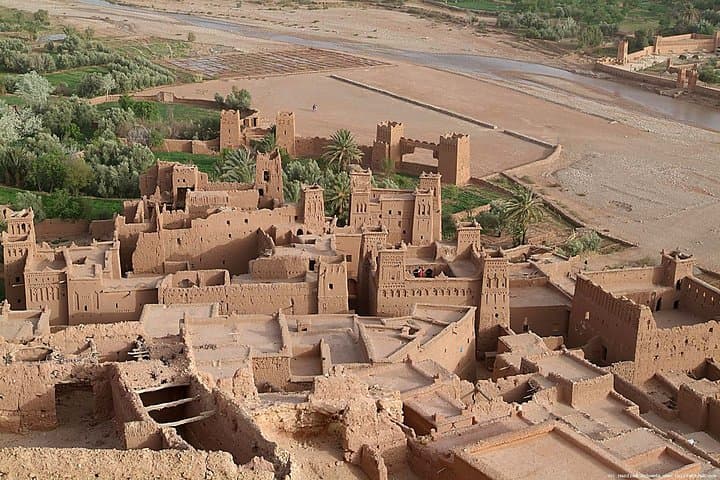
The trip threads the High Atlas via Tizi-n-Tichka (2,260 m), a road carved by uplifted rock and time, then slips through palm-lined valleys into the Drâa region. Ait Ben Haddou appears like a clay-built memory on the skyline: a UNESCO kasbah once on trans-Saharan trade routes and later a cinema backdrop for epics. In Zagora the desert teaches daily rhythm — sunset and sunrise aboard camels, communal meals, and the steady pulse of tam drums at camp.
Geology shows in the ochre strata of the pass and in dunes formed by seasonal winds; culture is in Berber hospitality and the simple architecture of kasbahs and ksars. Practicalities are straightforward: expect long drives (Marrakech–Zagora ~6–8 hours each way with stops), basic but private tent accommodations, and soft-sand hiking if you want to explore beyond the camel track. Bring layered clothing for hot days and cold nights, sun protection, cash for small purchases, and a small daypack for camera gear and water.
Respect local customs, keep noise low near camps, and leave no trace on fragile dune systems. For planners, aim for spring or fall for the most comfortable temperatures and clearer roads.
moderate.
2 days (approx. 48 hours).
Suitable for people comfortable with several hours of light activity, camel rides and short walks on sand; not strenuous but requires balance and mobility.
Expect roughly 6–8 hours each way including stops; the route crosses Tizi-n-Tichka and includes photo and lunch breaks.
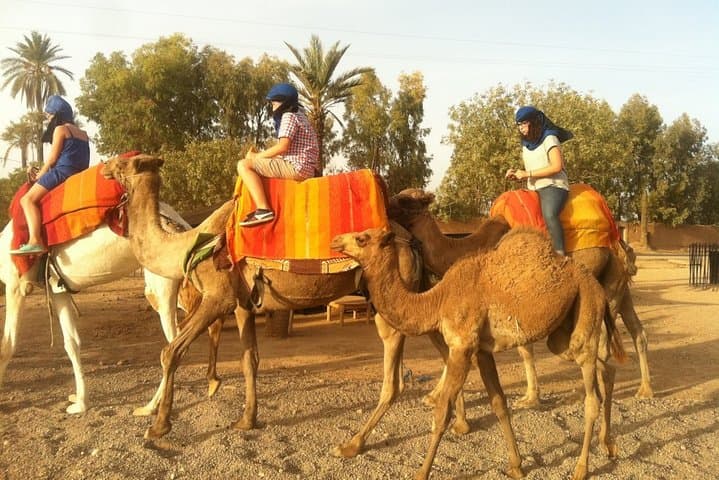
Yes — camel rides on organized tours are short and guided; notify operators of mobility issues so guides can assist mounting and dismounting.
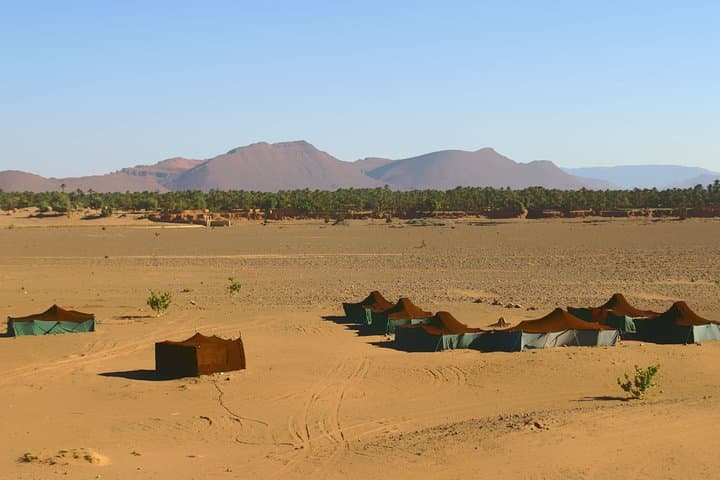
Guests sleep in private Berber-style tents (bivouacs) with simple bedding; facilities are basic but comfortable, and camps often have communal dining and campfire entertainment.
Most like this itinerary include breakfast, some lunches and a desert dinner, but restaurant stops on the return (e.g., Ouarzazate) may be at your own expense — confirm at booking.
The route follows old trans-Saharan corridors; Ait Ben Haddou served as a fortified caravan stop and later became a famed film location drawing filmmakers to the region.
Dune ecosystems are fragile — avoid driving or walking on shifting dunes where discouraged, pack out waste, and support local operators who follow low-impact camp practices.
Exotic Lines Travels operates guided outdoor trips and adventures with an emphasis on safety, stewardship, and memorable experiences.
Dusk arrives over the Zagora dunes and the caravan moves like a long, patient shadow — camels stepping, guides calling, and a wind that sculpts sand into new faces every hour. On this two-day route from Marrakech travelers trade city mosaics for a horizon that keeps widening until only sky and sand remain.
Dusk arrives over the Zagora dunes and the caravan moves like a long, patient shadow — camels stepping, guides calling, and a wind that sculpts sand into new faces every hour. On this two-day route from Marrakech travelers trade city mosaics for a horizon that keeps widening until only sky and sand remain.
The trip threads the High Atlas via Tizi-n-Tichka (2,260 m), a road carved by uplifted rock and time, then slips through palm-lined valleys into the Drâa region. Ait Ben Haddou appears like a clay-built memory on the skyline: a UNESCO kasbah once on trans-Saharan trade routes and later a cinema backdrop for epics. In Zagora the desert teaches daily rhythm — sunset and sunrise aboard camels, communal meals, and the steady pulse of tam drums at camp.
Geology shows in the ochre strata of the pass and in dunes formed by seasonal winds; culture is in Berber hospitality and the simple architecture of kasbahs and ksars. Practicalities are straightforward: expect long drives (Marrakech–Zagora ~6–8 hours each way with stops), basic but private tent accommodations, and soft-sand hiking if you want to explore beyond the camel track. Bring layered clothing for hot days and cold nights, sun protection, cash for small purchases, and a small daypack for camera gear and water.
Respect local customs, keep noise low near camps, and leave no trace on fragile dune systems. For planners, aim for spring or fall for the most comfortable temperatures and clearer roads.