THE ADVENTURE COLLECTIVE® · Independent discovery and booking for outdoor travel

Spend two days crossing the High Atlas to Aït Ben Haddou and the Zagora dunes—ride a camel at sunset, sleep in a private Berber tent, and return through mountain passes. A compact desert experience with UNESCO history and dramatic sunrise views.
Spend two days crossing the High Atlas to Aït Ben Haddou and the Zagora dunes—ride a camel at sunset, sleep in a private Berber tent, and return through mountain passes. A compact desert experience with UNESCO history and dramatic sunrise views.
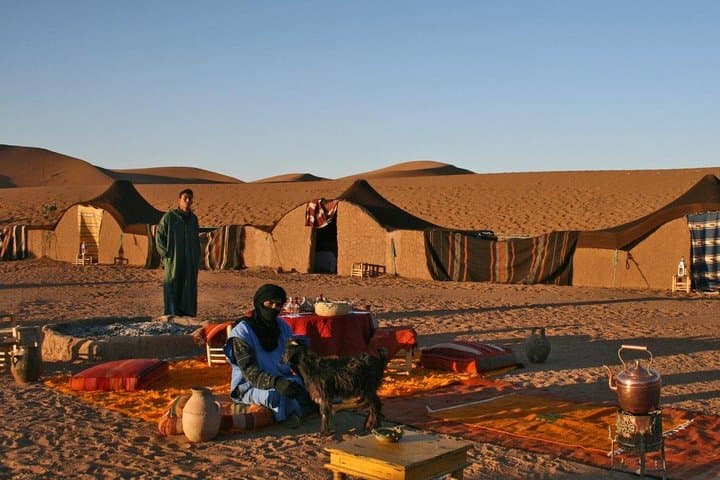
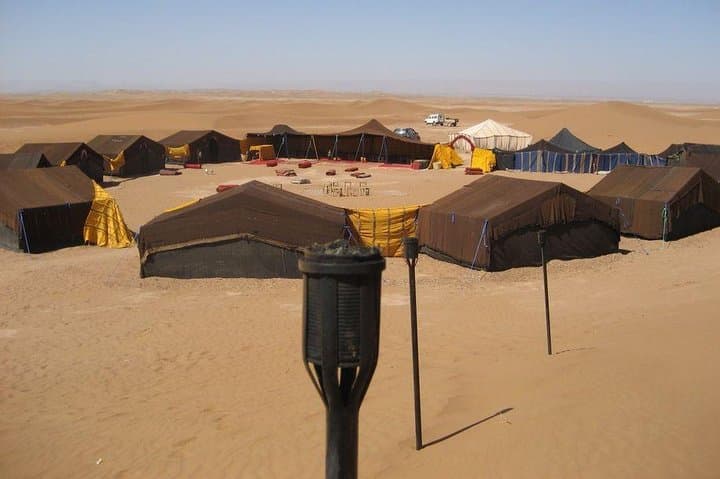
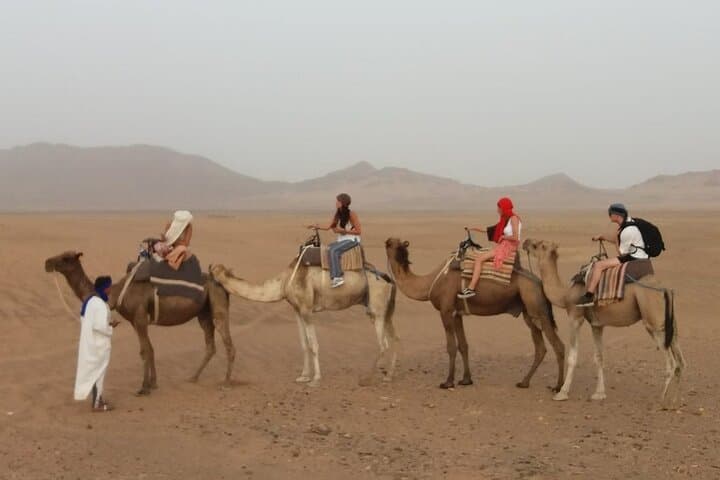
You crest the final ridge of the Nekhla dunes as the sun pulls the sand into long, warm shadows. Camels sway beneath you and the camp—a cluster of private Berber tents—wait with steaming tea and a low-ember dinner. The air is washboard cool after the day’s heat; the desert seems to breathe around the lantern light.
Verified experiences and guided adventures in the surrounding area.
Operated by STE Easy Transfers · Marrakech, Marrakech-Safi
You crest the final ridge of the Nekhla dunes as the sun pulls the sand into long, warm shadows. Camels sway beneath you and the camp—a cluster of private Berber tents—wait with steaming tea and a low-ember dinner. The air is washboard cool after the day’s heat; the desert seems to breathe around the lantern light.
The route itself traces old caravan arteries and high mountain passages. You cross the High Atlas via the Tizi n’Tichka pass (about 2,260 m), move through the cinematic kasbah landscapes around Ouarzazate and visit Aït Ben Haddou, a UNESCO mudbrick ksar once on the trans-Sahara trade route. Geologically, the High Atlas is uplifted Precambrian rock while the Zagora area gives way to wind-sculpted sands and stony hammada. Culturally, expect Berber hospitality: tagine dinners, mint tea rituals and tents staffed by local hosts.
Practicalities are straightforward: the full loop covers roughly 350–380 km round-trip from Marrakech with several hours of driving split between the two days and a short camel transfer (about 1 km) from the pickup point to the bivouac. Overnight is in a private tent with dinner and breakfast included; sunrise and sunset are the highlights—bring layers for cold nights, sturdy shoes for uneven, sandy terrain, and sun protection for long daytime stretches. Hydrate between stops, carry local cash for tips and guide fees, and plan for bumpy mountain roads. For travelers who want a compact desert experience, this two-day itinerary delivers a concentrated taste of Sahara travel with historically rich stops en route.
easy.
2 days (approx. 48 hours).
Suitable for travelers in average physical condition; short camel rides and light dune walking are required.
The camel transfer starts about one kilometer from Zagora and is a short sunset ride to the bivouac—typically 20–40 minutes depending on pace.
You’ll stay in a private Berber-style tent with basic bedding; the camp provides dinner and breakfast and shared campsite facilities.
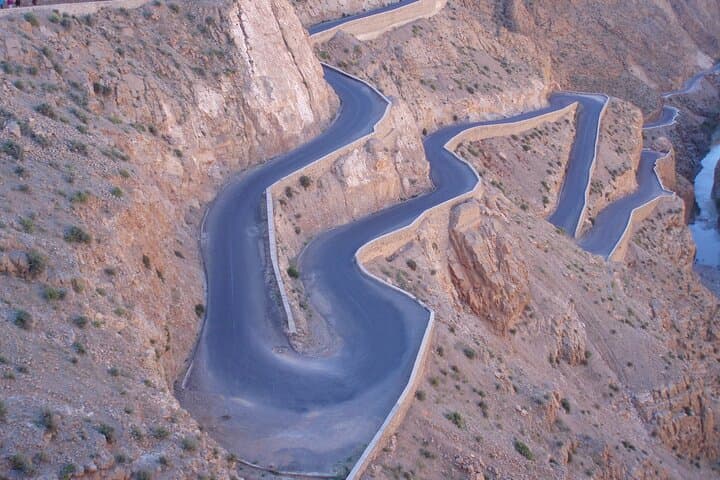
Roads cross the Tizi n’Tichka pass and include winding mountain sections; vehicles are air-conditioned and drivers are experienced with these routes.
Yes—this itinerary is marketed as suitable for all fitness levels; infants may need to sit on an adult’s lap during transport, and camel rides may have age or safety considerations.
Aït Ben Haddou grew as a fortified caravan ksar on the trans-Sahara trade routes; many kasbahs in the region are built from local mudbrick and reflect centuries of Berber and Saharan exchange.
The desert ecosystem is fragile—stick to established tracks, minimize campfire impact, and carry out all non-biodegradable waste; support local guides and small businesses to promote sustainable tourism.
STE Easy Transfers operates guided outdoor trips and adventures with an emphasis on safety, stewardship, and memorable experiences.
You crest the final ridge of the Nekhla dunes as the sun pulls the sand into long, warm shadows. Camels sway beneath you and the camp—a cluster of private Berber tents—wait with steaming tea and a low-ember dinner. The air is washboard cool after the day’s heat; the desert seems to breathe around the lantern light.
You crest the final ridge of the Nekhla dunes as the sun pulls the sand into long, warm shadows. Camels sway beneath you and the camp—a cluster of private Berber tents—wait with steaming tea and a low-ember dinner. The air is washboard cool after the day’s heat; the desert seems to breathe around the lantern light.
The route itself traces old caravan arteries and high mountain passages. You cross the High Atlas via the Tizi n’Tichka pass (about 2,260 m), move through the cinematic kasbah landscapes around Ouarzazate and visit Aït Ben Haddou, a UNESCO mudbrick ksar once on the trans-Sahara trade route. Geologically, the High Atlas is uplifted Precambrian rock while the Zagora area gives way to wind-sculpted sands and stony hammada. Culturally, expect Berber hospitality: tagine dinners, mint tea rituals and tents staffed by local hosts.
Practicalities are straightforward: the full loop covers roughly 350–380 km round-trip from Marrakech with several hours of driving split between the two days and a short camel transfer (about 1 km) from the pickup point to the bivouac. Overnight is in a private tent with dinner and breakfast included; sunrise and sunset are the highlights—bring layers for cold nights, sturdy shoes for uneven, sandy terrain, and sun protection for long daytime stretches. Hydrate between stops, carry local cash for tips and guide fees, and plan for bumpy mountain roads. For travelers who want a compact desert experience, this two-day itinerary delivers a concentrated taste of Sahara travel with historically rich stops en route.