THE ADVENTURE COLLECTIVE® · Independent discovery and booking for outdoor travel

A compact 2-day journey from Marrakech to the Zagora desert that pairs High Atlas vistas, UNESCO-listed Aït Ben Haddou, and a camel ride to a traditional bivouac. Ideal for travelers who want a concentrated Sahara experience with guided logistics and cultural stops.
A compact 2-day journey from Marrakech to the Zagora desert that pairs High Atlas vistas, UNESCO-listed Aït Ben Haddou, and a camel ride to a traditional bivouac. Ideal for travelers who want a concentrated Sahara experience with guided logistics and cultural stops.
Dawn clarifies the dunes in long gold strokes as camels file away from Zagora town toward a bivouac pitched under an immensity of stars.
Verified experiences and guided adventures in the surrounding area.
Operated by Excursions Marrakech · Zagora, Drâa-Tafilalet
Dawn clarifies the dunes in long gold strokes as camels file away from Zagora town toward a bivouac pitched under an immensity of stars.
This two-day circuit threads the High Atlas and the southern edge of the Sahara: the Tizi n’Tichka pass carves through rocky spines, Aït Ben Haddou’s earthen towers recall trans-Saharan caravan architecture, and the Drâa Valley opens into palm-lined irrigation channels that have supported oases for centuries.
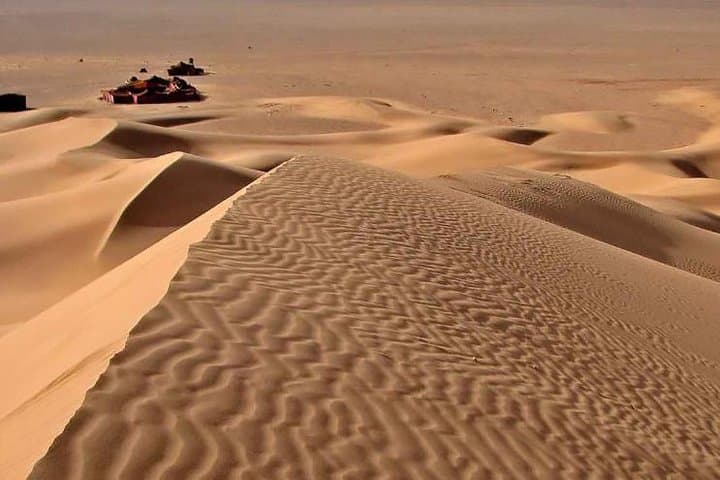
Geologically the route moves from folded Precambrian and Mesozoic foothills to wind-sculpted sands and alluvial terraces. Culturally it’s Berber country — ksars and kasbahs built in rammed earth and clay, passed down through generations and reused as film sets and living villages.
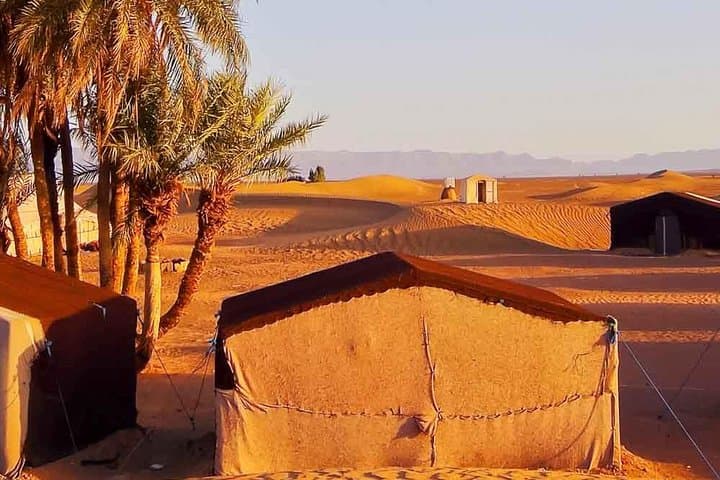
Expect short walks in Aït Ben Haddou, photo stops along the valley, and a two-hour camel transfer to a desert bivouac where dinner and a local music performance complete the evening. Sleeping is in traditional tents; mornings bring sunrise on the dunes and a slow ride back to Zagora and then Ouarzazate before returning to Marrakech.
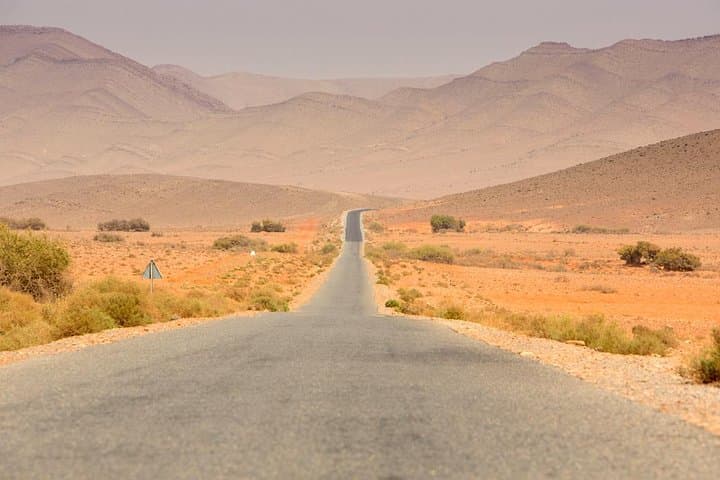
Practical edge: pack layered clothing for hot days and cold desert nights, bring a wide-brim hat and plenty of water, and plan for long vehicle stretches over mountain passes. Photography batteries deplete faster in sand and heat—carry sealed bags for gear. For comfort on the camel, wear long pants and closed shoes; short sandy hikes from the bivouac are easy but uneven.
This trip delivers concentrated desert experience in two days: landscapes that change with elevation, hands-on cultural moments, and practical logistics handled so you can focus on the horizon.
moderate.
2 days.
Moderate fitness: able to sit through long vehicle transfers, make short walks in uneven terrain and mount/dismount camels.
Camel transfers are gentle but require mounting and dismounting; rides last about two hours and are suitable for most people with moderate mobility.
Accommodation is a traditional desert bivouac with comfortable tents—expect camp beds or mattresses and blankets, not hotel-style beds.
Tipping is appreciated for local guides, drivers and camp staff; small amounts given individually are customary and support the local economy.
Children can join but should tolerate long drives and overnight tent conditions; confirm age restrictions and child seats at booking.
The Drâa corridor was a historic trans-Saharan trade route; Aït Ben Haddou is a fortified ksar that protected caravans and reflects centuries of earthen architecture.
The desert’s fragile soils and oasis aquifers are sensitive to overuse—stay on established paths, minimize water waste, and avoid single-use plastics.
Excursions Marrakech operates guided outdoor trips and adventures with an emphasis on safety, stewardship, and memorable experiences.
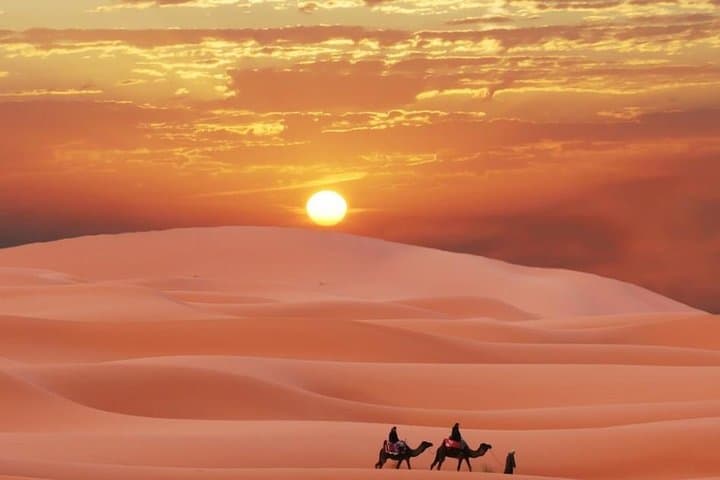
Dawn clarifies the dunes in long gold strokes as camels file away from Zagora town toward a bivouac pitched under an immensity of stars.
Dawn clarifies the dunes in long gold strokes as camels file away from Zagora town toward a bivouac pitched under an immensity of stars.
This two-day circuit threads the High Atlas and the southern edge of the Sahara: the Tizi n’Tichka pass carves through rocky spines, Aït Ben Haddou’s earthen towers recall trans-Saharan caravan architecture, and the Drâa Valley opens into palm-lined irrigation channels that have supported oases for centuries.
Geologically the route moves from folded Precambrian and Mesozoic foothills to wind-sculpted sands and alluvial terraces. Culturally it’s Berber country — ksars and kasbahs built in rammed earth and clay, passed down through generations and reused as film sets and living villages.
Expect short walks in Aït Ben Haddou, photo stops along the valley, and a two-hour camel transfer to a desert bivouac where dinner and a local music performance complete the evening. Sleeping is in traditional tents; mornings bring sunrise on the dunes and a slow ride back to Zagora and then Ouarzazate before returning to Marrakech.
Practical edge: pack layered clothing for hot days and cold desert nights, bring a wide-brim hat and plenty of water, and plan for long vehicle stretches over mountain passes. Photography batteries deplete faster in sand and heat—carry sealed bags for gear. For comfort on the camel, wear long pants and closed shoes; short sandy hikes from the bivouac are easy but uneven.
This trip delivers concentrated desert experience in two days: landscapes that change with elevation, hands-on cultural moments, and practical logistics handled so you can focus on the horizon.