THE ADVENTURE COLLECTIVE® · Independent discovery and booking for outdoor travel

A compact, private two-day loop from Marrakech into the Zagora dunes, combining a High Atlas crossing, a visit to Aït Ben Haddou, an hour-long camel ride and an overnight nomad camp. Ideal for travelers short on time who still want an authentic Sahara experience.
A compact, private two-day loop from Marrakech into the Zagora dunes, combining a High Atlas crossing, a visit to Aït Ben Haddou, an hour-long camel ride and an overnight nomad camp. Ideal for travelers short on time who still want an authentic Sahara experience.
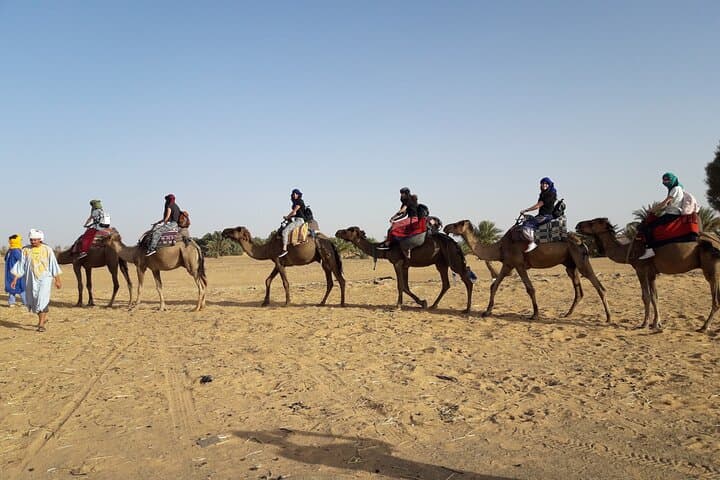
You crest a ridge of golden sand as late afternoon throws long shadows across the Sahara. The caravan’s slow sway and the wind’s dry voice set the rhythm; behind you, the car’s tracks fade toward the Anti-Atlas while ahead the camp lights appear like small constellations waiting on the dune.
Verified experiences and guided adventures in the surrounding area.
Operated by Visit morocco tours · Zagora, Drâa-Tafilalet
You crest a ridge of golden sand as late afternoon throws long shadows across the Sahara. The caravan’s slow sway and the wind’s dry voice set the rhythm; behind you, the car’s tracks fade toward the Anti-Atlas while ahead the camp lights appear like small constellations waiting on the dune.
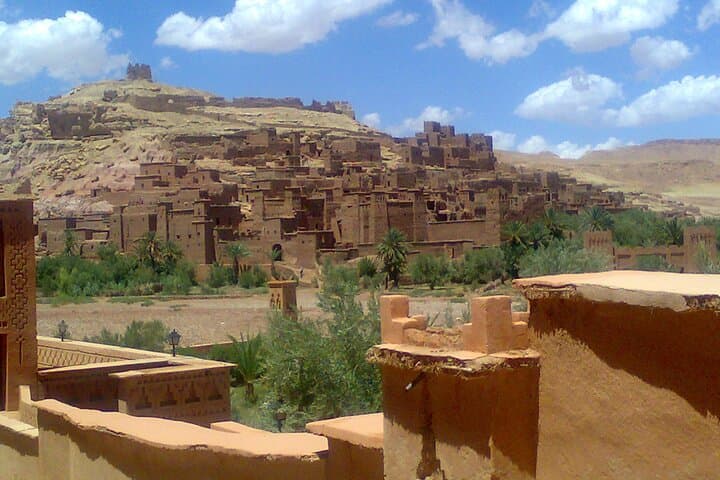
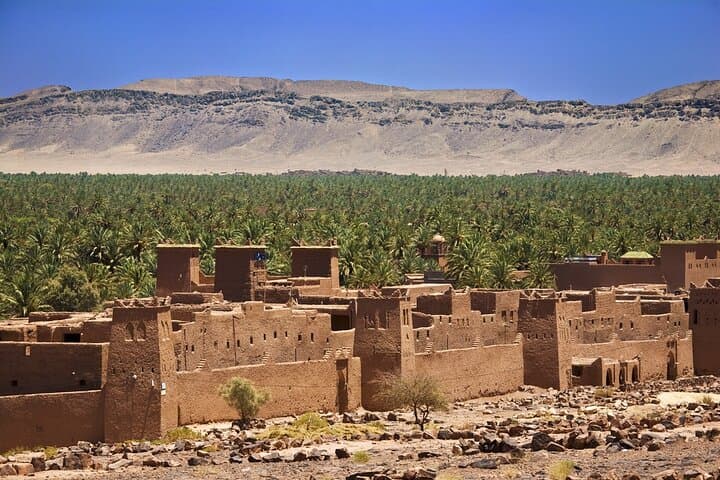
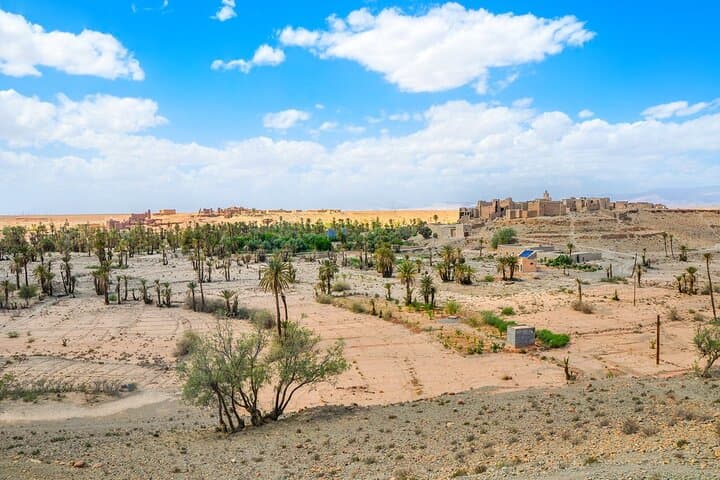
This two-day route threads Marrakech, the High Atlas passes, and the UNESCO-listed Kasbah Aït Ben Haddou before dropping into the palm-lined Draa Valley and the Zagora sandsea. Geologically, the region transitions from schist and granite of the High Atlas to eroded mudbrick plains and wind-sculpted dunes of the Sahara — a visible change in materials and scale. Culturally, expect Berber hospitality, the rammed-earth architecture of kasbahs, and evening Gnawa or Berber percussion around the fire.
Practical notes: the overnight is in a private nomad-style camp with dinner and breakfast included; camel transfers to and from the camp take about an hour each way. Sunrise and sunset are the highlights and the best light for photos. Temperatures swing strongly between night and day, and sand can abrade gear and zippers, so protective storage helps.
Plan for early departures through mountain passes, modest walking on uneven ground, and short stretches on camelback. Bring layered clothing, sun protection, and enough water for the road segments. The itinerary compresses classic desert scenery into 48 hours — a concentrated window into Morocco’s southern landscapes and living traditions.
easy.
2 days (48 hours).
Suitable for most fitness levels; you should be able to mount camels and walk short, uneven stretches.
The itinerary includes roughly one hour of camel riding each way to reach and leave the camp, enough for comfortable mounting and short stretches on the dunes.
The tour specifies a private overnight in a comfortable nomad camp with dinner and breakfast; facilities are basic but designed for comfort under desert conditions.
No special permit is required; entry to some kasbahs or studios may have modest admission fees if you opt to go inside.
The operator lists the tour as suitable for all fitness levels; children can participate, but mounting camels and walking on uneven terrain may be challenging for those with limited mobility.
The route follows ancient caravan corridors linking Marrakech to Saharan oases; Aït Ben Haddou became a strategic fortified stop on trans-Saharan trade routes and later a film location for international productions.
Stick to marked tracks when stopping; the desert's fragile crust and vegetation recover slowly from vehicle damage, and local communities encourage low-impact visits to protect water sources.
Visit morocco tours operates guided outdoor trips and adventures with an emphasis on safety, stewardship, and memorable experiences.
You crest a ridge of golden sand as late afternoon throws long shadows across the Sahara. The caravan’s slow sway and the wind’s dry voice set the rhythm; behind you, the car’s tracks fade toward the Anti-Atlas while ahead the camp lights appear like small constellations waiting on the dune.
You crest a ridge of golden sand as late afternoon throws long shadows across the Sahara. The caravan’s slow sway and the wind’s dry voice set the rhythm; behind you, the car’s tracks fade toward the Anti-Atlas while ahead the camp lights appear like small constellations waiting on the dune.
This two-day route threads Marrakech, the High Atlas passes, and the UNESCO-listed Kasbah Aït Ben Haddou before dropping into the palm-lined Draa Valley and the Zagora sandsea. Geologically, the region transitions from schist and granite of the High Atlas to eroded mudbrick plains and wind-sculpted dunes of the Sahara — a visible change in materials and scale. Culturally, expect Berber hospitality, the rammed-earth architecture of kasbahs, and evening Gnawa or Berber percussion around the fire.
Practical notes: the overnight is in a private nomad-style camp with dinner and breakfast included; camel transfers to and from the camp take about an hour each way. Sunrise and sunset are the highlights and the best light for photos. Temperatures swing strongly between night and day, and sand can abrade gear and zippers, so protective storage helps.
Plan for early departures through mountain passes, modest walking on uneven ground, and short stretches on camelback. Bring layered clothing, sun protection, and enough water for the road segments. The itinerary compresses classic desert scenery into 48 hours — a concentrated window into Morocco’s southern landscapes and living traditions.