THE ADVENTURE COLLECTIVE® · Independent discovery and booking for outdoor travel

Cross the High Atlas, ride a camel at sunset and sleep in a Berber desert camp on this compact two-day route from Marrakech to Zagora. Expect long drives, dramatic passes, and a dawn in the Sahara.
Cross the High Atlas, ride a camel at sunset and sleep in a Berber desert camp on this compact two-day route from Marrakech to Zagora. Expect long drives, dramatic passes, and a dawn in the Sahara.
You leave Marrakech before dawn, the city shrinking behind rose-colored walls while the road climbs the High Atlas. The tarmac tightens around the Tizi n’Tichka pass and the air thins; rock faces lean in like old guards as you descend toward sunlit plains. By midday the palms of the Draa Valley unfurl below—a green ribbon that hints at the life water forces from sand—and by evening the dunes outside Zagora push up, daring you to walk their slopes.
Verified experiences and guided adventures in the surrounding area.
Operated by Dafli Tours · Zagora, Drâa-Tafilalet
You leave Marrakech before dawn, the city shrinking behind rose-colored walls while the road climbs the High Atlas. The tarmac tightens around the Tizi n’Tichka pass and the air thins; rock faces lean in like old guards as you descend toward sunlit plains. By midday the palms of the Draa Valley unfurl below—a green ribbon that hints at the life water forces from sand—and by evening the dunes outside Zagora push up, daring you to walk their slopes.
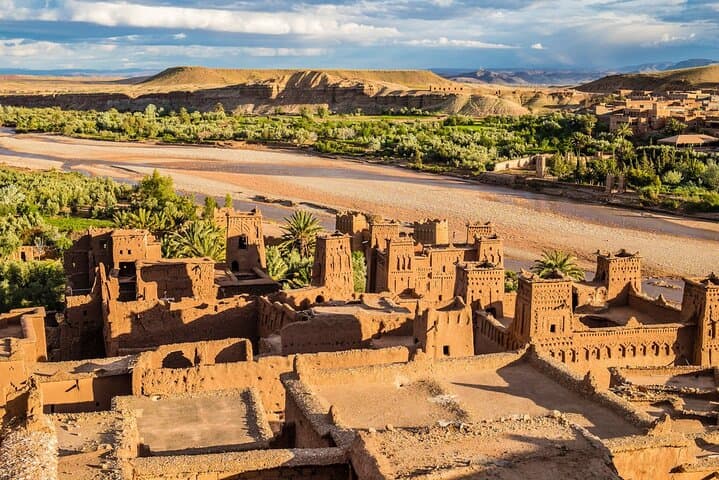
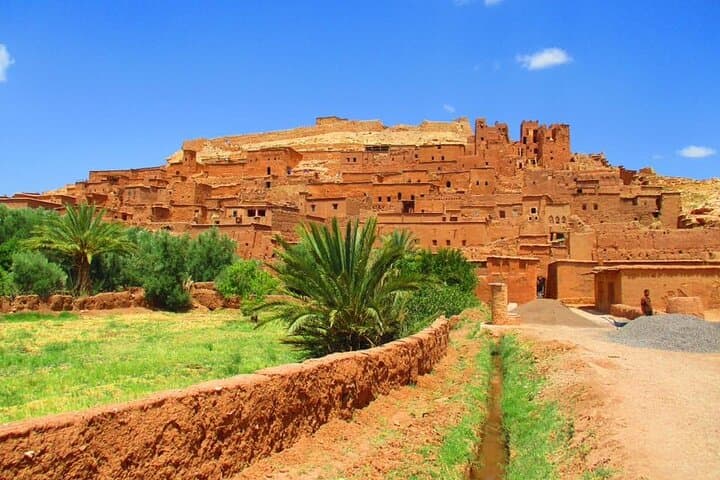
The route follows centuries-old corridors: mountain passes carved by trade, the ksar architecture of Aït Ben Haddou where mud-brick towers once watched caravans carrying salt and gold, and stretches of palm oases that enabled settlement in an otherwise arid landscape. Geologically, you cross folded Precambrian and Mesozoic ranges into Saharan sands; culturally, you encounter Berber hospitality and the slow rhythm of oasis agriculture.
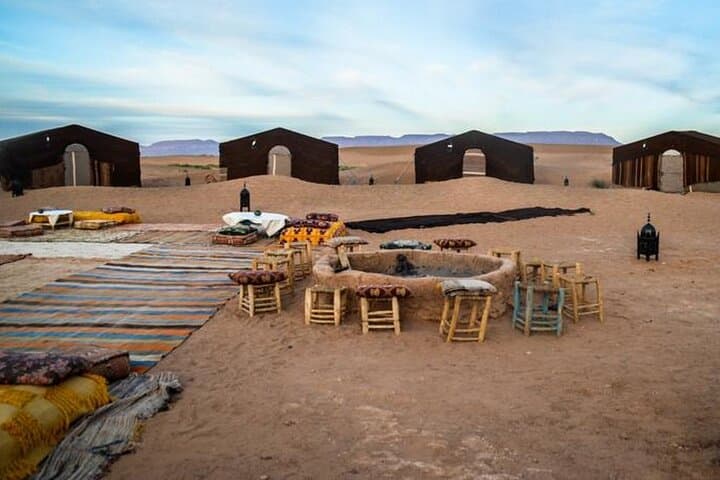
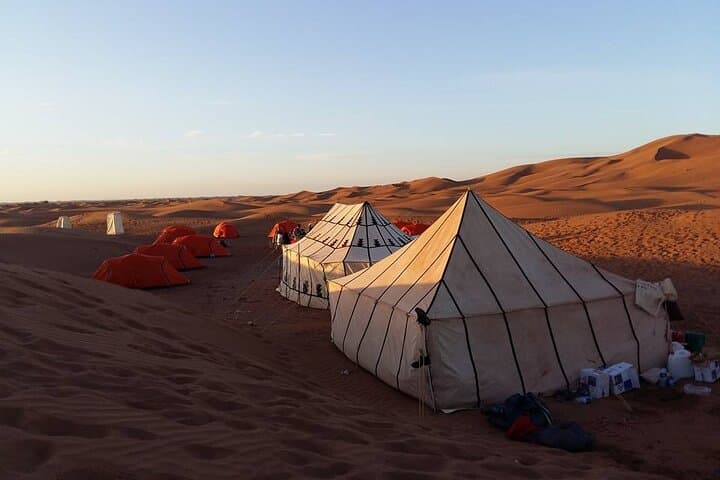
Practical guidance: expect long stretches in a minibus with multiple short stops; bring sun protection, ample water, and a soft bag for overnight camp gear. Plan for big temperature swings—hot afternoons and crisp nights—and limited phone service once you leave Ouarzazate. Camels are used for short sunset and optional dawn rides; the Berber camp offers a basic double tent and dinner under stars.
Timing the trip for spring or fall eases heat stress; summer can be extreme, and winter nights are frigid. Respect private spaces in villages, tip locally for services, and pack out plastics—desert ecosystems recover slowly but remain resilient to careful visitors.
easy.
2 days (about 48 hours).
Suitable for most fitness levels; requires tolerance for long vehicle transfers and short camel walks.
The included camel ride is typically a 30–60 minute sunset experience; dawn rides the next morning are optional and vary by camp.
Camps provide basic double tents with mattresses and blankets; they are not heated—bring warm layers for winter nights.
No; the tour is rated easy and suitable for most travelers, though long vehicle time and uneven terrain can be challenging for some.
The tour lists an English-speaking driver/guide; local Berber or Arabic may be spoken in villages and camps.
Aït Ben Haddou was a key fortified stop on trans-Sahara caravan routes and later a film location; the Draa Valley supported oasis agriculture that sustained caravans.
The Sahara’s fragile soils and oases recover slowly from disturbance—minimize waste, avoid off-track driving, and support local services to help communities conserve resources.
Dafli Tours operates guided outdoor trips and adventures with an emphasis on safety, stewardship, and memorable experiences.
You leave Marrakech before dawn, the city shrinking behind rose-colored walls while the road climbs the High Atlas. The tarmac tightens around the Tizi n’Tichka pass and the air thins; rock faces lean in like old guards as you descend toward sunlit plains. By midday the palms of the Draa Valley unfurl below—a green ribbon that hints at the life water forces from sand—and by evening the dunes outside Zagora push up, daring you to walk their slopes.
You leave Marrakech before dawn, the city shrinking behind rose-colored walls while the road climbs the High Atlas. The tarmac tightens around the Tizi n’Tichka pass and the air thins; rock faces lean in like old guards as you descend toward sunlit plains. By midday the palms of the Draa Valley unfurl below—a green ribbon that hints at the life water forces from sand—and by evening the dunes outside Zagora push up, daring you to walk their slopes.
The route follows centuries-old corridors: mountain passes carved by trade, the ksar architecture of Aït Ben Haddou where mud-brick towers once watched caravans carrying salt and gold, and stretches of palm oases that enabled settlement in an otherwise arid landscape. Geologically, you cross folded Precambrian and Mesozoic ranges into Saharan sands; culturally, you encounter Berber hospitality and the slow rhythm of oasis agriculture.
Practical guidance: expect long stretches in a minibus with multiple short stops; bring sun protection, ample water, and a soft bag for overnight camp gear. Plan for big temperature swings—hot afternoons and crisp nights—and limited phone service once you leave Ouarzazate. Camels are used for short sunset and optional dawn rides; the Berber camp offers a basic double tent and dinner under stars.
Timing the trip for spring or fall eases heat stress; summer can be extreme, and winter nights are frigid. Respect private spaces in villages, tip locally for services, and pack out plastics—desert ecosystems recover slowly but remain resilient to careful visitors.