THE ADVENTURE COLLECTIVE® · Independent discovery and booking for outdoor travel

Travel from Marrakech over the High Atlas to Zagora for a two-day desert safari featuring Ait Benhaddou, Draa Valley palms, a sunset camel ride and an overnight in a luxury camp. Expect long drives, striking landscapes, and a comfortable tent beneath vast desert skies.
Travel from Marrakech over the High Atlas to Zagora for a two-day desert safari featuring Ait Benhaddou, Draa Valley palms, a sunset camel ride and an overnight in a luxury camp. Expect long drives, striking landscapes, and a comfortable tent beneath vast desert skies.
The minibus eases out of Marrakech before dawn, tires crunching over the High Atlas passes as villages slide past the windows. By mid-afternoon the earth changes: ochre plains give way to date-lined wadis, and the Draa Valley’s kasbahs crowd the road like stories in clay. Arriving at Zagora, a camel caravan waits; the animals tread the dunes with deliberate patience as the sun lowers and colors sharpen.
Verified experiences and guided adventures in the surrounding area.
Operated by Tour and Travel Morocco · Zagora, Drâa-Tafilalet
The minibus eases out of Marrakech before dawn, tires crunching over the High Atlas passes as villages slide past the windows. By mid-afternoon the earth changes: ochre plains give way to date-lined wadis, and the Draa Valley’s kasbahs crowd the road like stories in clay. Arriving at Zagora, a camel caravan waits; the animals tread the dunes with deliberate patience as the sun lowers and colors sharpen.
This route threads geology and human history—High Atlas granite folded by tectonic pressure, then the alluvial soils of the Draa, where centuries of caravan trade linked sub-Saharan routes to Moroccan towns. Ait Benhaddou, a fortified ksar and UNESCO site, offers compact history: earthen towers, film sets, and a living example of southern Moroccan architecture. Berber music around the campfire traces that cultural line, voices and drums filling the desert night.
Practically, expect long drives with scheduled stops: mornings for mountain views and Ait Benhaddou exploration, late afternoons for camel treks and sunset on the dunes. Luxury desert tents provide private beds, hot showers, and toilets—comfort paired with open-sky solitude. Nights are cold; mornings can be windy.
Bring layered clothing for big diurnal shifts, sun protection for daytime crossings, and a small daypack for camera, water, and valuables during excursions. Hydration and pacing matter—the camel rides are gentle but require balance; uneven sand underfoot makes closed-toe shoes the sensible choice. If planning around weather, spring and fall balance warm days and cool nights, while summer is intensely hot and winter can dip sharply after dark.
moderate.
2 days.
Suitable for travelers in average health who can tolerate long vehicle transfers and short camel rides; not strenuous but involves uneven terrain.
Expect roughly 8–10 hours of combined driving each direction with stops; itineraries include breaks at the High Atlas and Ait Benhaddou.
Guests stay in private, luxury tents with beds, hot-water showers and toilet facilities—standard amenities vary by operator but are included on this tour.
Yes; the camel treks are gentle and guided, though mounting and dismounting require some balance—notify guides of mobility issues beforehand.
Generally yes for children and adults in good health, but it’s not recommended for those with spinal, heart, or pregnancy-related restrictions due to camel rides and long transfers.
The route follows historic caravan corridors; Ait Benhaddou was a strategic trading post where goods and culture moved between sub-Saharan Africa and northern Morocco.
The Sahara’s fragile soils and scarce water demand low-impact travel—choose camps that minimize generator use, respect local water practices, and avoid off-track driving.
Tour and Travel Morocco operates guided outdoor trips and adventures with an emphasis on safety, stewardship, and memorable experiences.
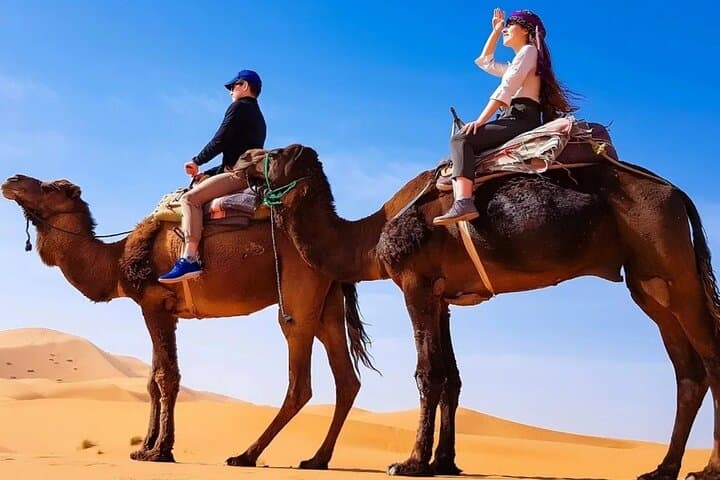
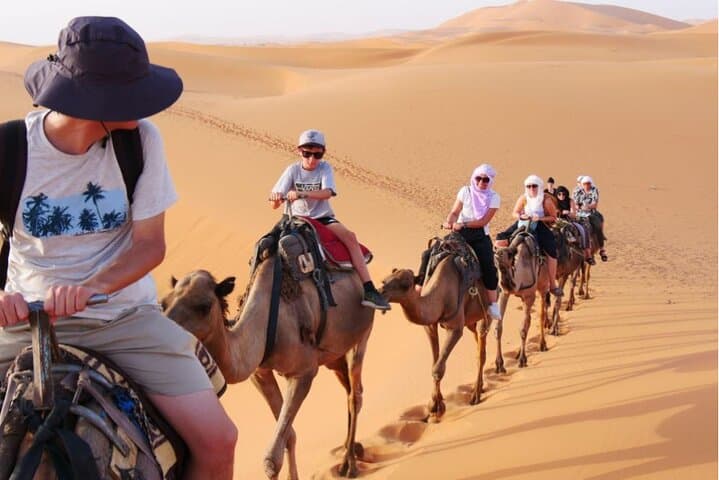
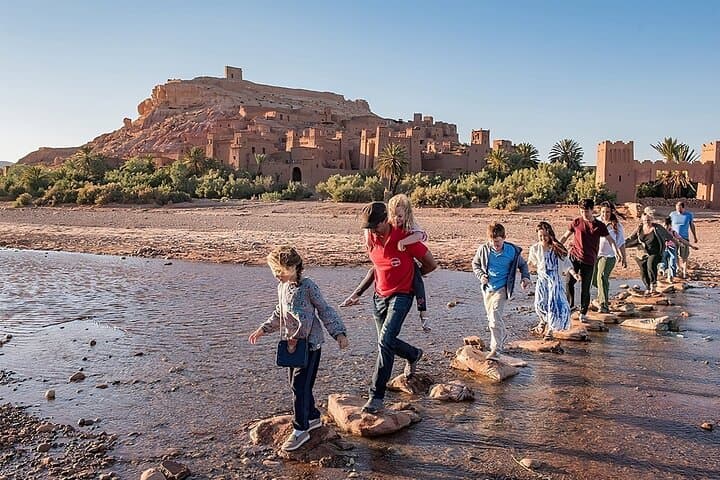
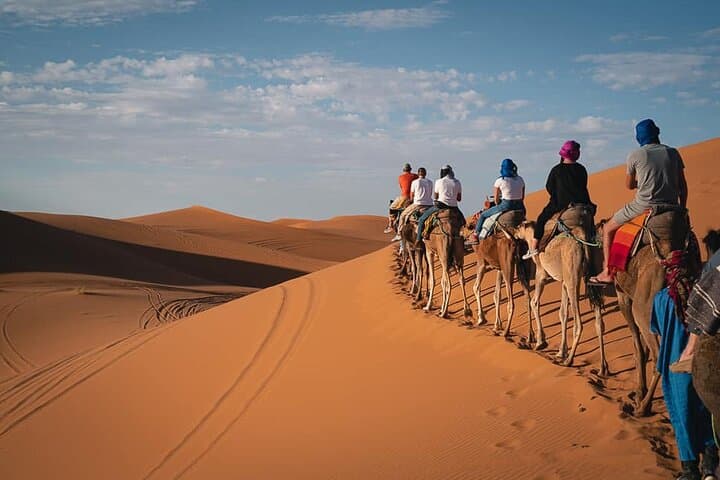
The minibus eases out of Marrakech before dawn, tires crunching over the High Atlas passes as villages slide past the windows. By mid-afternoon the earth changes: ochre plains give way to date-lined wadis, and the Draa Valley’s kasbahs crowd the road like stories in clay. Arriving at Zagora, a camel caravan waits; the animals tread the dunes with deliberate patience as the sun lowers and colors sharpen.
The minibus eases out of Marrakech before dawn, tires crunching over the High Atlas passes as villages slide past the windows. By mid-afternoon the earth changes: ochre plains give way to date-lined wadis, and the Draa Valley’s kasbahs crowd the road like stories in clay. Arriving at Zagora, a camel caravan waits; the animals tread the dunes with deliberate patience as the sun lowers and colors sharpen.
This route threads geology and human history—High Atlas granite folded by tectonic pressure, then the alluvial soils of the Draa, where centuries of caravan trade linked sub-Saharan routes to Moroccan towns. Ait Benhaddou, a fortified ksar and UNESCO site, offers compact history: earthen towers, film sets, and a living example of southern Moroccan architecture. Berber music around the campfire traces that cultural line, voices and drums filling the desert night.
Practically, expect long drives with scheduled stops: mornings for mountain views and Ait Benhaddou exploration, late afternoons for camel treks and sunset on the dunes. Luxury desert tents provide private beds, hot showers, and toilets—comfort paired with open-sky solitude. Nights are cold; mornings can be windy.
Bring layered clothing for big diurnal shifts, sun protection for daytime crossings, and a small daypack for camera, water, and valuables during excursions. Hydration and pacing matter—the camel rides are gentle but require balance; uneven sand underfoot makes closed-toe shoes the sensible choice. If planning around weather, spring and fall balance warm days and cool nights, while summer is intensely hot and winter can dip sharply after dark.