THE ADVENTURE COLLECTIVE® · Independent discovery and booking for outdoor travel

Sleep in a felt yurt on the Aydarkul plain between Samarkand and Bukhara, ride a camel across steppe, and hear nomadic music beside the campfire. This two-day self-guided loop pairs cultural sites like Alexander’s Fort and Chashma Spring with the surprising lakeshore of Aydarkul.
Sleep in a felt yurt on the Aydarkul plain between Samarkand and Bukhara, ride a camel across steppe, and hear nomadic music beside the campfire. This two-day self-guided loop pairs cultural sites like Alexander’s Fort and Chashma Spring with the surprising lakeshore of Aydarkul.
The wind over the Arnasay Depression pushes fine dust across wide sky; a line of felt yurts sits like punctuation on the flat, and the smell of wood smoke and boiling tea cuts through the chill. You arrive from Samarkand after the road narrows and the landscape opens—rolling steppe, clay ridges, and the broad mirror of Lake Aydarkul glinting ahead.
Verified experiences and guided adventures in the surrounding area.
Operated by Samaria Travel · Nurata, Navoiy Region
The wind over the Arnasay Depression pushes fine dust across wide sky; a line of felt yurts sits like punctuation on the flat, and the smell of wood smoke and boiling tea cuts through the chill. You arrive from Samarkand after the road narrows and the landscape opens—rolling steppe, clay ridges, and the broad mirror of Lake Aydarkul glinting ahead.
This route threads through Nurata, where Alexander’s Fort crowns a limestone escarpment and Chashma Spring still draws pilgrims to its steady, mineral-rich pool. Aydarkul itself is a modern feature: a Soviet-era reservoir formed in 1969 that reshaped local ecology and turned a dry depression into a seasonal marshland that attracts waterbirds and nomadic camps.
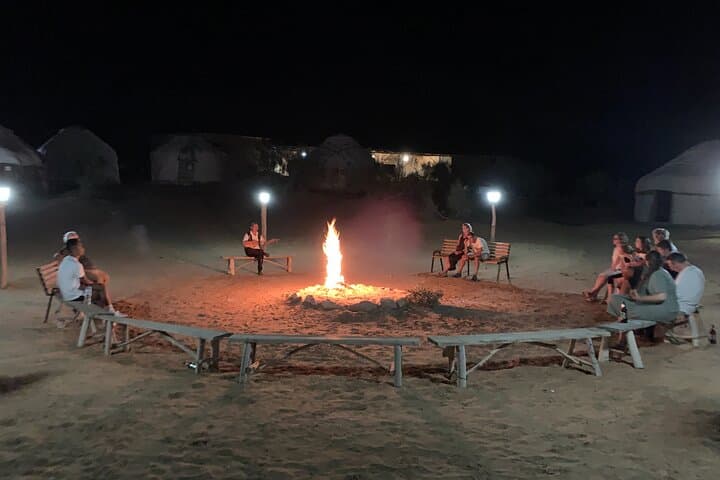
At camp you sleep in a traditional yurt on firm beds with warm blankets, share a campfire meal, and hear Kazakh strings and throat-sung melodies after dusk. Days are simple: short drives over imperfect asphalt and gravel, a camel ride across the flats, birdwatching along the lake edge, and the ceremonial visit to Chashma with its marble pool and tiny marinka fish.
Practical notes: the yurt season runs late March–October; roads between the towns can be long and bumpy—expect 40 minutes from Aydarkul to the camp and a 200 km drive to Bukhara on day two. Bring sun protection, a headlamp, warm layers for cool nights, and modest clothing for holy sites. Water and snacks on hand make the day easier, and a camera with a long lens rewards patient birding. The experience balances cultural exchange and quiet landscape—simple, tactile, and easy on fitness but rich in place.
easy.
2 days.
Suitable for most travelers with basic mobility; involves short walks, camel rides, and tolerance for long vehicle transfers.
Yes — the itinerary can be reversed; confirm pickup and drop-off points when booking.
Yurts have shared bathroom facilities with a flushing toilet; expect basic, camp-style amenities rather than hotel-level plumbing.
The initial stretch uses good road, but much of the route to the camp is uneven asphalt or gravel and can be bumpy—allow time for slower travel.
Dinner and breakfast are included at the camp; bring snacks for the road and any special dietary needs noted at booking.
Nurata’s hilltop fort is linked in local tradition to Alexander the Great; Aydarkul was formed in 1969 after Soviet water management projects reshaped the Arnasay Depression.
The Arnasay–Aydarkul area is sensitive to water-level change and human impact; follow leave-no-trace principles, avoid disturbing fish in sacred pools, and respect pastoral grazing areas.
Samaria Travel operates guided outdoor trips and adventures with an emphasis on safety, stewardship, and memorable experiences.
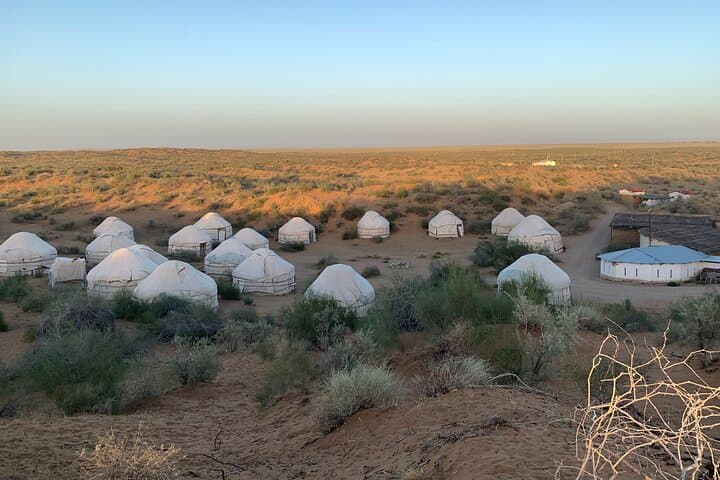
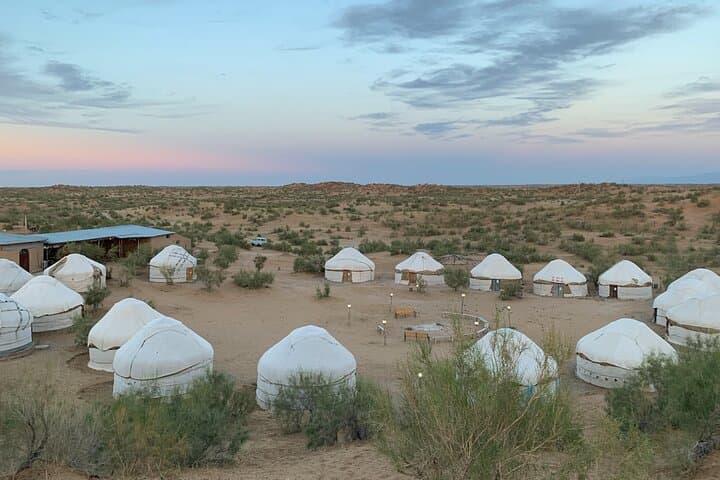
The wind over the Arnasay Depression pushes fine dust across wide sky; a line of felt yurts sits like punctuation on the flat, and the smell of wood smoke and boiling tea cuts through the chill. You arrive from Samarkand after the road narrows and the landscape opens—rolling steppe, clay ridges, and the broad mirror of Lake Aydarkul glinting ahead.
The wind over the Arnasay Depression pushes fine dust across wide sky; a line of felt yurts sits like punctuation on the flat, and the smell of wood smoke and boiling tea cuts through the chill. You arrive from Samarkand after the road narrows and the landscape opens—rolling steppe, clay ridges, and the broad mirror of Lake Aydarkul glinting ahead.
This route threads through Nurata, where Alexander’s Fort crowns a limestone escarpment and Chashma Spring still draws pilgrims to its steady, mineral-rich pool. Aydarkul itself is a modern feature: a Soviet-era reservoir formed in 1969 that reshaped local ecology and turned a dry depression into a seasonal marshland that attracts waterbirds and nomadic camps.
At camp you sleep in a traditional yurt on firm beds with warm blankets, share a campfire meal, and hear Kazakh strings and throat-sung melodies after dusk. Days are simple: short drives over imperfect asphalt and gravel, a camel ride across the flats, birdwatching along the lake edge, and the ceremonial visit to Chashma with its marble pool and tiny marinka fish.
Practical notes: the yurt season runs late March–October; roads between the towns can be long and bumpy—expect 40 minutes from Aydarkul to the camp and a 200 km drive to Bukhara on day two. Bring sun protection, a headlamp, warm layers for cool nights, and modest clothing for holy sites. Water and snacks on hand make the day easier, and a camera with a long lens rewards patient birding. The experience balances cultural exchange and quiet landscape—simple, tactile, and easy on fitness but rich in place.