THE ADVENTURE COLLECTIVE® · Independent discovery and booking for outdoor travel

Reserve Yungang Grottoes tickets ahead to bypass lines and spend more time among Northern Wei cave carvings. Add a local guide or private transport to deepen context and stitch the grottoes into a full-day Datong itinerary.
Reserve Yungang Grottoes tickets ahead to bypass lines and spend more time among Northern Wei cave carvings. Add a local guide or private transport to deepen context and stitch the grottoes into a full-day Datong itinerary.
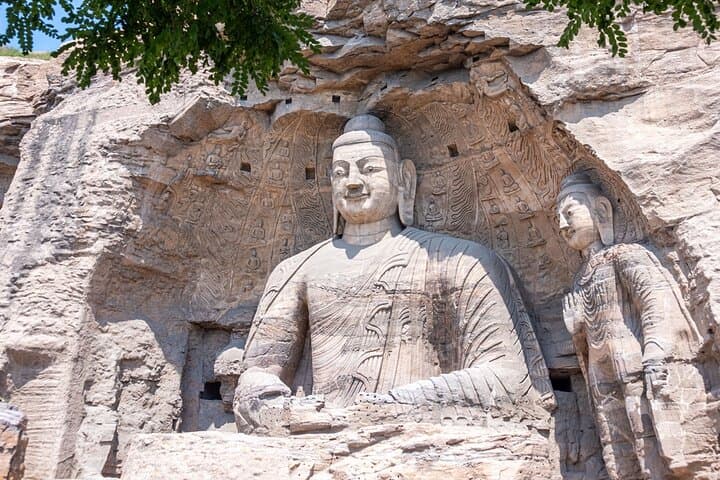
You step off the park pathway and the cliff-face opens like a carved page of history: rows of niches, reclining Buddhas and high-relief guardians watching the valley below. Light slants across soot-darkened stone, and the cool air inside the largest caves feels deliberately different—calm, measured, a human-made hush that centuries polished into place.
Verified experiences and guided adventures in the surrounding area.
Operated by Unique Beijing Tours · Datong, Shanxi
You step off the park pathway and the cliff-face opens like a carved page of history: rows of niches, reclining Buddhas and high-relief guardians watching the valley below. Light slants across soot-darkened stone, and the cool air inside the largest caves feels deliberately different—calm, measured, a human-made hush that centuries polished into place.
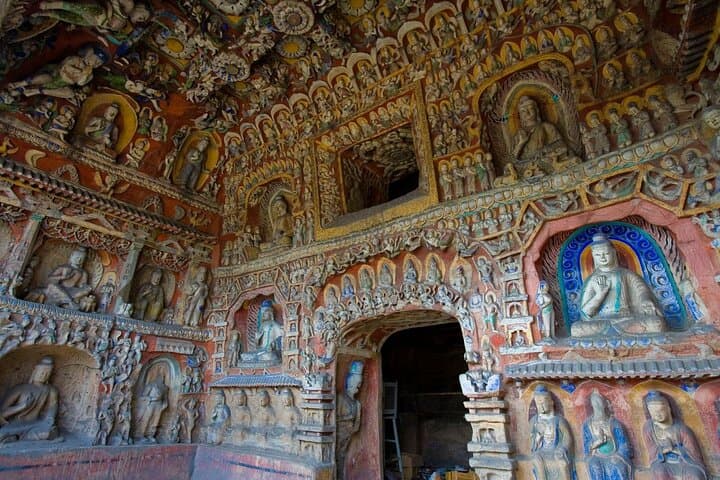
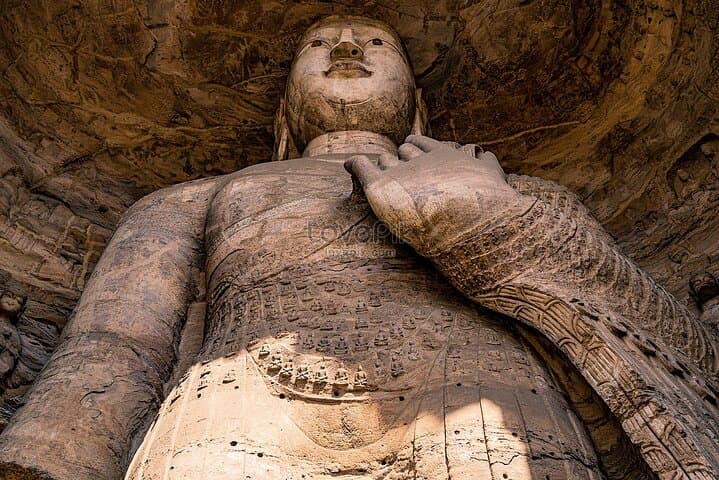
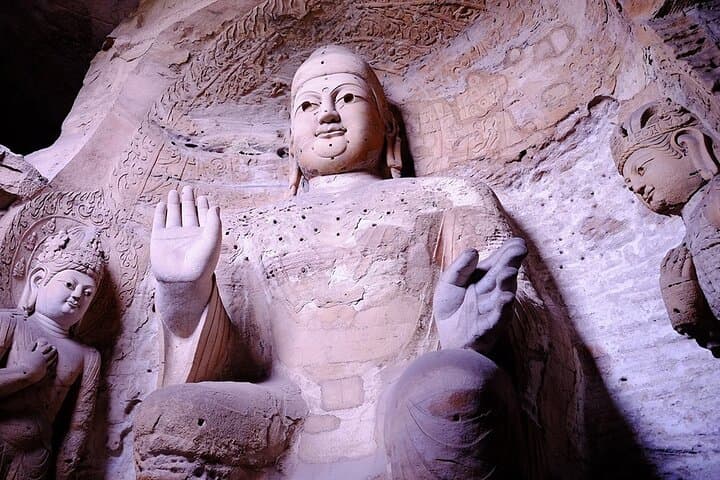
Carved during the Northern Wei Dynasty (5th–6th centuries), the Yungang Grottoes are a major example of early Chinese Buddhist sculpture and of cultural exchange along migration and trade routes. The sandstone cliffs at Wuzhou Hill record shifting styles—from massive, blocky central Buddhas to intricate, later ornamental panels—reflecting both Indian and Central Asian influences. Local Datong culture, historically at the crossroads of nomadic and agrarian worlds, gave this site its scale and ambition.
Expect broad, stepped walkways, multiple cave chambers and interpretive plaques; some cave interiors are dim and require careful footing. The site is wheelchair accessible at main areas, but several chambers include uneven stone thresholds. Guides—available as an add-on—translate iconography, tell stories about patrons who commissioned the caves, and link the grotto art to nearby sites like the Hanging Temple.
Plan to arrive early to avoid crowds and midday heat, bring a light layer for interior coolness, and refrain from touching the carvings. Tickets issued via QR code speed entry; optional private transport is useful if you’re based in Datong and want a compact itinerary that includes the Hanging Temple and Nine-Dragon Wall.
easy.
1–4 hours.
Suitable for most fitness levels; involves some standing and short stairs inside caves
No—mobile QR codes are accepted at the entrance; have your ID ready for verification if requested.
Main areas and surfaces are wheelchair accessible, though some smaller cave chambers have thresholds or steps that may be difficult to access.
Visits typically range from 1 to 3 hours depending on whether you explore deeply or add a guided tour and nearby attractions.
Yes—common combinations include the Hanging Temple, Nine-Dragon Wall and Huayan Temple; private transport can streamline a full-day loop.
The grottoes were carved under Northern Wei patronage in the 5th–6th centuries and illustrate early Chinese Buddhist art influenced by Central Asian styles.
The site is managed for preservation—avoid touching carvings, follow designated paths, and support local conservation by respecting signage and staff directions.
Unique Beijing Tours operates guided outdoor trips and adventures with an emphasis on safety, stewardship, and memorable experiences.
You step off the park pathway and the cliff-face opens like a carved page of history: rows of niches, reclining Buddhas and high-relief guardians watching the valley below. Light slants across soot-darkened stone, and the cool air inside the largest caves feels deliberately different—calm, measured, a human-made hush that centuries polished into place.
You step off the park pathway and the cliff-face opens like a carved page of history: rows of niches, reclining Buddhas and high-relief guardians watching the valley below. Light slants across soot-darkened stone, and the cool air inside the largest caves feels deliberately different—calm, measured, a human-made hush that centuries polished into place.
Carved during the Northern Wei Dynasty (5th–6th centuries), the Yungang Grottoes are a major example of early Chinese Buddhist sculpture and of cultural exchange along migration and trade routes. The sandstone cliffs at Wuzhou Hill record shifting styles—from massive, blocky central Buddhas to intricate, later ornamental panels—reflecting both Indian and Central Asian influences. Local Datong culture, historically at the crossroads of nomadic and agrarian worlds, gave this site its scale and ambition.
Expect broad, stepped walkways, multiple cave chambers and interpretive plaques; some cave interiors are dim and require careful footing. The site is wheelchair accessible at main areas, but several chambers include uneven stone thresholds. Guides—available as an add-on—translate iconography, tell stories about patrons who commissioned the caves, and link the grotto art to nearby sites like the Hanging Temple.
Plan to arrive early to avoid crowds and midday heat, bring a light layer for interior coolness, and refrain from touching the carvings. Tickets issued via QR code speed entry; optional private transport is useful if you’re based in Datong and want a compact itinerary that includes the Hanging Temple and Nine-Dragon Wall.